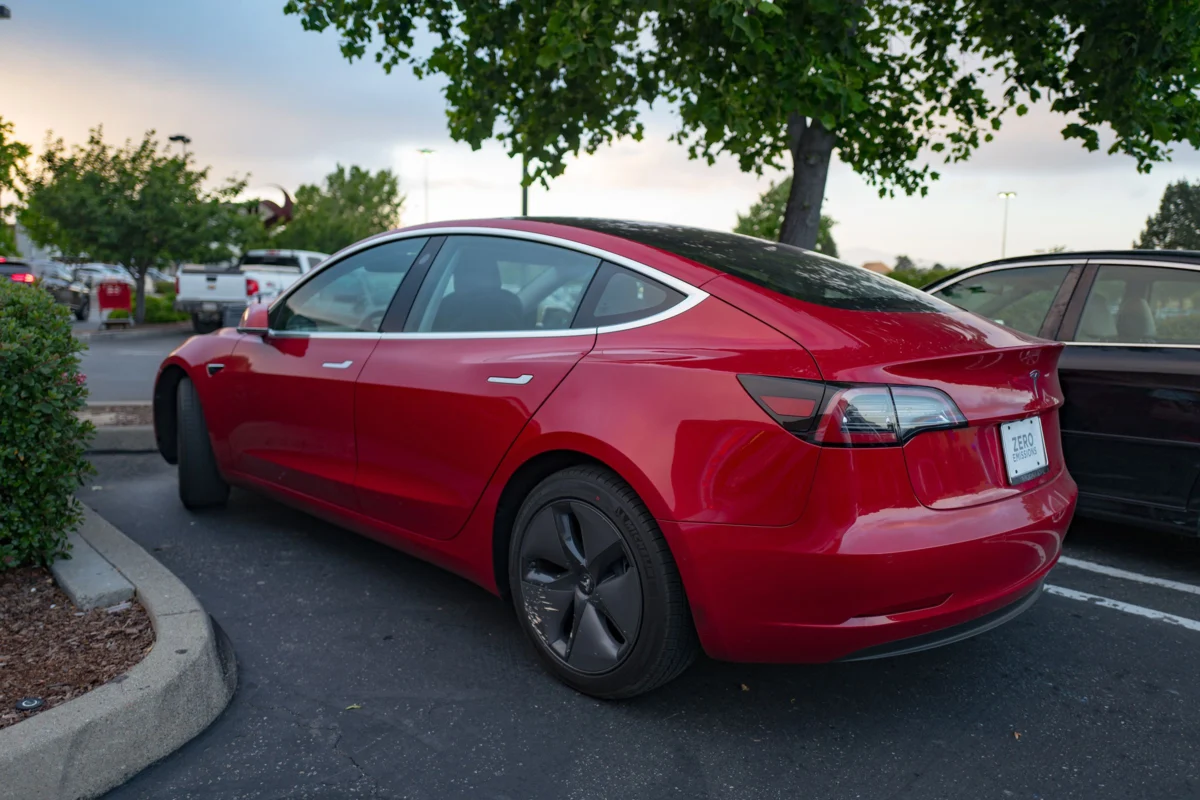
For years, the sleek, flush-mounted door handle has served as the hallmark of modern electric vehicle (EV) aesthetics. By disappearing into the car’s bodywork when not in use, these handles promised improved aerodynamics and a futuristic, minimalist profile. However, what was once hailed as a triumph of industrial design has transformed into a major liability. Following years of scrutiny from regulators and mounting pressure from legal advocates, Tesla has initiated its largest-ever recall in China, affecting nearly 3 million vehicles. This move, mirrored by a broader regulatory crackdown across the Chinese automotive sector, signals a fundamental shift in how safety agencies view the intersection of high-tech design and life-saving accessibility.
Main Facts: A Massive Regulatory Intervention
The State Administration for Market Regulation (SAMR) in China announced on Friday that it is mandating the recall of more than 2.9 million Tesla Model 3 and Model Y vehicles produced in the country between 2019 and 2026. The move is a direct response to concerns that the signature retractable door handles impede passenger egress and hinder rescue efforts during emergency situations.
The intervention is not limited to Tesla. In a rare display of industry-wide regulatory muscle, the Chinese government simultaneously ordered the recall of over 1 million additional vehicles from eight other major manufacturers, including Geely, Xiaomi, Xpeng, and Chery, citing identical safety concerns regarding flush-mounted handle designs.
For the affected Tesla models, the remedy involves a two-pronged approach. First, Tesla will deploy an over-the-air (OTA) software update designed to trigger a automatic window-lowering function upon detecting a collision, providing an alternative exit route. Second, the manufacturer will be required to install high-visibility warning stickers near the interior mechanical emergency release latches. Currently, these manual overrides are often camouflaged by interior trim, making them nearly impossible to locate for panicked passengers or first responders during the chaotic aftermath of an accident—a risk that is significantly exacerbated when a vehicle’s low-voltage battery, which powers the electronic door systems, is compromised.
A Chronology of Conflict: From Innovation to Liability
The trajectory of the "flush-handle controversy" traces back to the early days of the Tesla Model S and Model X, which popularized the technology. As other automakers rushed to emulate the aesthetic, the design became a standard feature in the premium EV market.
- 2019–2021: As the global fleet of flush-handle vehicles grew, anecdotal reports of difficulty in exiting vehicles began to emerge. Legal complaints surfaced, alleging that in instances where the 12-volt battery failed or the electronic door system jammed, occupants were trapped inside.
- 2022–2024: High-profile accidents in both the United States and China brought the issue into the mainstream. Families of crash victims began filing lawsuits, specifically naming the door handle design as a contributing factor in fatalities, arguing that the handles effectively turned the cars into death traps when power was lost.
- 2025: Regulatory interest reached a boiling point. China, having signaled a tougher stance on automotive tech, began drafting legislation to effectively ban fully retractable handles, viewing them as a violation of basic safety egress principles.
- July 2026: Bloomberg reported that the U.S. National Highway Traffic Safety Administration (NHTSA) had begun exploring new federal mandates for door handle design, suggesting that the era of "form over function" was nearing its end.
- August 2026: The SAMR officially triggered the massive recall, marking the definitive point where global regulators prioritized emergency egress over minimalist automotive styling.
Supporting Data: The Mechanics of Failure
The core of the problem lies in the reliance on low-voltage (12V) electrical systems. While the massive high-voltage battery pack drives the vehicle, the door handles, cabin displays, and computers rely on a separate 12V system. In the event of a severe collision, if this system is severed, the electronic actuators responsible for popping the handles out or unlocking the latches cease to function.
Data from incident reports indicates that the "hidden" nature of the manual mechanical release is the primary point of failure. In most Tesla models, the manual release is a lever tucked into the door pocket or armrest. In a dark, smoke-filled, or inverted vehicle, passengers often have no visual cues to locate these levers. The requirement for new warning stickers is an admission that the design, while sleek, failed the most basic "usability under duress" test.
Furthermore, the secondary recall of 50,000 imported Tesla vehicles—focused on the "Autopilot" assisted steering system—highlights a wider trend of regulatory skepticism toward Tesla’s software-first approach. The requirement for new in-cabin cameras to monitor driver attention suggests that regulators no longer trust software updates alone to correct fundamental hardware or human-machine interface (HMI) oversights.
Official Responses and Corporate Silence
Tesla, typically vocal on social media, has remained notably silent regarding this specific, massive recall. A request for comment sent to Tesla’s press office went unanswered, leaving the public to rely on the regulatory filings provided by Chinese authorities.
Conversely, the Chinese government has been increasingly transparent about its legislative goals. By setting strict, proactive standards for autonomous vehicle data and human-machine interaction, Beijing is positioning itself as the global gatekeeper of automotive safety standards. For the eight other Chinese automakers caught in the recall net—including Beijing Automotive and Leapmotor—the directive serves as a sobering reminder that state regulators are willing to sacrifice national manufacturing pride for the sake of strict safety protocols.
Implications: The End of the "Minimalist" Era?
The implications of this recall extend far beyond a few million door handles.
1. The Death of Aesthetics as an Excuse
The automotive industry has spent the last decade prioritizing the "clean" look of EVs. This recall marks the beginning of a "safety-first" design mandate. It is highly probable that future international regulations will require all vehicles to feature a clear, mechanical, and always-accessible door handle, regardless of the vehicle’s design language.
2. Software is Not a Panacea
Tesla’s reliance on over-the-air updates has long been a cost-saving strength. However, regulators are now drawing a line in the sand: software can enhance safety, but it cannot fix a design that is fundamentally counter-intuitive in an emergency. The fact that the recall mandates physical stickers—an analog solution to a digital problem—is a stinging indictment of the "everything-in-software" philosophy.
3. A Fragmented Global Market
With the U.S. and China moving toward stricter, potentially divergent regulations on door handles and assisted-driving tech, global automakers may face a future where they must manufacture different hardware configurations for different regions. This threatens the economies of scale that have driven down EV prices.
4. Legal Precedent
The lawsuits filed by families in the U.S. and China now have a powerful piece of evidence: a government-mandated recall. This documentation will likely embolden plaintiffs in ongoing litigation, potentially leading to significant financial settlements that could impact Tesla’s bottom line and future design budgets.
Conclusion
The flush door handle was meant to be the ultimate statement of the electric age: quiet, seamless, and unobtrusive. But as the industry has learned through tragedy and subsequent regulation, a vehicle’s most important feature is not its drag coefficient or its futuristic appeal, but its ability to let its occupants out in the blink of an eye. As Tesla and its peers scramble to retrofit millions of cars, the lesson for the broader automotive industry is clear: in the high-stakes world of transportation, safety must never be sacrificed at the altar of design. The "cool factor" has officially hit a dead end, and the era of mandatory, intuitive accessibility has begun.