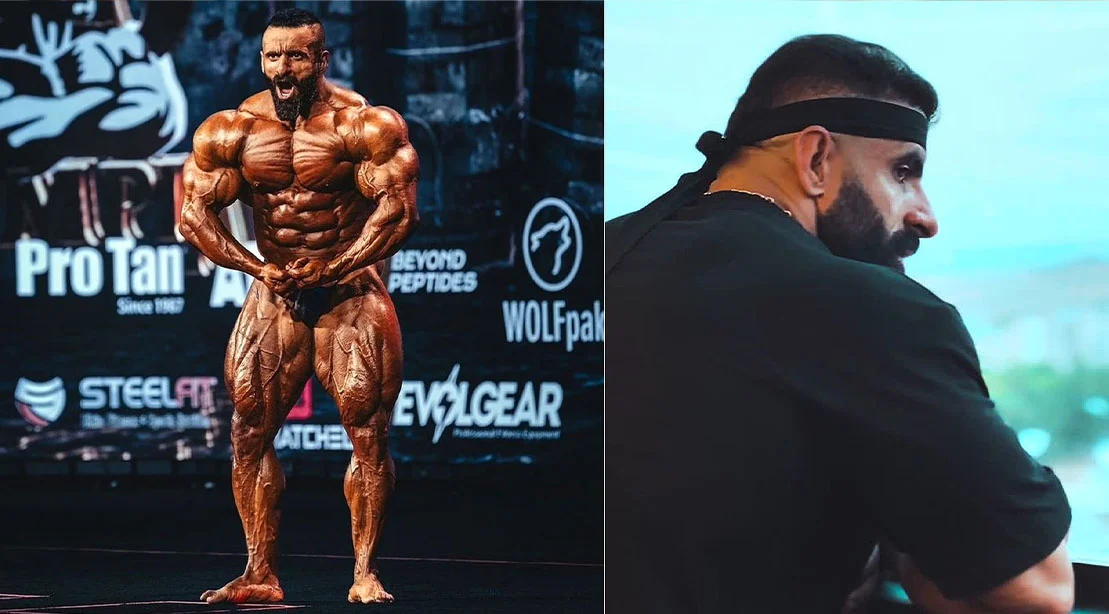
In a development that has sent shockwaves through the professional bodybuilding community, two-time Olympia champion Hadi Choopan has officially announced his withdrawal from the 2026 Mr. Olympia competition. The news, confirmed via his personal Instagram account on August 26, marks a somber turning point for the sport, as one of its most consistent and formidable contenders will be absent from the Las Vegas stage for the first time since his debut in 2019.
For fans of “The Persian Wolf,” the news is particularly devastating. Choopan, who has occupied a top-four spot in every Olympia appearance over the last seven years, was widely considered a primary threat to the current throne. His preparation for this year’s show was defined by an aggressive training regimen and a high-profile partnership with renowned coach Milos Sarcev, signaling a clear intention to reclaim the Sandow trophy he last held in 2022.
A Legacy of Excellence: The Competitive Context
To understand the magnitude of this withdrawal, one must look at the standard of excellence Choopan has set since arriving on the international scene. Since 2019, Choopan has been the definition of consistency in a sport often plagued by fluctuations in physique and conditioning.
A Record of Consistency
- 2019: Debut performance, securing a high-profile 3rd place.
- 2020: 4th place finish.
- 2021: 3rd place finish.
- 2022: The crowning achievement; Choopan wins the Mr. Olympia title.
- 2023–2025: A dominant three-year run as the runner-up, pushing the limits of mass and detail.
Choopan’s presence in the final callout has been a staple of the sport’s most prestigious weekend. His physique—known for its extreme density, conditioning, and “freak factor”—has consistently forced his rivals to elevate their own preparations. With the 2026 event scheduled for September 26, the timing of his withdrawal effectively leaves a massive void in the lineup that will alter the tactical approach of every other competitor in the Open Division.
Chronology of the Crisis: The Failed Journey
The collapse of Choopan’s 2026 campaign was not the result of injury or loss of motivation, but rather a complex bureaucratic nightmare that unfolded over a harrowing 48-hour period.
The Breakdown
According to statements released by the athlete, the ordeal began when he attempted to depart for Dubai, a mandatory transit point for his travel to the United States. Choopan had planned a brief stay in the UAE to facilitate his final documentation and interview with the U.S. Embassy.
- Wednesday Afternoon: Choopan arrived at the airport in Shiraz, Iran, prepared for his flight to Dubai. Upon checking in, he was informed that his transit visa had been unexpectedly deactivated.
- Immediate Escalation: Recognizing the severity of the situation, Choopan traveled to Tehran in a desperate bid to resolve the paperwork through other channels.
- The Dead End: In Tehran, he was met with the same obstruction. Authorities cited evolving regional geopolitical tensions and travel restrictions, which rendered his entry into the UAE—and by extension, his path to the U.S. Embassy—impossible.
- The Final Decision: With the window for processing a U.S. visa closing rapidly and the logistics of international travel proving insurmountable, Choopan was forced to face the reality that his preparation, which had cost him months of physical and financial investment, would not culminate in a stage appearance this year.
Supporting Data: The Logistics of Elite Bodybuilding
The challenges faced by international athletes in the IFBB Pro League, particularly those from nations with strained diplomatic relations with the United States, have long been a subject of concern. While the Mr. Olympia contest is the pinnacle of the sport, the administrative hurdles required to compete are significant.
The Visa Hurdle
Elite bodybuilders require P-1 or O-1 visas to compete in the U.S. These require meticulous planning, including sponsor support, documented proof of "extraordinary ability," and successful interview outcomes at U.S. consulates. Even for established legends like Choopan, external political factors can override even the most well-prepared applications.
The Coaching Factor: The Sarcev Influence
The 2026 prep was particularly notable due to the collaboration with Milos Sarcev. Known as "The Mind" in bodybuilding circles, Sarcev is credited with pushing athletes to achieve unprecedented levels of muscle fullness and vascularity. Analysts had predicted that this specific pairing could have resulted in the "best version" of Choopan to date. The loss of this professional synergy is a blow not only to the athlete but to the evolution of the sport’s aesthetic.
Official Responses and Industry Reaction
As of late August, the IFBB Pro League and the Mr. Olympia organizers have acknowledged the situation. While the organization maintains strict qualification requirements, there has been an outpouring of support from the bodybuilding fraternity.
Social Media and Peer Support
Hadi Choopan’s Instagram, which boasts nearly 8 million followers, became a forum for his peers to express their sympathy. Many fellow competitors, who had been training with the specific intent of surpassing "The Persian Wolf," have expressed their disappointment.
"The sport is not the same without him," one top-tier competitor noted in a social media comment. The sentiment across the industry is one of frustration—not at the athlete, but at the administrative limitations that prevent the world’s best from competing on the world’s biggest stage.
Implications for the 2026 Mr. Olympia
The absence of a former champion always shifts the landscape of the competition. Without Choopan, the battle for the top three is now significantly more open, and the pressure on the remaining top-tier athletes to fill that void in quality is immense.
1. The Tactical Shift
Athletes like Samson Dauda, Derek Lunsford, and others who have long been chasing Choopan now face a different set of tactical challenges. With the “benchmark” of conditioning absent, the judging panel will be looking to see who can claim the throne of “most conditioned” in his stead.
2. The Global Visibility of the Sport
The situation highlights the "borderless" ambition of the IFBB vs. the "border-heavy" reality of international travel. There is growing discussion within the community about whether the Olympia should consider rotating host cities to more accessible international hubs, or if the league needs to implement more robust diplomatic support for its international champions.
3. Future Prospects for Choopan
Despite the heartbreak, the consensus is that Choopan’s career is far from over. He remains a national hero in Iran and a global icon of the sport. His statement—"I worked incredibly hard this year to bring a new version of Hadi Choopan"—suggests that his drive remains intact. Should he be able to navigate these logistical obstacles in the future, he remains an immediate threat to the title.
Conclusion: A Lost Opportunity
The 2026 Mr. Olympia will undoubtedly be a historic event, but it will carry an asterisk. The absence of Hadi Choopan serves as a stark reminder that even in the world of professional bodybuilding, where physical mastery is the primary objective, external forces can still dictate the outcome.
As the industry moves forward toward the September date, the focus shifts to how the remaining field will perform in the absence of one of the greatest bodybuilders of the modern era. For now, the "Persian Wolf" remains in Iran, his championship dreams deferred by a bureaucratic wall, leaving fans and analysts to wonder what might have been had he been allowed to step on stage.
Muscle & Fitness will continue to monitor this story as it develops, providing updates on any potential changes to the qualification landscape or further statements from the athlete.