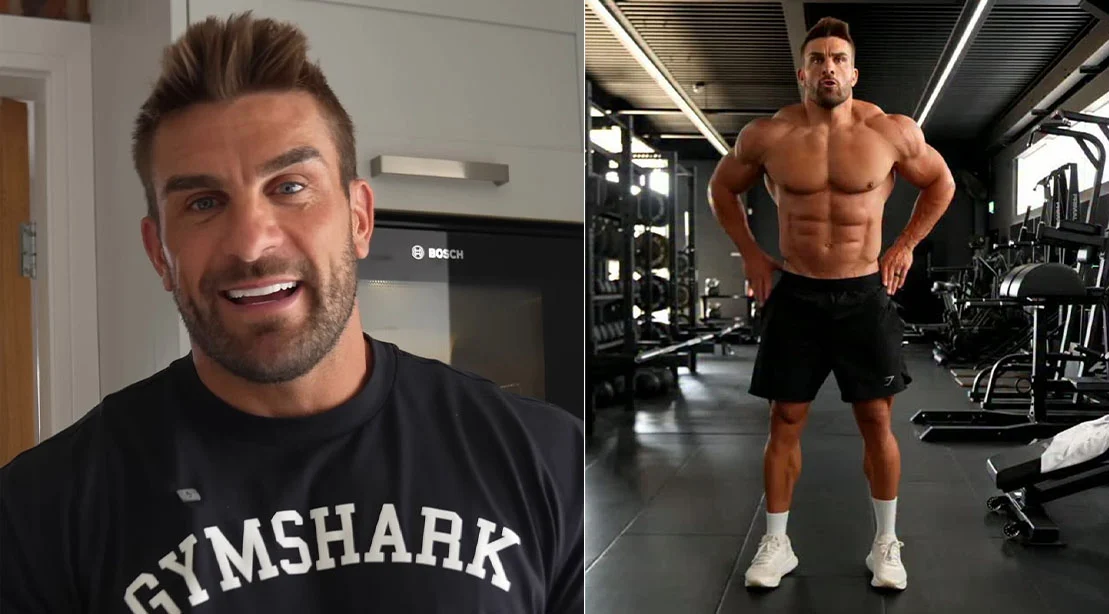
With the 2026 Olympia final in Las Vegas looming just weeks away, the bodybuilding world is turning its collective gaze toward the Men’s Physique division. At the center of this storm is the reigning king, Ryan Terry. As the British powerhouse gears up to defend his title and chase an unprecedented fourth trophy, the narrative surrounding his preparation has shifted. While his training intensity remains as lethal as ever, the secret to his current form isn’t found in a new exercise variation or a radical supplement protocol—it is found in a profound, intentional shift in psychological perspective.
For years, the elite stage of professional bodybuilding was defined by a “warrior mentality” that often bordered on hostility. Yet, as Terry approaches the 2026 stage, he is proving that the most effective path to the podium may not be paved with anger, but with gratitude and joy.
The Evolution of a Champion: A Chronology of Resilience
To understand the magnitude of Terry’s current mental state, one must look back at his arduous decade-long climb to the top. Achieving the Men’s Physique throne was not a linear progression; it was a grueling, ten-plus-year journey marked by near-misses, intense scrutiny, and the constant pressure of international competition.
The 2025 Crucible
Last year, the atmosphere surrounding the Olympia was markedly different. Terry found himself caught in a web of psychological warfare orchestrated by his rivals, most notably the outspoken challenger Ali Bilal. Bilal, a two-time Arnold Classic champion and a perennial Olympia runner-up, utilized a strategy of public disparagement, openly questioning the structural integrity of Terry’s physique and suggesting that the veteran had slipped past his prime.
For a man who had built his career on composure, the pressure was immense. In an uncharacteristic moment of vulnerability to the outside noise, Terry engaged. The pre-Olympia press conference became a theater of tension, with Terry firing back at his critics to defend his legacy. While he ultimately emerged victorious, defending his crown with a display of dominance, he later admitted that the experience left him hollow.
The 2026 Pivot
Post-2025, the narrative shifted. In a candid series of updates shared via his official Instagram and through his RT-Fit platform, Terry revealed that he had reached a breaking point with the "negative motivation" model. He realized that while anger can fuel a temporary burst of intensity, it is not a sustainable fuel source for a long-term professional career. Entering the 2026 season, Terry made a conscious vow to strip away the bitterness and return to the foundational love of the sport.
Supporting Data: Why Positivity Produces a Superior Physique
It is a common misconception in the fitness industry that a "grind-until-you-break" mentality is the only way to achieve elite conditioning. However, physiological science often suggests that chronic stress—whether mental or physical—can lead to elevated cortisol levels, which in turn can lead to stubborn fat retention and muscle catabolism.
Terry’s testimony aligns with this data. During his 2025 preparation, he described feeling "obsessed" and "in his own head," noting that his body was actively resisting his conditioning protocols. He struggled with weight loss and metabolic responsiveness, a common symptom of a body locked in a sympathetic nervous system "fight or flight" response.
The "Joy" Variable
In contrast, his 2026 prep has been marked by what he calls a "wholesome approach." By integrating his family life into his training schedule and focusing on the enjoyment of the process rather than the fear of losing his title, Terry has seen a remarkable change in his physical response:
- Metabolic Efficiency: Terry reports that his body fat is shedding with greater ease than in previous years, likely due to a stabilized hormonal environment.
- Energy Levels: Despite the extreme caloric deficits required for stage readiness, the champion reports higher daily energy levels, which he attributes to reduced mental fatigue.
- Longevity: By viewing the sport as a gift rather than a burden, Terry is effectively extending his competitive window, proving that a balanced athlete is often a more durable one.
Official Responses: The Champion in His Own Words
The transition from a defensive posture to a positive one has been well-documented by Terry himself. Speaking to veteran commentator Bob Cicherillo following his 2025 victory, Terry offered a moment of surprising grace toward his rival.
"I want to thank that guy [Bilal], because he unleashed something in me this year, which I never thought I had," Terry remarked. "A new level, and it really brought the best out of me."
However, in his recent updates, he has clarified that while he appreciates the lessons of the past, he refuses to live in that negative space again. "If you guys followed me last year, you’ll see that my motivation was very different to years before that," Terry explained to his followers. "It came from a negative place. I let other people’s energy in, and I absorbed it… It wasn’t an enjoyable place. Bodybuilding has to be enjoyable to sustain it 365 days a year."
Now 37, Terry is operating with a level of wisdom that only comes from deep experience. He emphasizes that the "biggest stage in the world" is not a permanent residence, and his current priority is to ensure that his journey is one he can look back on with pride, not just one he can look back on with a trophy.
Implications for the Future of Men’s Physique
The implications of Ryan Terry’s shift are significant for the entire bodybuilding landscape. He is effectively setting a new standard for what it means to be a modern champion.
The End of the "Angry" Archetype?
For years, the sport has fetishized the "dark, brooding athlete." Terry’s success suggests that the next generation of bodybuilders might benefit more from mental health awareness, family integration, and a focus on intrinsic motivation than from the tired tropes of pre-contest trash-talking. If Terry wins his fourth title in September, he will be the loudest argument against the necessity of negativity in professional sports.
A Masterclass in Longevity
At 37, Terry is defying the traditional expiration date of the Men’s Physique athlete. His ability to adapt his mindset as his body matures is the hallmark of a true professional. While the younger, hungrier upstarts focus on the "noise," Terry is focusing on his internal state. This creates a psychological advantage that his competitors, often blinded by their own competitive anxiety, may find impossible to overcome.
The Legacy of RT-Fit
Beyond the stage, Terry’s influence is rippling through his training brand, RT-Fit. By showcasing a "happy" prep, he is providing a blueprint for thousands of amateur athletes who struggle with the psychological toll of strict dieting. He is teaching his followers that you don’t have to hate your life to achieve an incredible six-pack. In doing so, he is moving from being a mere champion of a sport to a mentor for a lifestyle.
Conclusion: The Final Countdown
As the final weeks before the 2026 Olympia countdown, all eyes remain on the man from Britain. He is physically imposing, mentally sharpened, and, most importantly, genuinely happy. In a sport that demands everything from its participants—often at the expense of their sanity—Ryan Terry is finding a way to have it all.
The message is clear: The trophy is the goal, but the journey is the life. By choosing positivity, Terry hasn’t just increased his chances of standing at the top of the podium in Las Vegas; he has secured his legacy as one of the most well-adjusted and dominant forces in the history of the sport. Whether he walks away with his fourth title or simply with the satisfaction of a perfect prep, one thing is certain: Ryan Terry has already won the battle that matters most—the one within.
For more information on Ryan Terry’s training regimens, including his signature ab-development series, visit the official Muscle & Fitness archives or follow his journey at instagram.com/ryanjterry.