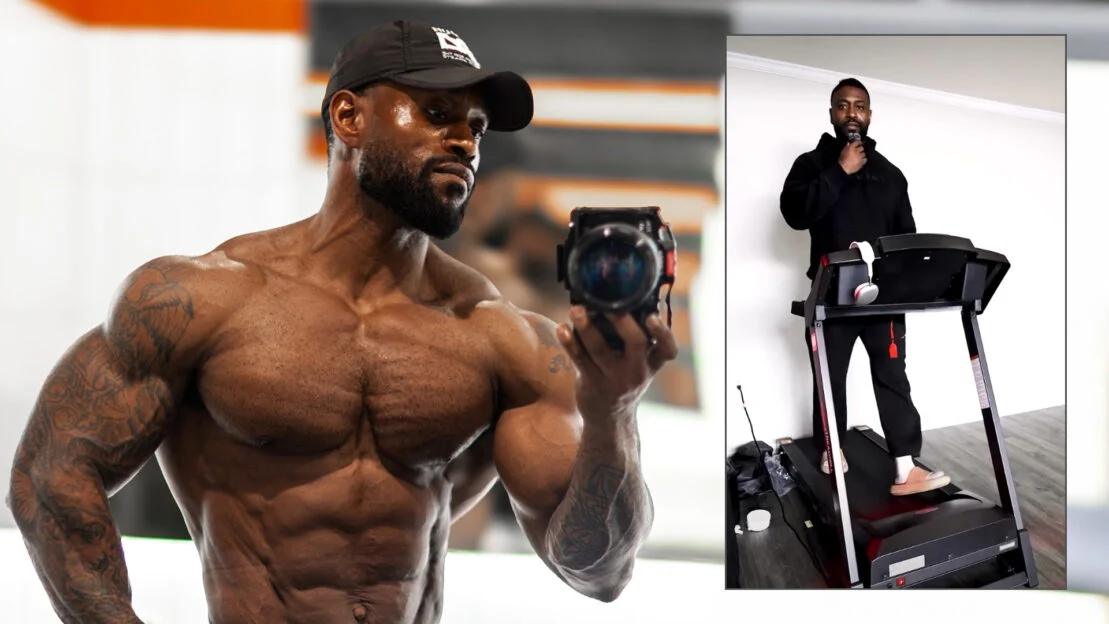
In the high-stakes world of competitive bodybuilding, the common perception is that fat loss requires brutal, soul-crushing cardio sessions—think steep incline sprints, hours on the stair climber, and high-intensity interval training (HIIT) that leaves an athlete gasping for air. However, Sheriff Taiwo, an IFBB Pro bodybuilder and renowned transformation coach, is challenging the industry’s status quo. Better known to his thousands of followers as "FitDad," Taiwo advocates for a counterintuitive approach to shredding body fat: the humble, low-intensity walk.
For a man who turned IFBB Pro in 2025 and competes at the highest level of the Men’s Physique division, Taiwo knows the value of intensity. Yet, he argues that for the average person—and even for elite athletes—sprinting isn’t always the solution. Instead, he posits that consistent, daily walking is the "fat loss hack" that actually yields sustainable, long-term results.
Main Facts: The Science of the Stroll
The core premise of Taiwo’s philosophy is simple: fat loss should not be a violent disruption to one’s metabolic or physical recovery. While high-intensity exercise has its place in cardiovascular conditioning, it often creates a systemic stress load that can be counterproductive for those already juggling the demands of a career, family, and training.
Walking operates on a different physiological spectrum. It is classified as Low-Intensity Steady State (LISS) cardio. Unlike HIIT, which relies heavily on glycogen (sugar) stores for fuel, a moderate-paced walk encourages the body to utilize fat oxidation as its primary energy source.
Key takeaways from Taiwo’s approach:
- Minimal Recovery Impact: Unlike heavy sprinting, which can lead to delayed onset muscle soreness (DOMS) and central nervous system fatigue, walking allows an athlete to train legs or perform heavy lifting the following day without a performance deficit.
- Appetite Regulation: High-intensity exercise often triggers a compensatory hunger response, leading many to "eat back" the calories they just burned. Walking, conversely, does not spike hunger hormones, making it easier to maintain a caloric deficit.
- Sustainability: The "FitDad" mantra is built on the idea that the best workout is the one you actually finish. Walking is a low-barrier-to-entry activity that avoids the burnout cycle associated with more aggressive forms of exercise.
Chronology of a Transformation: From Dad to Pro
To understand the weight of Taiwo’s advice, one must look at his trajectory. His journey was not paved with quick fixes, but rather a methodical accumulation of habits.
2020–2022: The Foundation
As a father balancing professional responsibilities and fitness, Taiwo began refining his own regimen. He noticed that as his training volume increased in the gym, his ability to recover from traditional cardio decreased. He began shifting his morning routine to include 30–45 minutes of walking.
2023–2024: Refinement
During his preparation for the professional stage, Taiwo implemented "stacking" techniques. By breaking down his daily movement into smaller, manageable increments—a strategy he now teaches his coaching clients—he was able to maintain an extremely low body fat percentage while preserving muscle mass.
2025: The Pro Milestone
Achieving his IFBB Pro status solidified his methodology. By the time he stepped onto the stage at the New York Pro, his physique was a testament to the fact that excessive, high-impact cardio is not a prerequisite for professional conditioning. His success proved that consistency in movement, rather than the intensity of the sweat, is the primary driver of aesthetic transformation.
Supporting Data: The Math Behind the Movement
The effectiveness of walking is not just anecdotal; it is rooted in basic thermodynamic principles. For the average adult in the United States, who weighs approximately 190 pounds, walking at a brisk pace of 3 miles per hour (mph) burns roughly 150 calories every 30 minutes.
The Weekly Impact
If an individual adopts the 150-minute-per-week recommendation—roughly 30 minutes a day, five days a week—they are creating a caloric deficit of 750 to 1,000+ calories per week without ever stepping foot in a gym.
- 150 minutes/week: 750–1,050 calories burned.
- Annual impact: Over the course of a year, this equates to roughly 10 to 15 pounds of body fat reduction, assuming caloric intake remains stable.
Furthermore, studies published in journals such as The American Journal of Clinical Nutrition have consistently shown that LISS cardio is more effective at preserving lean muscle mass compared to HIIT. For bodybuilders like Taiwo, this is the "Holy Grail": losing fat while keeping the muscle they have worked so hard to build.
Official Responses and Expert Consensus
The fitness community has largely responded with a shift in perspective. While trainers of the old school once pushed the "no pain, no gain" narrative, modern exercise physiology is moving toward the "FitDad" model.
"The issue with high-intensity cardio for the general population," says a leading sports physiologist, "is the cortisol response. Excessive intensity elevates stress hormones, which can lead to water retention and fat storage in the abdominal region. Sheriff Taiwo’s approach, by keeping intensity low, manages cortisol levels while maximizing fat burning."
Taiwo himself emphasizes that his role as a coach is to remove the "mental friction" of exercising. "When I tell a busy parent they need to find an hour for a grueling workout, they quit," Taiwo explains. "When I tell them they just need to find ten minutes three times a day, they succeed. Success breeds consistency."
Implications: The Future of Fat Loss
The implications of the "FitDad" approach are profound for public health and the bodybuilding industry alike.
1. The Democratization of Fitness
By framing exercise as "walking" rather than "training," Taiwo lowers the psychological barrier for entry. This is particularly important for individuals who are obese or suffering from joint issues, where high-impact running could cause injury.
2. Redefining "Workouts"
The concept of "stacking" movement—10 minutes after breakfast, 15 at lunch, 20 after dinner—deconstructs the myth that exercise must be a single, arduous event. It encourages a lifestyle of movement rather than a "sedentary for 23 hours, active for one" lifestyle.
3. Long-Term Health Outcomes
Beyond fat loss, the benefits of walking include improved insulin sensitivity, lower blood pressure, and enhanced mental health. As Taiwo notes, the most important metric is not the calories burned in one session, but whether you will still be doing the activity in six months.
4. The Professional Standard
For the competitive athlete, this movement marks a shift away from the "crash-and-burn" cycle of pre-contest preparation. If an IFBB Pro can reach the pinnacle of the sport by prioritizing walking over sprinting, it suggests that the industry may finally be moving toward a more sustainable, health-conscious future for bodybuilding.
Conclusion
Sheriff "FitDad" Taiwo has distilled a complex problem into a simple, actionable solution. His message is clear: You do not need to suffer to see results. By incorporating a consistent, daily walking routine, anyone—from the busy parent to the aspiring IFBB Pro—can achieve significant fat loss without compromising their recovery, their muscle mass, or their sanity.
In a world obsessed with the next "big thing" in fitness gadgets or extreme training methods, the most effective tool remains the one we’ve had since birth. It’s time to stop sprinting toward our goals and start walking toward them. Consistency, as Taiwo reminds us, beats intensity every single time.
To learn more about Sheriff Taiwo’s training philosophies and to follow his journey, you can find him on Instagram.