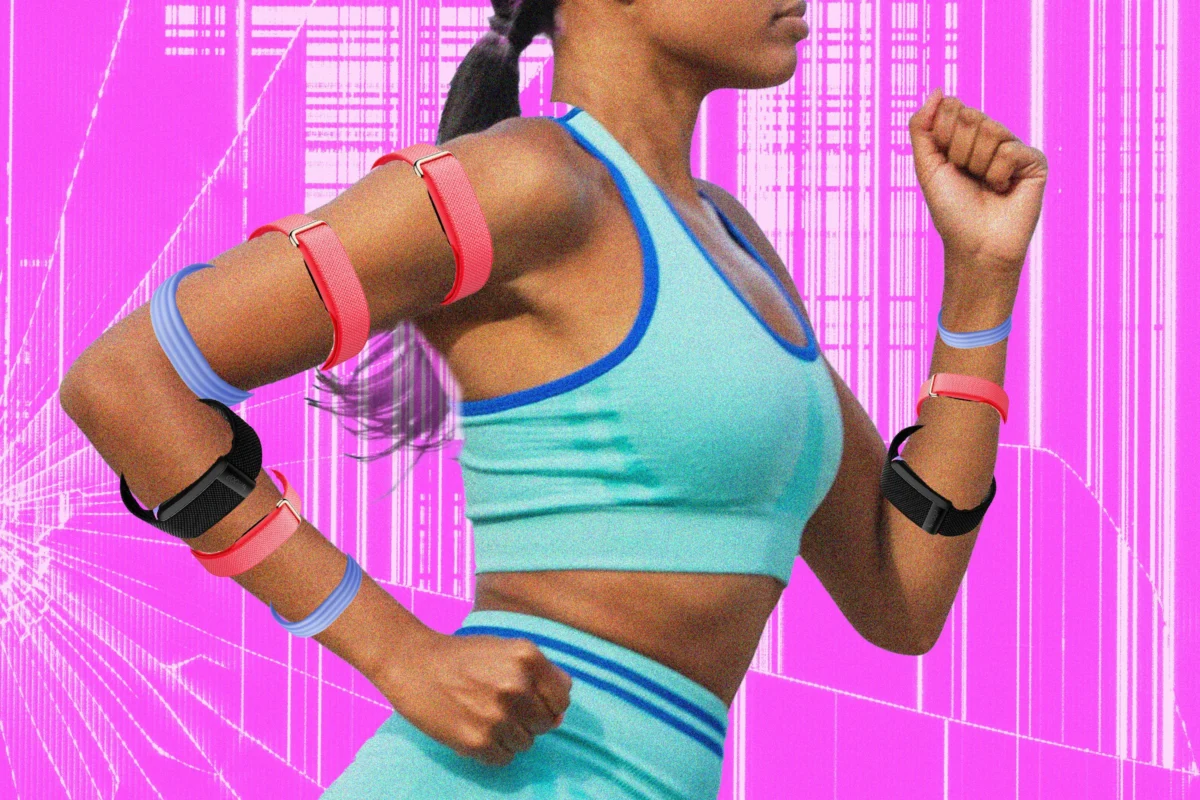
In the crowded landscape of consumer electronics, a curious paradox has emerged: the most innovative gadget on the shelf is one designed to be ignored. We are witnessing the rise of the "screen-free" wearable—a device that remains blissfully silent, dark, and unobtrusive until the moment its battery requires a charge or you choose to engage with your data on your own terms.
For over a decade, we have been conditioned to believe that a wearable is only as good as its display. We have tethered ourselves to glowing OLED screens that pulse with notifications, vibrating incessantly to remind us of emails, social media mentions, and the arbitrary goal of taking a few more steps. But as our collective exhaustion with "attention-hoarding" technology reaches a boiling point, a new wave of devices—the Garmin Cirqa, Google Fitbit Air, Polar Loop, Amazfit Helio Strap, and the industry-pioneering Whoop series—is promising to return our focus to the physical world.
The Rise of the "Invisible" Tracker
The shift toward screen-free technology is not merely a design trend; it is a defensive reaction to the modern digital environment. According to recent market analysis, this category is poised for explosive growth as consumers actively seek to reclaim their autonomy from constant digital bombardment.
While the tech industry has spent the last decade perfecting the "always-on" lifestyle, these new trackers operate on the principle of subtraction. By stripping away the screen, manufacturers are forcing a recalibration of the user experience. You no longer glance at your wrist to check a heart-rate spike during a meeting; instead, the device works in the background, quietly aggregating health metrics that can be reviewed later—if, and only if, you have the time and inclination to do so.
A Return to 2009: The Cyclical Nature of Tech
To understand where we are going, we must look at where we started. Long-time observers of the wearable space will find this "new" generation of trackers hauntingly familiar. In the early days of the Fitbit (circa 2009–2012), devices like the Fitbit Ultra or the diminutive Fitbit Zip were rarely centerpieces of our digital lives. They were utilitarian tools, often clipped to a waistband or tucked into a pocket. They tracked movement, not engagement.
The subsequent decade, however, was defined by the "smartwatchification" of health tech. As smartwatches gained popularity, the industry shifted toward maximizing time-on-device. We became addicted to the dopamine loop of "closing rings," checking sleep scores the moment our eyes opened, and reacting to haptic pings. The screen-free movement is a pivot back to those simpler roots—a recognition that the most useful wearable is the one that disappears.
AI: The Double-Edged Sword of Personal Health
The transition to screen-free hardware is inextricably linked to the meteoric rise of Artificial Intelligence. AI is simultaneously the primary catalyst for our digital burnout and the key tool that makes screen-free devices viable.
The Upsell of Insight
Companies like Google and Whoop are leveraging AI to transform raw sensor data into actionable narratives. A screen-free device cannot show you a complex graph, but it can feed that data into an AI-powered app that translates the numbers into human-readable advice. For instance, the Fitbit Air’s app can convert a complex heart-rate variability (HRV) trend into a conversational summary.
However, this reliance on AI creates a new economic model. While the hardware itself is often a simplified collection of sensors—heart rate, accelerometer, Bluetooth transmitter—the "value-add" has shifted to the software subscription. Companies now upsell "chatty" health coaches and AI-driven insights for monthly fees, effectively monetizing the convenience of not having to interpret your own raw data.
The Expert Perspective
Peter Richardson, co-founder of Counterpoint Research, notes that we are still in the infancy of this transition. "The use of AI in monitoring and guiding health and wellness is still at the early stage of development," Richardson explains. "But it will likely become significantly more advanced as AI matures, shifting the burden of analysis away from the user and toward the system."
This makes the lack of a screen an asset rather than a liability. By moving the "intelligence" to the phone or cloud, the wearable on your wrist becomes a simple, durable, and unobtrusive sensor node, allowing the AI to shine without the physical constraints of a tiny, power-hungry display.
The Burden of "Technostress"
The push for screen-free wearables is a direct response to a phenomenon researchers call "technostress." As digital demands have grown, our cognitive capacity to absorb them has not.
Elizabeth Marsh, a doctoral researcher at the University of Nottingham, has spent years studying the "dark side" of the digital workplace. Her research suggests that the constant notification loops—whether on a PC, a smartphone, or a smartwatch—are a primary driver of anxiety, information overload, and the erosion of the boundary between home and work.
The Cost of Constant Connectivity
"Participants described these technologies in visceral terms," Marsh notes. "Notifications make people feel on edge; they report feeling anxious, angry at the sender for demanding their time, and simultaneously guilty for not responding immediately."
This creates a paradox of control. While many users attempt to "cure" this stress by turning off notifications, they often find themselves suffering from a secondary anxiety: the fear of missing out (FOMO). Screen-free wearables offer a middle ground. They allow users to maintain their health tracking—providing a sense of agency—without the constant, high-frequency "buzz" of an alert-heavy device. By removing the visual anchor of the screen, these devices help users avoid the reflex to check for updates, effectively lowering the digital noise floor of their daily lives.
Toward a Philosophy of Digital Mindfulness
The ultimate goal of this shift is what Marsh calls "digital mindfulness." This is not about abandoning technology entirely, but rather shifting from a passive, reactive relationship with our gadgets to an intentional, purposeful one.
The Three Pillars of Digital Mindfulness:
- Intention: Picking up a device only when there is a clear, pre-defined purpose, rather than reaching for it out of a habitual, unconscious reflex.
- Attention: Remaining present in the chosen activity and resisting the pull of the constant digital background noise.
- Attitude: Responding to one’s own tech habits with patience rather than self-criticism. When we fail to maintain our boundaries, a compassionate response is more sustainable than a punitive one.
Implications for the Future of Wearables
As Apple and other tech giants explore their own versions of this "less is more" concept, the market is bracing for a fundamental shift in how we perceive utility. For years, the industry operated under the assumption that "more" (more features, more pixels, more connectivity) equaled "better."
The success of the screen-free movement suggests that for the modern consumer, "better" now means "less intrusive."
We are moving away from the era of the "second screen" and toward an era of "background health." This transition implies a future where our devices are akin to our clothing: essential, functional, and largely unnoticed. Whether this will ultimately reduce our reliance on tech or simply shift our dependency from the watch to the AI-powered app remains to be seen. However, one thing is clear: the era of the buzzing, glowing, attention-demanding wrist ornament is facing a serious challenge from a new, quieter competitor.
For the user, the choice is increasingly binary. Do you want a watch that reminds you of everything you haven’t done yet, or a sensor that quietly logs your progress while you go about your day? As we grapple with the increasing intensity of the digital workplace and the persistent itch of FOMO, the quiet efficiency of a screen-free device is starting to look less like a downgrade and more like a necessary intervention.
The screen-free wearable is not just a piece of hardware; it is a declaration of independence from the tyranny of the notification. It is, perhaps, the most human-centric piece of technology we have seen in years.