Responding to an oil or chemical spill is inherently dangerous; when those hazards intersect with the extreme conditions of winter—ice-covered rivers, sub-zero temperatures, and unpredictable hydraulic currents—the complexity of the operation increases exponentially. For emergency responders, inland spill mitigation in cold weather is one of the most unforgiving environments in the field.
The primary objective of any spill response remains the containment and recovery of hazardous materials. However, when the spill occurs in a riverine environment under winter conditions, the margin for error is razor-thin. This report details the specialized protocols, risk assessment strategies, and safety imperatives required to operate effectively and safely in these high-stakes environments.
The Hazards of Moving Water Under Ice
The fundamental difference between lake and river ice response lies in the hydraulics. While lake ice provides a relatively stable, albeit static, platform, river ice hides a constant, moving threat. Water flowing beneath an ice shelf can create localized weaknesses, air pockets, and “scouring” effects that render traditional ice-thickness calculations unreliable.
Should a responder break through the ice in a lake, the primary threat is cold-water immersion and hypothermia. If that same responder breaks through in a river, they are immediately subject to the current, which can pull them underneath the ice sheet, complicating extraction and increasing the risk of drowning. Because of this, standard operating procedures (SOPs) mandate that responders remain off the ice until a rigorous, multi-layered safety plan is established, vetted, and approved by the site safety officer.
Chronology of Response: From Assessment to Execution
Effective response follows a strict, logical progression. Skipping steps or rushing the initial site evaluation is a precursor to disaster.
Phase 1: Initial Size-Up
Upon arrival, the incident commander must lead a comprehensive size-up that moves from the periphery inward. This includes:
- Hydraulic Assessment: Measuring current speed and determining water depth. Faster water significantly reduces the structural integrity of the ice.
- Geophysical Survey: Mapping the river morphology. Shallow areas may have ice frozen to the riverbed (anchor ice), while deeper channels may have thin, deceptive ice cover.
- Structural Ice Analysis: Utilizing augers to conduct a systematic, grid-based test of ice thickness and quality.
Phase 2: Structural Verification
Responders must never rely on visual cues alone. The strength of ice is a function of age, temperature, water chemistry, and current. The "50 x T²" formula serves as a baseline for load-bearing capacity (where T is thickness in inches). For instance, 4 inches of clear, solid ice provides a theoretical capacity of 800 lbs. However, in a river environment, this estimate must be downgraded by 15% to account for currents and up to 50% for "snow ice," which is structurally inferior due to the air pockets trapped during the freezing of slush.
Phase 3: Operational Deployment
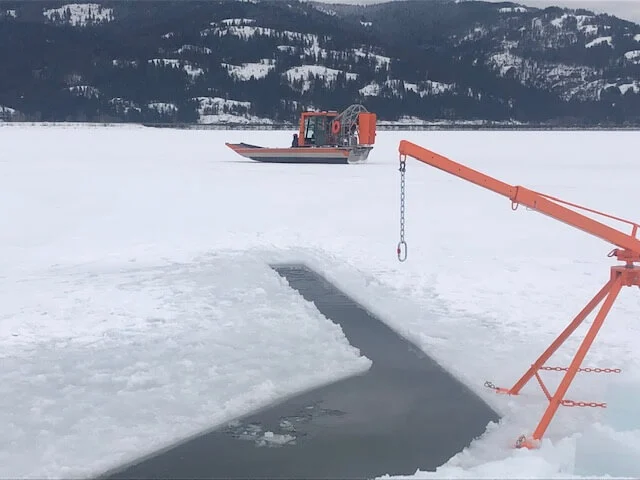
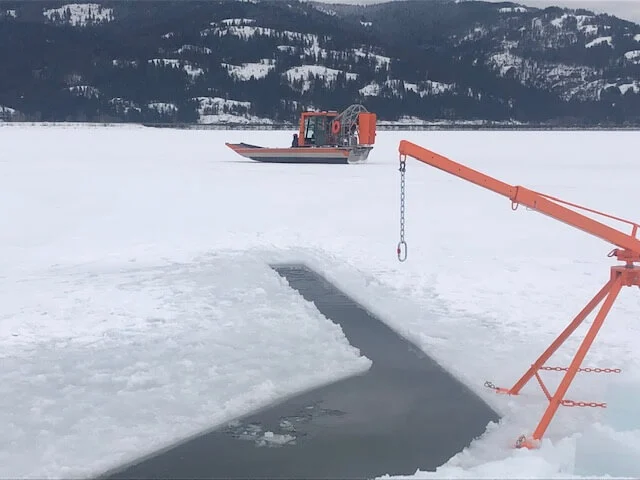
Once the assessment is complete, the site must be prepared. This involves creating safe access points, installing non-slip traction mats on riverbanks, and establishing a "buddy system" where every responder on the ice is tethered to a belayer stationed on stable ground. If the ice quality is questionable, operations must transition to airboats or inflatable platforms, effectively removing the human load from the ice surface.
Supporting Data: Ice Classifications and Safety Thresholds
Responders must be fluent in identifying ice types, as each possesses unique mechanical properties:
- Clear/Lake Ice: The gold standard for strength. It forms when temperatures drop rapidly, allowing for a dense, crystalline structure.
- Frazil Ice: A collection of disk-shaped slush on the surface. It is indicative of the early, unstable phases of freezing.
- Candled Ice: A dangerous, rotted form of ice that appears thick but has lost its structural bond, resembling a collection of vertical needles.
- Snow Ice: Opaque and milky, this occurs when snow saturates the ice surface and freezes. It is significantly weaker than clear ice and should be treated with extreme caution.
Load-Bearing Guidelines
- 2 Inches or Less: Absolute stay-off zone.
- 4 Inches: Minimum for foot traffic (skating/fishing).
- 5–6 Inches: Minimum for light vehicles (ATVs/Snowmobiles).
- 7–8 Inches: Minimum for medium-duty response trucks.
Note: These figures are baseline estimates for lake ice; river ice requirements must be adjusted upward for the added instability of the current.
Official Safety Protocols and PPE Requirements
The Incident Command System (ICS) for winter spills demands a robust PPE suite and a dedicated medical contingency.
Essential PPE
Every responder operating near the edge must wear a high-visibility, insulated drysuit, a certified rescue PFD, helmet, and ice cleats. Ice awls must be kept accessible on the outermost layer of clothing for immediate self-rescue.
Medical Readiness
A "Warming Tent" is a mandatory component of the site safety plan. It must be equipped with portable heaters, cots, hypothermia wraps, automated external defibrillators (AEDs), and supplemental oxygen. Because cold weather accelerates the onset of fatigue and hypothermia, rotation schedules must be strictly enforced, ensuring that responders have access to dry gear and a heat source before their core body temperature drops.
Implications: The Human Factor and Environmental Reality
The reality of cold-weather spill response is that the environment is an active participant in the incident. Unlike summer spills, where environmental variables are largely static, winter spills involve a shifting landscape.
Wind Chill and Human Performance
The Wind Chill Temperature Index is not merely a weather forecast; it is a critical operational metric. As wind speed increases, the rate of heat loss from exposed skin escalates, leading to frostbite in minutes.
| Wind Speed (mph) | 15°F (Ambient) | 0°F (Ambient) | -15°F (Ambient) |
|---|---|---|---|
| 5 mph | 7°F | -11°F | -28°F |
| 15 mph | 0°F | -19°F | -39°F |
| 30 mph | -5°F | -26°F | -46°F |
The implication for managers is clear: productivity drops as the wind chill rises. Decision-making becomes impaired as core temperatures dip, and dexterity is lost when hands are exposed. Commanders must prioritize shorter operational windows to account for the physical toll the cold takes on personnel.
The Self-Rescue Imperative
If a responder breaks through, the "Self-Rescue Technique" must be muscle memory.
- Control the Panic: Immediate immersion triggers the "gasp reflex." Responders are trained to resist this through cold-water acclimation drills.
- Extend and Distribute: Reach forward onto the solid ice edge, spreading weight to avoid further breakage.
- The Kick and Crawl: Use ice awls to gain purchase, then kick horizontally to move the body into a prone position, sliding back onto the solid surface.
- Roll Away: Do not stand up immediately. Roll away from the hole to distribute weight until stable ground is reached.
Conclusion
Winter inland spill response is a discipline defined by caution and preparation. By integrating rigorous ice assessment formulas, mandatory belay procedures, and comprehensive medical contingencies, organizations can mitigate the inherent risks of working on frozen waterways. The goal is not only the effective containment of the spill but the safe return of every responder. In the unforgiving cold, the most effective tool in the response kit is a well-trained, disciplined, and cautious team that refuses to underestimate the power of the moving water beneath their feet.