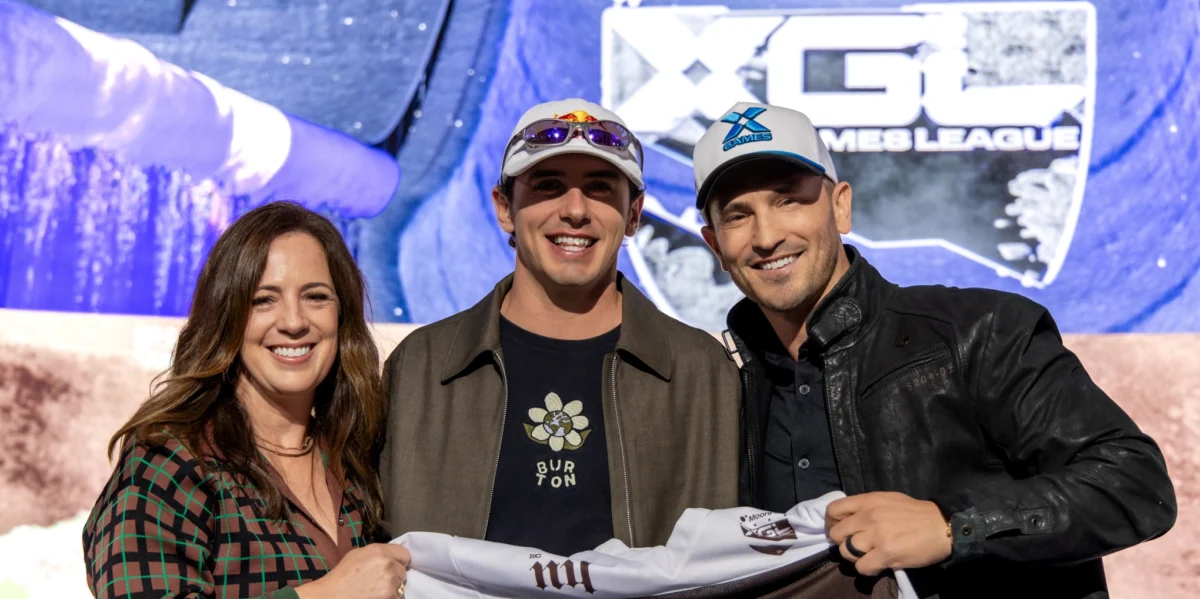
LOS ANGELES (September 16, 2026) — The action sports landscape underwent a seismic shift tonight at Cosm Los Angeles. As the LED dome illuminated the faces of over 500 industry leaders, athletes, and fans, the inaugural MoonPay X Games League (XGL) Winter Draft signaled the end of the "standalone event" era and the dawn of a new, team-based professional circuit.
With 40 of the world’s elite ski and snowboard athletes selected across four global clubs, the foundation has been laid for a high-stakes, season-long championship. From the star power of Eileen Gu to the veteran presence of Mark McMorris, the roster assembly confirms that the X Games is no longer just a collection of podium moments—it is now a championship race that demands consistency, team chemistry, and long-term strategy.
The Birth of the Team Concept: A Chronology of the Draft
The evening was a masterclass in modern sports production, blending the visceral energy of action sports with the high-stakes drama of professional league drafts. Hosted inside the state-of-the-art Cosm, the immersive environment allowed fans to feel the intensity as four General Managers—representing XC Golden State, XC New York, XC Park City, and XC Whistler—navigated five rounds of selection.
The Opening Rounds
The tension was palpable when XC Golden State General Manager Jonny Moseley stepped to the podium. With the first-ever overall pick in XGL history, Moseley selected four-time X Games medalist Eileen Gu. The move was as strategic as it was symbolic, anchoring the Golden State roster with one of the most recognizable and talented figures in modern skiing.
The drama continued as the clubs filled their ranks:
- Pick #2: XC New York, led by GM Dave Sypniewski, wasted no time, drafting snowboarding icon and perennial fan favorite Mark McMorris.
- Pick #3: XC Park City GM Sharalee “Haze” Hazen, leveraging her experience from the Summer league, selected the formidable Yiming Su.
- Pick #4: XC Whistler GM Ryan Stutt rounded out the first round by selecting skier Megan Oldham, establishing a heavy-hitting identity for the Canadian-based club.
By the time the fifth round concluded, 40 athletes from 14 different countries had been claimed. The range of talent was vast, spanning from the 14-year-old phenom Patti Zhou to 32-year-old veterans like McMorris and Scotty James, creating a fascinating blend of raw, youthful progression and seasoned, tactical experience.
The 2027 Road Map: From Aspen to Finland
The draft was merely the prologue to a grueling and exhilarating 2027 Winter Season. For the first time in X Games history, the results of every competition will carry weight toward a cumulative season total, culminating in the crowning of a league champion.
The Competition Calendar
The XGL schedule is designed to test the versatility and endurance of the four clubs:
- The Kickoff (January 29–31, 2027): The season begins at the spiritual home of winter action sports: Buttermilk in Aspen, Colorado.
- The Northern Swing (February 19–21, 2027): The circuit moves to Calgary, Alberta, where the cold, high-performance conditions of the Canadian Rockies will force teams to adapt their strategies.
- The Championship (April 9–11, 2027): The season concludes in Ruka, Finland, where the final points will be tallied to determine the inaugural MoonPay X Games League Winter Champion.
Each club, consisting of five men and five women, will operate under a points-accrual system. This shift from "individual glory" to "club achievement" is expected to change how athletes approach their runs, prioritizing team placement alongside individual progression.
Official Perspectives: The Vision Behind the Shift
The move toward a league-based structure is a calculated gamble by MSP Sports Capital to institutionalize the X Games. During the event, leadership emphasized that this evolution was necessary to move the needle for fans and commercial partners alike.
Jeremy Bloom’s Strategic Vision
"For nearly 30 years, Winter X Games has created iconic individual moments," said Jeremy Bloom, CEO of X Games. "Tonight, we added something entirely new: consequences across a season. We’re taking a brand people have loved for decades and giving fans something they’ve never had before—teams to follow, a season to track, and a championship to fight for."
The Athlete’s Perspective
Eileen Gu, speaking shortly after being drafted first overall, expressed a mixture of professional pride and a desire to see the sport grow through the new structure.
"I’m really excited to make something super magical happen this season," Gu remarked. "I think this league is going to be so big for our industry, for our sport, and my dream of bringing freeskiing to more people will be realized one step at a time with you guys."
Implications for the Industry: Why Now?
The transition to the MoonPay X Games League is not merely a change in format; it is a fundamental shift in the economic and cultural model of action sports.
1. Increased Athlete Compensation
Historically, action sports athletes relied heavily on sponsorship and one-off prize purses. The XGL team-based model introduces a professional league structure that provides stability. By formalizing the athlete-club relationship, the league expands compensation opportunities beyond the podium, allowing for a more sustainable career path for top-tier talent.
2. Deeper Fan Engagement
The "event-to-event" nature of previous X Games iterations often left casual fans with little incentive to follow the sport year-round. The XGL aims to solve this with "season-long storylines." By tracking team standings and regional affiliations (Golden State, New York, Park City, Whistler), the league is betting that fans will gravitate toward club loyalty, mirroring the fandom seen in the NFL, NBA, or Formula 1.
3. A Multi-Platform Broadcast Strategy
The success of the Draft’s viewership—broadcast on the ESPN App, Roku, YouTube, Kick, and Amazon—demonstrates the league’s commitment to digital-first accessibility. By leveraging these platforms, the XGL is meeting a younger demographic where they consume content, ensuring that the "team-based" narrative is delivered in real-time.
Supporting Data: The Composition of the League
The XGL is a massive logistical undertaking. To understand the magnitude of this shift, one must look at the structural requirements:
- Total Clubs: 8 (4 Summer, 4 Winter).
- Roster Size: 10 athletes per club (5 male, 5 female).
- Total Athletes: 40 winter specialists involved in the inaugural draft.
- Global Reach: Representation from 14 countries, highlighting the league’s commitment to international talent.
- Title Partner: MoonPay, whose involvement underscores the high-growth, venture-backed trajectory of the league under MSP Sports Capital.
Conclusion: A New Horizon
As the lights dimmed at Cosm Los Angeles, the sense of finality was replaced by a palpable buzz of anticipation. The 2027 Winter Season is no longer a theoretical concept—it is a live, competitive entity.
For the fans, the stakes have never been higher. For the athletes, the pressure to deliver for their clubs adds a layer of intensity previously unseen in the world of freeskiing and snowboarding. As the industry looks toward the opening gates in Aspen this January, one thing is certain: the X Games has successfully transitioned from a weekend spectacle into a year-round, professional powerhouse. The era of the XGL has officially begun.
For additional information regarding the 2027 competition calendar, broadcast schedules, and fan experiences, visit xgames.com/xgl.