In the high-stakes world of Hollywood, physical transformation is often synonymous with vanity—actors starving themselves to shed weight or bulking up for superhero roles that require little more than a polished physique for the camera. However, for actor Lukas Gage, preparing for his latest venture, the highly anticipated Prison Break reboot, required an entirely different paradigm. There would be no vanity-driven bodybuilding here. Instead, Gage pursued a goal that is arguably more difficult and far more practical: durability.
Gage, who stars as the congressional candidate Jackson in the new series, realized early on that the demands of a high-octane production would shatter any actor who wasn’t physically fortified. With long production days, grueling overnight shoots, and the relentless, sweltering heat of West Virginia summers, Gage needed to be an athlete, not just a performer.
The Core Philosophy: Redefining Fitness for the Screen
For Gage, the objective was clear: become capable of handling the physical load of a character who is constantly running, maneuvering, and operating under the immense pressure of a political campaign. "Jackson is someone who is constantly operating under pressure, so there is a real physicality to the role," Gage explains. "He is running for Congress and constantly trying to keep up with staying fit for the campaign. I wanted to feel athletic and capable. I had a few months to prepare, which gave me enough time to build up my endurance while making sure I could sustain it throughout production."
This shift in focus—moving from aesthetic goals to functional capacity—reflects a growing trend among leading men in Hollywood who prioritize the ability to survive a 14-hour shooting day over the size of their biceps.
A Chronology of Preparation
Gage’s preparation was not an overnight endeavor. It was a calculated, months-long period of conditioning designed to mirror the erratic and exhausting nature of life on set.
Phase 1: Building the Foundation (The Early Months)
In the lead-up to production, Gage focused heavily on aerobic capacity and foundational strength. Understanding that Prison Break would involve scenes requiring bursts of high-intensity movement—sprinting, climbing, and navigating tight spaces—he prioritized energy system development. This phase was about increasing his "redline," or the point at which fatigue begins to degrade his performance.
Phase 2: The Intensive Split (Mid-Production Preparation)
As filming approached, Gage adopted a rigorous five-day-a-week training split. His routine was a masterclass in variety, ensuring he could handle any physical demand the script threw his way:
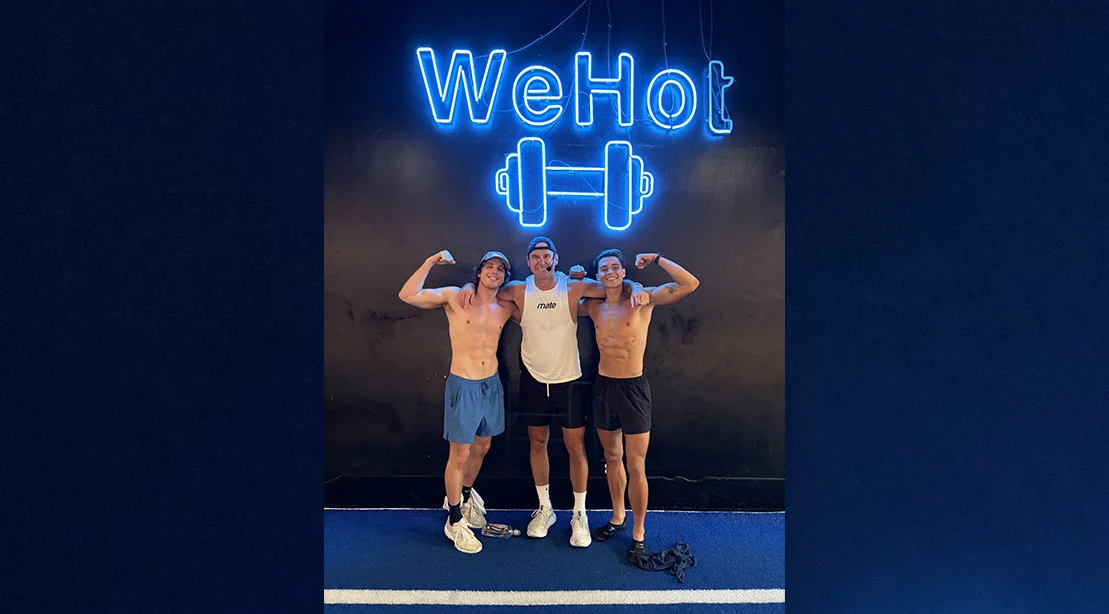
- Training Mate (2 days): Utilizing the Australian-inspired group fitness concept, Gage engaged in HIIT (High-Intensity Interval Training). These sessions were designed to build explosive power and metabolic conditioning.
- Dogpound (2 days): Under the guidance of professional trainers, these sessions focused on functional strength and resistance training, ensuring that his muscles could support his joints through repeated, high-impact movements.
- Active Recovery/Cardio (1 day): A dedicated day for endurance work, alternating between running, swimming, and cycling.
Phase 3: The Maintenance Grind (During Production)
Once the cameras started rolling in West Virginia, the goal shifted from building new muscle to maintaining existing capacity. This required the ability to adapt to a schedule that rarely offered consistency.
Supporting Data: The Science of "Durability"
The "durability" model of training that Gage employs is backed by sports science principles often used by tactical athletes (military, police, and fire rescue). By prioritizing HIIT and mobility, Gage was essentially training for "work capacity."
According to fitness experts, the key to sustained performance in high-stress environments is the ability to recover between bouts of exertion. Gage’s reliance on Training Mate’s circuit-based approach allows for a "constantly varied" stimulus, which prevents the monotony of standard gym routines. His workout circuits incorporate rowing, jumping, and functional movements that mimic the real-world stresses of a set.
However, even the most dedicated athletes face hurdles. Gage famously notes his disdain for burpees. "Burpees still make me feel like I’m insane and going to throw up," he admits, highlighting the reality that effective, functional training is rarely comfortable.
Official Perspectives: The Evolution of a Leading Man
Gage’s approach to fitness has been a journey of evolution. Reflecting on his past roles, he notes that every project demands a different physical language.
- For Road House: The focus was on combat mechanics and learning to fight convincingly.
- For Fargo: He needed to cultivate the specific, technical movement of a golf swing—a skill he jokingly admits is still a work in progress.
- For Voicemails for Isabelle: The role of a chef offered him the freedom to step away from rigid training and enjoy a more relaxed relationship with his diet.
Prison Break stands apart because it requires no specific "skill" but rather a high baseline of total-body readiness. Gage’s maturity in this process is evident in how he approaches his body’s signals. "There’s a difference between being uncomfortable and being genuinely exhausted or at risk of injury," he says. "Learning to recognize that difference has been really important."
The 20-Minute Consistency Rule
One of the most valuable takeaways from Gage’s routine is his "20-Minute Consistency Rule." In an industry characterized by uncertainty, Gage has realized that perfection is the enemy of progress. When call times run long or overnight shoots destroy his sleep schedule, he doesn’t throw his training out the window.
"Some days that means a full workout, and other days it means 20 focused minutes and calling it a win. Consistency matters more than perfection," he says. On days where he cannot hit the gym, he improvises—focusing on mobility exercises in his trailer or prioritizing his step count. This psychological shift allows him to maintain a sense of control in an environment that is otherwise chaotic.
Recovery and Nutrition: Fueling the Machine
Gage treats his nutrition and recovery with the same seriousness as his training. He emphasizes that recovery is where the actual growth happens. His "recovery stack" includes:
- Sleep: The absolute priority for cognitive and physical recovery.
- Hydration: Essential for maintaining performance in the summer heat.
- Mobility Work: Keeping joints loose to prevent the common injuries associated with repeated, intense movement.
- Strategic Nutrition: While he has largely cut out processed foods, he maintains a balanced, sustainable approach. His "cheat" meal—a weekly visit to In-N-Out—serves as a reminder that fitness is a lifestyle, not a prison sentence.
Implications: The New Standard for Actors
The implications of Gage’s approach are significant. He is moving the needle in Hollywood, signaling that the most impressive "transformation" an actor can undergo is not necessarily the one that looks best on a magazine cover, but the one that allows them to perform at a high level under immense external pressure.
"Being fit means so much more than just how you look," Gage concludes. "I think it’s more about feeling strong, capable, and healthy enough to do the things you love for the long haul."
As the Prison Break reboot nears, viewers will see the results of this work not just in the lines of Gage’s frame, but in the energy, intensity, and sustained focus he brings to the screen. For those looking to adopt his methods, the message is simple: find your version of consistency, prioritize the "boring" work of recovery, and remember that when it comes to long-term health and career success, intensity is a tool, but consistency is the foundation. Gage has proven that even in the most unpredictable of careers, you can build a life—and a body—that is built to last.