At just nine years old, standing on a miniature windsurfing board at a summer camp, Sofia Hämäläinen first experienced the intoxicating intersection of wind, water, and pure, unadulterated freedom. With a modest three-square-meter sail and a beginner’s board, she was far from proficient, yet the sensation of gliding across the surface of the sea ignited a lifelong passion. Today, that young girl is a rising star in the world of competitive windsurfing, representing the next generation of Finnish sailing talent with eyes firmly fixed on the Olympic stage.
The Evolution of a Discipline: From Hobby to High-Speed Science
Windsurfing has undergone a radical transformation in recent years, moving away from traditional displacement hulls to the high-tech, high-speed world of hydrofoiling. Hämäläinen’s transition into the iQFoil class in 2022 marked a professional turning point. The iQFoil, now the official Olympic windsurfing equipment, allows athletes to literally fly above the water, reaching speeds exceeding 50 kilometers per hour.
For Hämäläinen, who grew up in Helsinki and spent much of her life in Tallinn, the sea is not just a training ground; it is a complex, living entity. "Water is an element I know inside and out," she explains. "It changes from place to place—sometimes fast, sometimes slow, and the feel of the foil varies. You must be on the water constantly, or the connection to the sea begins to fade."
Her dedication has yielded tangible results. In 2024, Hämäläinen secured a bronze medal at the Youth World Championships, and she has been steadily climbing the ranks in the senior circuit, including a 25th-place finish at the European Championships.
Chronology of a Career: Finding the Path to the Top
Hämäläinen’s path to elite sport was not linear. Before finding her calling on the water, she was a versatile athlete, participating in figure skating, competitive acrobatics, and football. However, the unique challenges of windsurfing—a sport that demands both extreme physical stamina and high-level tactical intelligence—eventually won her over.
- Early Years: Initial exposure to sailing at summer camps; transition from multiple sports to a primary focus on water-based competition.
- 2022: A critical pivot to the iQFoil class to align with Olympic qualification standards.
- 2024: Achieving international recognition with a Youth World Championship bronze medal.
- Present Day: Integrating into high-performance training environments abroad to bridge the gap between Finnish resources and the global elite.
Because Finland lacks a deep pool of world-class peers in the iQFoil class, Hämäläinen has taken the initiative to seek out international training squads. "I left early on to train with those better than me," she notes. "At the world level, the equipment is better, the race strategies are sharper, and the athletes have more experience handling variable conditions."
The Economic and Technical Reality of Elite Windsurfing
Success in the modern Olympic era is a brutal, high-stakes game of marginal gains. The cost of competition is astronomical, with Hämäläinen’s annual budget hovering around 60,000 euros. This funding is allocated to equipment, coaching, and the relentless travel schedule required to chase the best wind conditions and competition circuits.
The Anatomy of a Winning Rig
The equipment itself is a testament to the sport’s technical complexity. A professional-grade board costs several thousand euros, and a single high-performance sail—which may only be used for a few major regattas before being retired—costs between 1,000 and 1,500 euros. Athletes often require two or three such sails annually to remain competitive.
The most critical component, however, is the hydrofoil. "The foil carries all the weight, so its structure and stiffness are decisive," Hämäläinen explains. "Each piece of equipment is essentially a custom item, even if they are manufactured identically. A top-tier sailor can feel the difference between a good and a bad piece of kit. To get the best, you ideally need to be at the factory testing gear, but that is a privilege reserved for the very best in the world."
For most, it is a game of probability: ordering high-end gear and hoping a "prime" unit arrives. "Finding the right front wing for the foil is a challenge. You cannot reach the top 20 in the world if you give away even a fraction of performance in your equipment."
Next Generation: A Catalyst for Finnish Success
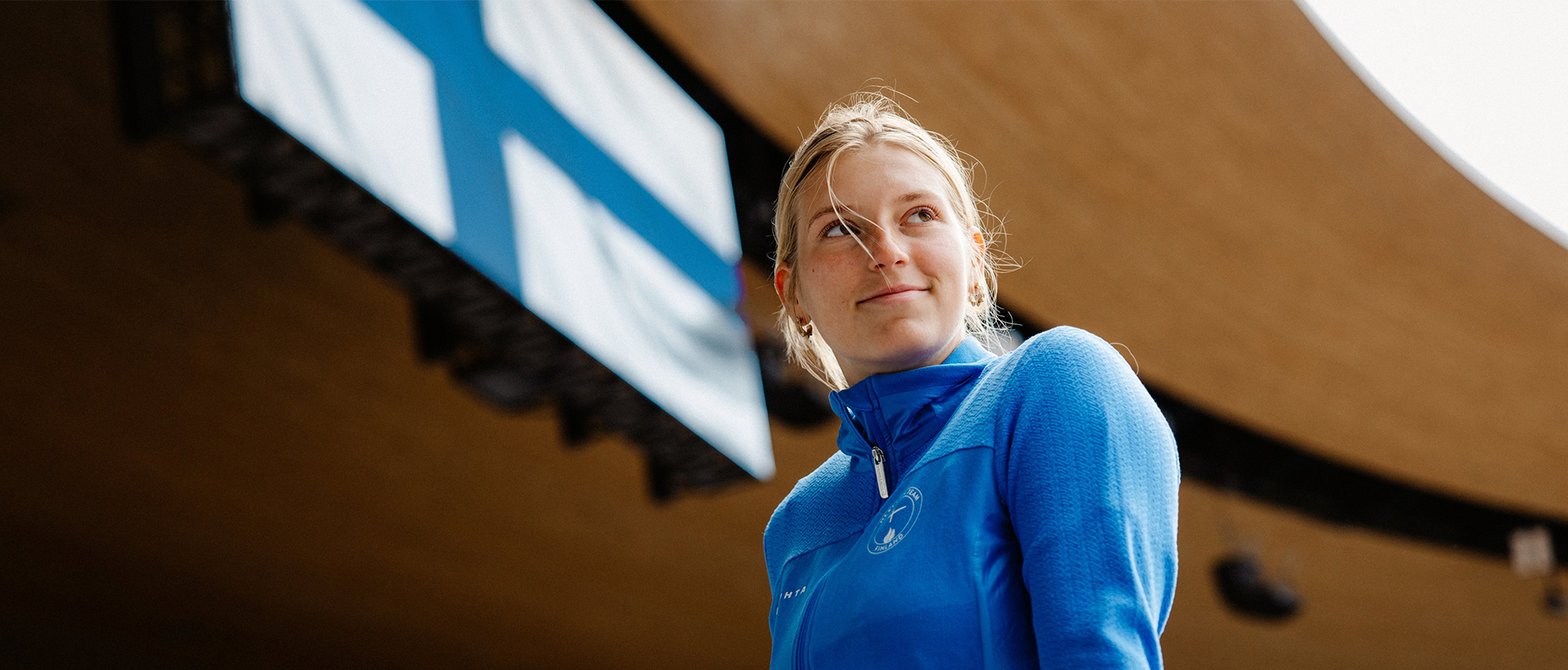
Recognizing the need for a more structured pathway for young athletes, the Finnish Olympic Committee launched the Next Generation Team Finland program. Aimed at athletes aged 15–22, the program identifies those with clear podium potential and provides them with a customized support package worth over 10,000 euros, covering financial aid, expert coaching, and medical support.
Hämäläinen is one of the 21 inaugural members of this initiative. "Collaboration with the federation and the Next Generation program is crucial," she says. "I am extremely grateful for the support that allows me to focus on the training and the racing rather than just the survival of my career."
The "Math and Muscle" Paradox
High-level windsurfing requires a bizarre, paradoxical skill set: the analytical mind of a mathematician combined with the explosive power of a weightlifter. During a race, the start is the most critical juncture.
"In a race, there might be 60 boards searching for the best route," Hämäläinen describes. "At 50 km/h, with cross-traffic, you have to decide in a split second whether to dodge or hold your ground. You have to be aggressive, yet calculated. If you miss the start, the race is essentially over."

Beyond the tactical start, the race turns into a physical war of attrition. "We perform 20 to 30-second bursts of intense ‘pumping,’ where the entire body is working at maximum capacity. You need a rock-solid core and incredible aerobic conditioning to maintain that over a five-day regatta."
Implications and Future Outlook
The road to the 2028 and 2032 Olympics is paved with both internal and external challenges. Hämäläinen speaks candidly about the environmental reality of the sport—colliding with plastic bags or marine debris, which can instantly ruin a race. "It’s frustrating when external factors outside your control dictate your success, like that time a dead fish got stuck on my foil during the European Championships. But you have to move on. Irritation doesn’t help the next start."
Her ultimate goal transcends personal glory. Following the retirement of Finnish windsurfing legend Tuuli Petäjä-Sirén, the sport saw a long period of quiet in Finland. Hämäläinen is now working to rebuild that legacy.
"My goal isn’t just to make it to the Olympics, but to inspire a new generation," she says. "I want to show that there is a path here, even if you have to pave it yourself. I want to be the reason another young girl at a summer camp looks at a windsurfing board and decides to chase the horizon."
As Hämäläinen continues to balance the grueling demands of high-performance training with the necessity of maintaining a life outside of sports, her perspective remains grounded. She credits her mother as her greatest support system, providing the perspective needed to navigate the highs and lows of professional sport. Ultimately, for Sofia Hämäläinen, windsurfing is more than a career; it is a pursuit of flow, a pursuit of speed, and a testament to the enduring power of a nine-year-old’s dream.