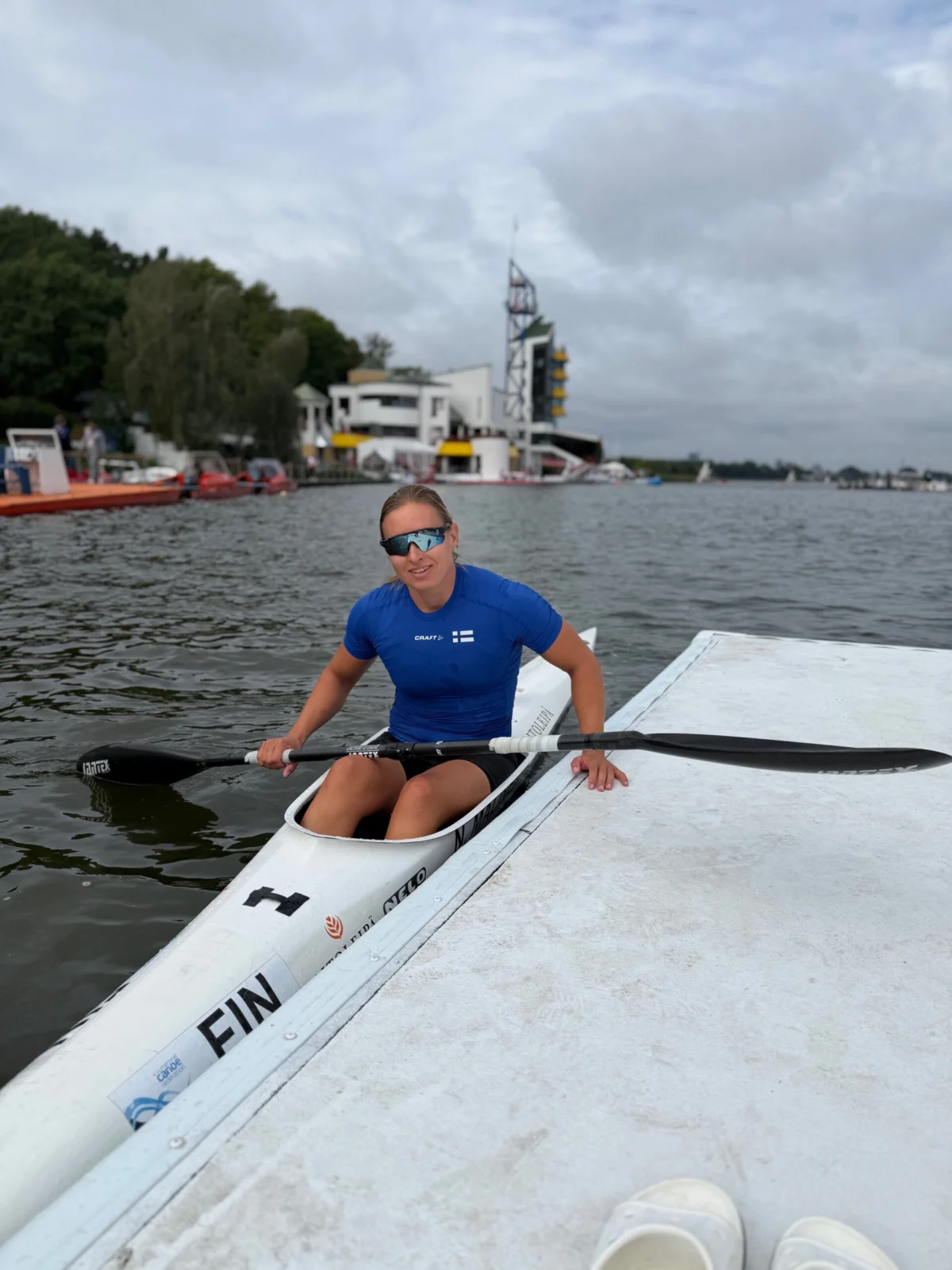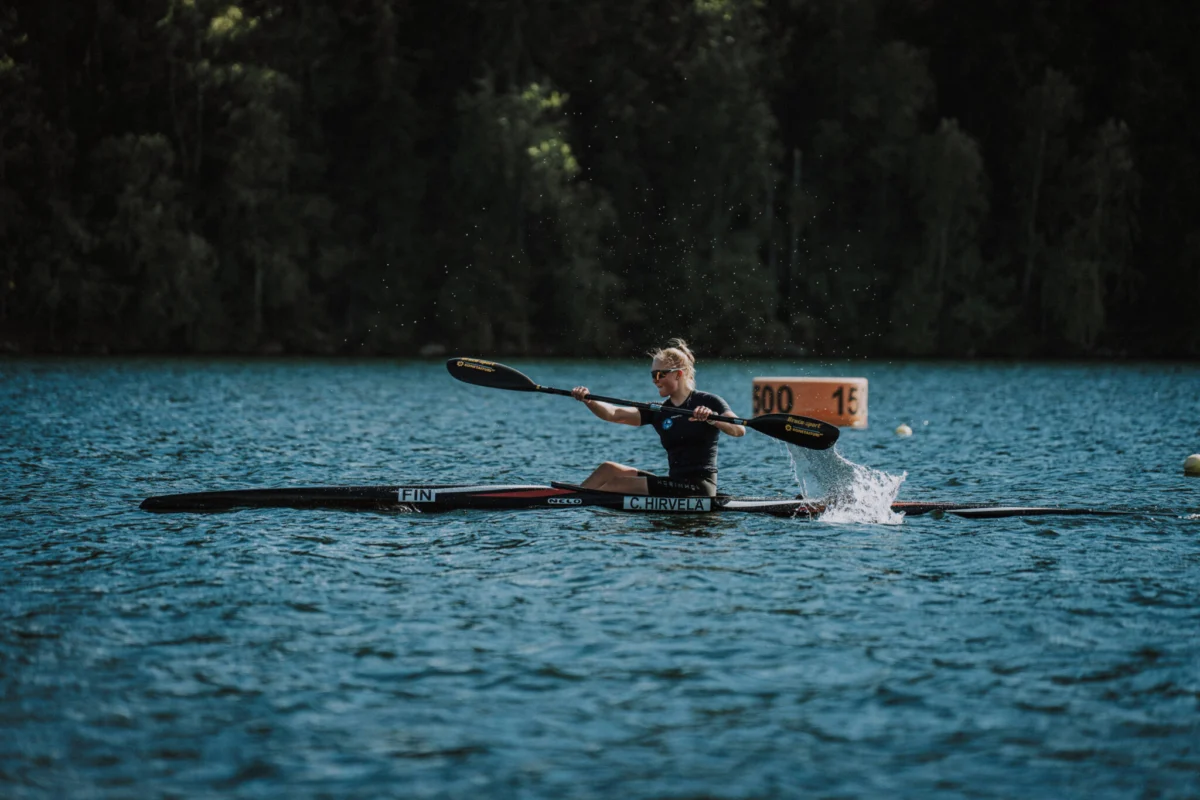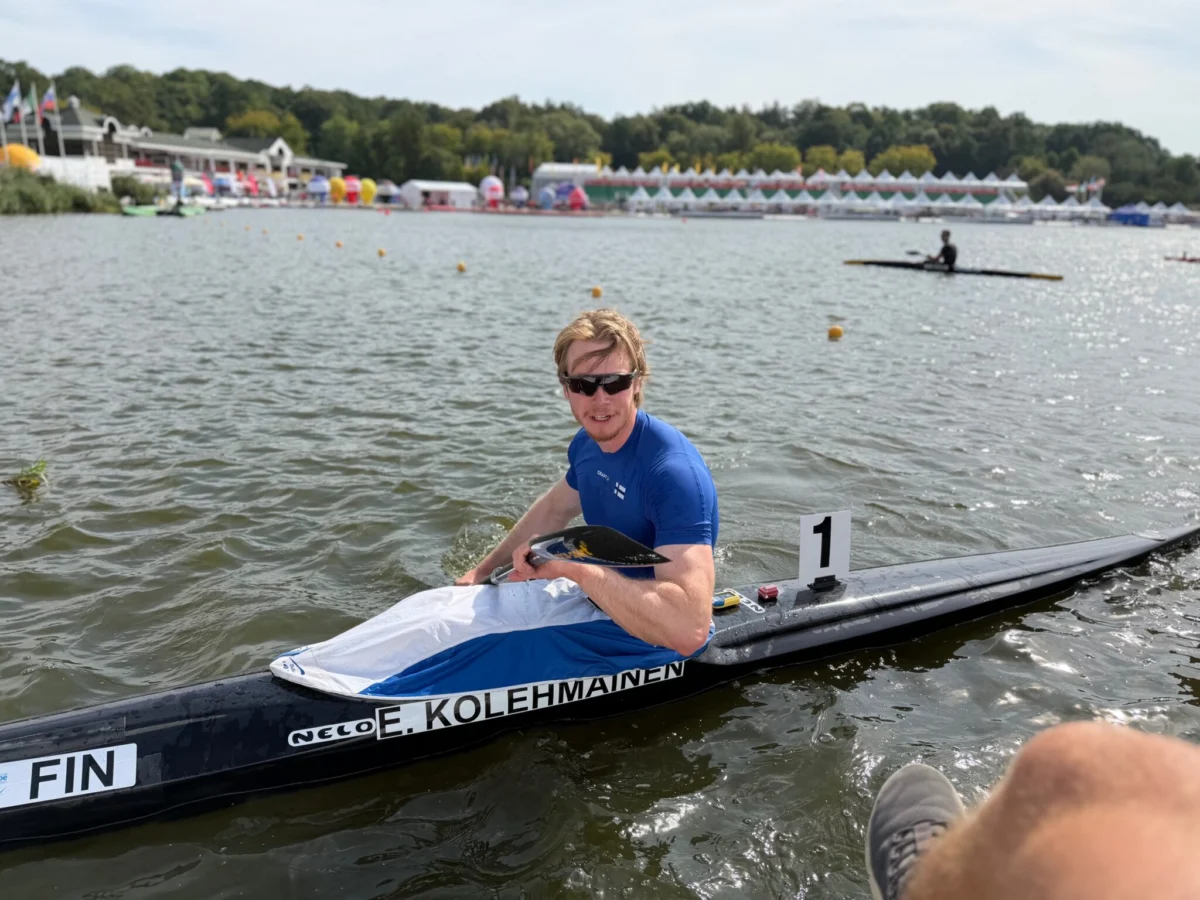
Poznan, Poland – In a remarkable display of grit and tactical prowess, Finnish paddler Eetu Kolehmainen has achieved a significant milestone for his nation, securing a coveted spot in the B-final of the Men’s K1 1000m event at the ongoing Canoe Sprint World Championships in Poznan. His outstanding performance on the third day of competition, Friday, marks Finland’s return to the top echelons of this Olympic discipline after a hiatus of several years. Adding to the Finnish contingent’s success, Netta Malinen also demonstrated strong form, advancing to the C-final in the Women’s K1 500m.
The Malta Arena in Poznan provided a formidable challenge for all competitors, with a relentless 8m/s headwind sweeping across the course. It was against these testing conditions that Kolehmainen, in particular, showcased his burgeoning talent, executing a race plan that was described as "tactically excellent" by his team.
Main Facts: A Resurgent Performance on the International Stage
The third day of the Canoe Sprint World Championships witnessed moments of high drama and national pride for Finland. Eetu Kolehmainen, a rising star in Finnish canoeing, delivered a career-defining performance in the Men’s K1 1000m heats. Battling a fierce headwind, Kolehmainen demonstrated exceptional endurance and strategic acumen, culminating in a powerful surge in the final quarter of his race. His sixth-place finish in a fiercely contested heat was sufficient to earn him a spot in Saturday’s B-final, an achievement that reverberates with historical significance for Finnish canoe sprint. This marks the first time in numerous years that a Finnish male paddler has reached the B-final in the individual K1 1000m at a World Championship, and it is Kolehmainen’s inaugural B-final appearance at this elite level.
Concurrently, Netta Malinen also ensured her continued participation in the championships. Competing in the Women’s K1 500m heats on Friday morning, Malinen navigated her way to a ninth-place finish in her respective heat, thereby securing her progression to the C-final. Both athletes’ advancements underscore a positive trajectory for Finnish canoeing on the global stage, showcasing their ability to compete and perform under pressure against the world’s best. The challenging weather conditions at Poznan’s Malta Arena, characterized by a persistent and strong headwind, added an extra layer of difficulty to their already demanding races, making their achievements even more commendable.
Chronology of the Day: Battling the Elements in Poznan
Friday, the third day of the Canoe Sprint World Championships, unfolded under the watchful gaze of a persistent and challenging adversary: a powerful headwind. The Malta Arena in Poznan, known for its pristine waters and world-class facilities, transformed into a crucible of endurance and tactical cunning as athletes wrestled not only with their competitors but also with nature’s unyielding force. A sustained headwind of 8m/s (approximately 18 miles per hour) whipped across the course, turning every stroke into a monumental effort and fundamentally altering race strategies.
Morning Heats: Malinen’s Strategic Push
The day commenced with the women’s events, and Finland’s Netta Malinen was among the first to face the challenging conditions in her K1 500m heat. The 500m distance, while shorter than the Olympic 1000m, demands an explosive start combined with sustained power and efficient technique. The headwind, however, complicated this formula, forcing paddlers to conserve energy more judiciously and adjust their stroke rates to maintain momentum without burning out too early.
Malinen, known for her consistent effort and disciplined approach, launched into her heat with determination. From the outset, the strong gusts made it difficult to establish a consistent rhythm. The water was choppy, and the spray from the paddlers’ blades was often blown back into their faces, further obscuring visibility. Despite these adversities, Malinen maintained her composure, focusing on her own race plan. She fought hard against a field of highly experienced international competitors, many of whom were seasoned medal contenders. By the final 100 meters, as the lactic acid built and every muscle screamed, Malinen dug deep, pushing her craft towards the finish line. Her ninth-place finish in the heat was a testament to her perseverance and strategic pacing, earning her a well-deserved spot in the C-final. While not an A or B final, securing a C-final berth at a World Championship is a significant achievement, placing her firmly within the top echelons of female sprint paddlers globally and providing another opportunity to compete at the highest level.
Afternoon Showdown: Kolehmainen’s Masterclass in Adversity
The afternoon session brought even more intense racing, and it was Eetu Kolehmainen’s turn to step into the spotlight in the Men’s K1 1000m heats. The 1000m distance is the ultimate test of a paddler’s aerobic capacity, muscular endurance, and mental fortitude. In a normal race, it’s a relentless grind, but with an 8m/s headwind, it became an epic battle of attrition. The wind acted like a constant brake, requiring significantly more power to maintain speed and making it incredibly taxing to bridge gaps or launch powerful sprints.
Kolehmainen lined up against a formidable field, including several national champions and Olympic hopefuls. As the starter’s gun fired, the roar of the crowd was quickly swallowed by the wind. Eetu, however, seemed unfazed. His initial strokes were strong and measured, avoiding the common pitfall of over-exerting in the early stages against the wind. His coach, Jeremy Hakala, had undoubtedly prepared him for such conditions, emphasizing the critical importance of a smart, adaptive race strategy.
For the first 750 meters, Kolehmainen maintained a strong, consistent pace, positioning himself within striking distance of the leaders, but without pushing into the red zone too early. He held his ground, meticulously managing his energy reserves, knowing that the real race would begin when others started to falter under the cumulative strain of the headwind.
Then came the defining moment: the final 250 meters. As many of his competitors, exhausted from fighting the relentless wind, began to fade, Kolehmainen unleashed a breathtaking surge. Drawing upon deep reserves of power and a finely tuned sense of timing, he launched into a furious sprint. His paddle strokes became more forceful, his boat cutting through the choppy water with renewed vigor. Spectators and commentators watched in awe as he started to gain on multiple paddlers ahead of him, closing the gaps with every powerful stroke. In a dramatic display of raw determination and tactical brilliance, Kolehmainen powered past several boats, crossing the finish line in an incredible sixth position.
The immediate aftermath was a mix of exhaustion and elation. The official announcement confirming his qualification for the K1 1000m B-final sent a ripple of excitement through the Finnish camp. It was not just a personal best for Kolehmainen; it was a beacon of renewed hope for Finnish sprint canoeing, marking a return to a level of international competitiveness not seen in this specific event for many years. His performance was a masterclass in how to race strategically and effectively in adverse conditions, turning a challenge into an opportunity.
Supporting Data: The Road to International Acclaim
Kolehmainen’s and Malinen’s performances are not just individual triumphs; they are indicative of deeper currents within Finnish canoeing, highlighting the dedication required to compete at the pinnacle of a demanding global sport.
The K1 1000m: An Olympic Discipline of Endurance and Strategy
The Men’s K1 1000m is one of the marquee events in canoe sprint, holding a prestigious spot as an Olympic discipline. It demands a unique blend of explosive power, sustained aerobic capacity, and refined technique. Paddlers must be able to maintain a high stroke rate and immense power output for approximately three and a half minutes, all while navigating their sleek, unstable kayaks. Tactical nuances are paramount, especially in variable conditions. A strong headwind, like the 8m/s encountered in Poznan, transforms the race. It not only increases the physical load dramatically but also forces a recalculation of energy distribution. Paddlers might opt for a slightly lower, more efficient stroke rate, saving their peak power for a decisive late surge, as Kolehmainen masterfully demonstrated.
For Finland, a nation more traditionally known for winter sports, achieving success in flatwater sprint canoeing has always been a testament to focused effort. The "many years" absence from the K1 1000m B-final underscores the difficulty of consistently producing athletes capable of competing at this level. A B-final spot means an athlete is ranked among the top 18 in the world for that particular event, a significant benchmark that validates years of training and sacrifice.
Athlete Profiles: Rising Stars of Finnish Canoeing
Eetu Kolehmainen: A Journey of Persistence
Eetu Kolehmainen’s journey to the B-final is a narrative of unwavering dedication. Hailing from a canoeing club deeply rooted in Finnish paddling tradition, Kolehmainen has steadily climbed the ranks. His training regimen is rigorous, involving countless hours on the water, strength and conditioning in the gym, and meticulous video analysis of his technique. Prior to these World Championships, Kolehmainen had shown glimpses of his potential at various European Cup events and junior championships, but this B-final qualification marks his true arrival on the senior international stage. His calm demeanor off the water belies a fierce competitive spirit that ignites during a race, particularly evident in his ability to execute high-pressure finishes. His tactical intelligence, honed through years of experience and guidance from his coaches, is now paying dividends. This breakthrough performance suggests Kolehmainen is not just a participant but a genuine contender in future international competitions, with eyes firmly set on Olympic qualification cycles.
Netta Malinen: Emerging Talent and Consistent Effort
Netta Malinen represents the vibrant future of Finnish women’s canoeing. While perhaps less experienced at the very highest senior level than some of her counterparts, Malinen has consistently shown remarkable progress. Her dedication to training and her disciplined approach to competition have allowed her to steadily improve her times and placings. The K1 500m demands both speed and stamina, and Malinen has been working tirelessly to develop both aspects of her paddling. Her qualification for the C-final demonstrates her ability to perform under pressure and maintain a high standard against a highly competitive international field. Malinen’s consistent presence in these higher-level finals is crucial for her development and serves as an important benchmark for other aspiring female paddlers in Finland. She embodies the spirit of perseverance, continually striving to close the gap on the world’s elite.
The Malta Arena: A World-Class Venue
The Malta Arena in Poznan, Poland, is renowned as one of Europe’s premier venues for international canoe sprint and rowing competitions. Located on Lake Malta, the course boasts state-of-the-art facilities, including multiple lanes, grandstands for spectators, and sophisticated timing systems. Poland has a rich history in canoe sprint, and Poznan has hosted numerous World Cups and World Championships, making it a familiar and respected ground for athletes. However, even the most advanced venues cannot control the weather. The open nature of Lake Malta means it is susceptible to wind, and Friday’s 8m/s headwind was a stark reminder of how environmental factors can dramatically influence race dynamics, favoring those who are not only physically strong but also tactically astute and mentally resilient.
Understanding the Finals Structure
In competitive canoe sprint, the finals structure is designed to rank athletes efficiently.
- A-final: This is the pinnacle, featuring the top 9 athletes (or boats) who compete for medals and the overall world title.
- B-final: Comprising athletes ranked 10th to 18th, the B-final is highly competitive, as paddlers vie for higher world rankings and often use it as a benchmark for Olympic qualification cycles. For many athletes, reaching the B-final at a World Championship is a significant career achievement, demonstrating their presence among the global elite.
- C-final: This final typically includes athletes ranked 19th to 27th. It provides an important opportunity for athletes who just missed the B-final to gain more international racing experience and improve their overall ranking.
Eetu Kolehmainen’s advancement to the B-final means he is officially among the top 18 K1 1000m paddlers in the world, a truly outstanding accomplishment. Netta Malinen’s C-final berth places her firmly within the top 27 in her event, a strong indicator of her emerging potential.
Official Responses: Voices from the Finnish Camp
The Finnish delegation in Poznan is undoubtedly buoyed by the strong performances, especially Kolehmainen’s breakthrough. The atmosphere in the team camp reflects a blend of pride, relief, and focused anticipation for the upcoming finals.
Coach Jeremy Hakala on Kolehmainen’s Breakthrough
Jeremy Hakala, the team coach and contact person for further information, shared his immense satisfaction with Kolehmainen’s performance. "Eetu’s race was nothing short of brilliant," Hakala stated with palpable pride. "We knew the conditions would be tough, and we had discussed a strategy that would allow him to conserve energy and make a late push. To execute it so perfectly, against such strong competition and that brutal headwind, speaks volumes about his tactical intelligence and his sheer determination. He didn’t just paddle; he raced with his head, his heart, and every ounce of his strength."
Hakala emphasized the historical significance of the achievement. "It’s been too long since Finland had an individual in the K1 1000m B-final at a World Championships. This is a huge moment for Eetu personally, and for Finnish canoeing as a whole. It proves that our programs are working, and that with dedication, we can compete at the highest level. We are incredibly proud of him." Looking ahead to Saturday’s B-final, Hakala added, "The B-final will be incredibly competitive, featuring athletes all hungry for those top-18 spots. Eetu will go out there, stick to his race plan, and give it everything he has. The goal is to finish as high as possible and gain invaluable experience."
Malinen’s Focus on the C-Final
Regarding Netta Malinen’s C-final qualification, Hakala expressed similar optimism. "Netta also had a very challenging heat," he explained. "The K1 500m in a headwind is an absolute sprint, and she maintained her composure and fought hard right to the end. Making the C-final at this level is a testament to her progress and consistency. For tomorrow’s C-final, the aim is to deliver her best performance of the championship, learn from the experience, and push for a strong finish. Every race at this level is a crucial learning opportunity."
Looking Ahead: Team Morale and Future Prospects
The general mood within the Finnish team is one of cautious optimism. Performances like Kolehmainen’s and Malinen’s are significant morale boosters, validating the hard work of the entire support staff, from coaches to physiotherapists. "These achievements are not just about the athletes; they’re about the entire team," a team official commented. "It fosters a positive environment and shows our younger paddlers what’s possible. We are building something special here, and these results are important steps on that journey." The team is now fully focused on Saturday’s races, ensuring both athletes are rested, fueled, and mentally prepared for their respective challenges.
Implications: A New Chapter for Finnish Canoe Sprint
The success of Eetu Kolehmainen and Netta Malinen at the World Championships carries profound implications, not just for their individual careers but for the broader landscape of Finnish canoe sprint.
Elevating Finnish Canoeing on the Global Stage
Kolehmainen’s B-final qualification, especially in an Olympic distance, is a powerful statement. It signals Finland’s re-emergence as a competitive force in international flatwater canoeing. For a country that might not be traditionally associated with dominance in this sport, such performances are crucial for raising national pride and attracting attention. This increased visibility can lead to greater recognition from sports authorities, potentially translating into enhanced funding, improved training facilities, and more robust development programs for aspiring paddlers. It places Finland back on the map in a significant way, demonstrating that with strategic investment and dedicated athletes, they can contend with larger, more established canoeing nations.
Olympic Aspirations and Beyond
The B-final is not merely a ranking; it’s a critical stepping stone towards Olympic qualification. While direct qualification for the Paris 2024 Olympics might be challenging from this position, Kolehmainen’s performance establishes him as a legitimate contender for future Olympic cycles. It provides invaluable experience of racing at the highest level, under immense pressure, and against the world’s best. This psychological boost and the practical experience gained will be instrumental in fine-tuning his preparation for subsequent qualification events. For both Kolehmainen and Malinen, these championships are crucial components of their long-term Olympic trajectories, offering insights into their strengths and areas for further development.
Inspiring the Next Generation
Perhaps one of the most significant long-term implications is the inspiration these athletes provide to younger generations of Finnish paddlers. When junior athletes see their national heroes competing and achieving success on the world stage, it ignites their own aspirations. It shows them that with hard work and dedication, reaching the highest levels of international sport is an attainable dream. This ripple effect can lead to increased participation in canoeing clubs, a larger talent pool, and ultimately, a stronger foundation for the future of Finnish canoe sprint. Kolehmainen and Malinen are now role models, demonstrating that success is possible even when facing formidable challenges, be they tough competition or adverse weather. Their achievements underscore the notion that Finland, despite its size, can produce world-class athletes in diverse sporting disciplines.
Upcoming Action: A Crucial Saturday Ahead
The excitement continues on Saturday, August 29th, with a packed schedule for both Finnish athletes. The performances from Friday have set the stage for crucial races, where both Kolehmainen and Malinen will aim to capitalize on their momentum.
Saturday, August 29th Schedule for Finnish Athletes (all times local Poznan):
- 10:30 K1 200m Heat 1, Lane 8: Netta Malinen
- This is another chance for Malinen to test her raw speed in the shortest sprint distance. The top 3 advance directly to the A-final, 4-6 to the B-final.
- 11:17 K1 500m Heat 3, Lane 7: Eetu Kolehmainen
- Kolehmainen enters the fray in another Olympic distance. Top 3 to A-final, 4-6 to B-final, 7-9 to C-final.
- 15:08 K1 500m C-final, Lane 1: Netta Malinen
- Netta will compete for final rankings in her primary event, aiming for the highest possible finish within the 19th-27th range.
- 15:47 K1 1000m B-final, Lane 9: Eetu Kolehmainen
- This is the culmination of Kolehmainen’s historic run. He will race for positions 10-18, a critical race for world ranking points and prestige.
The stakes are high, and the Finnish team is ready for the challenges that Saturday will bring. Every stroke will count as they continue to make their mark on the international stage.
How to Follow the Championships
Fans eager to follow the Finnish paddlers and the rest of the world’s elite can do so through the official channels:
- Livestream: Catch all the action live on the official Planet Canoe YouTube channel: https://www.youtube.com/@PlanetCanoe
- Start Lists & Results: For real-time updates on race schedules and results, visit the official competition website: https://wc26.domtel-sport.pl/
For further information or media inquiries, please contact:
Jeremy Hakala
+358 44 246 4030
[email protected]