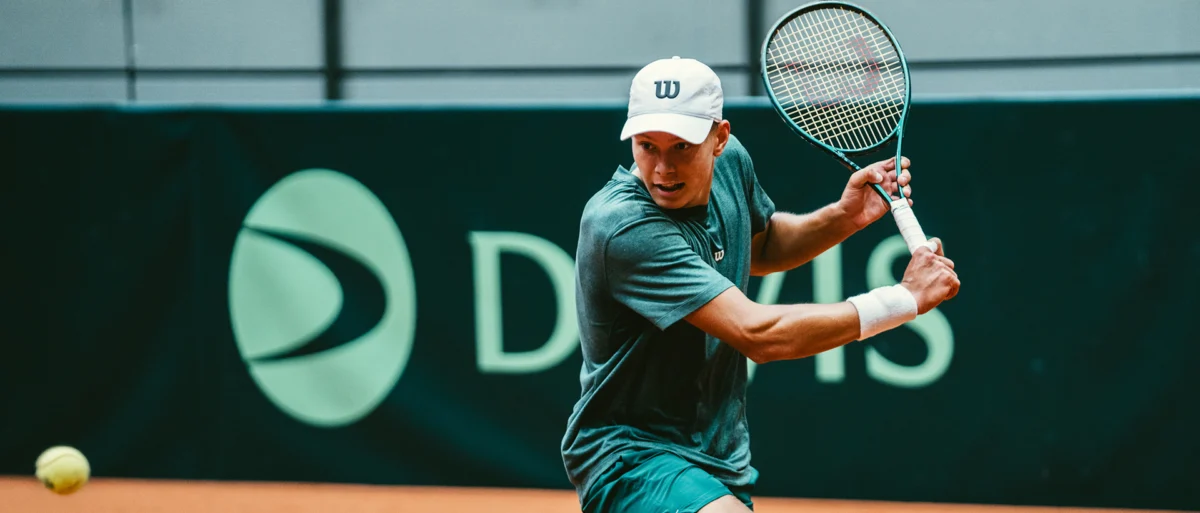
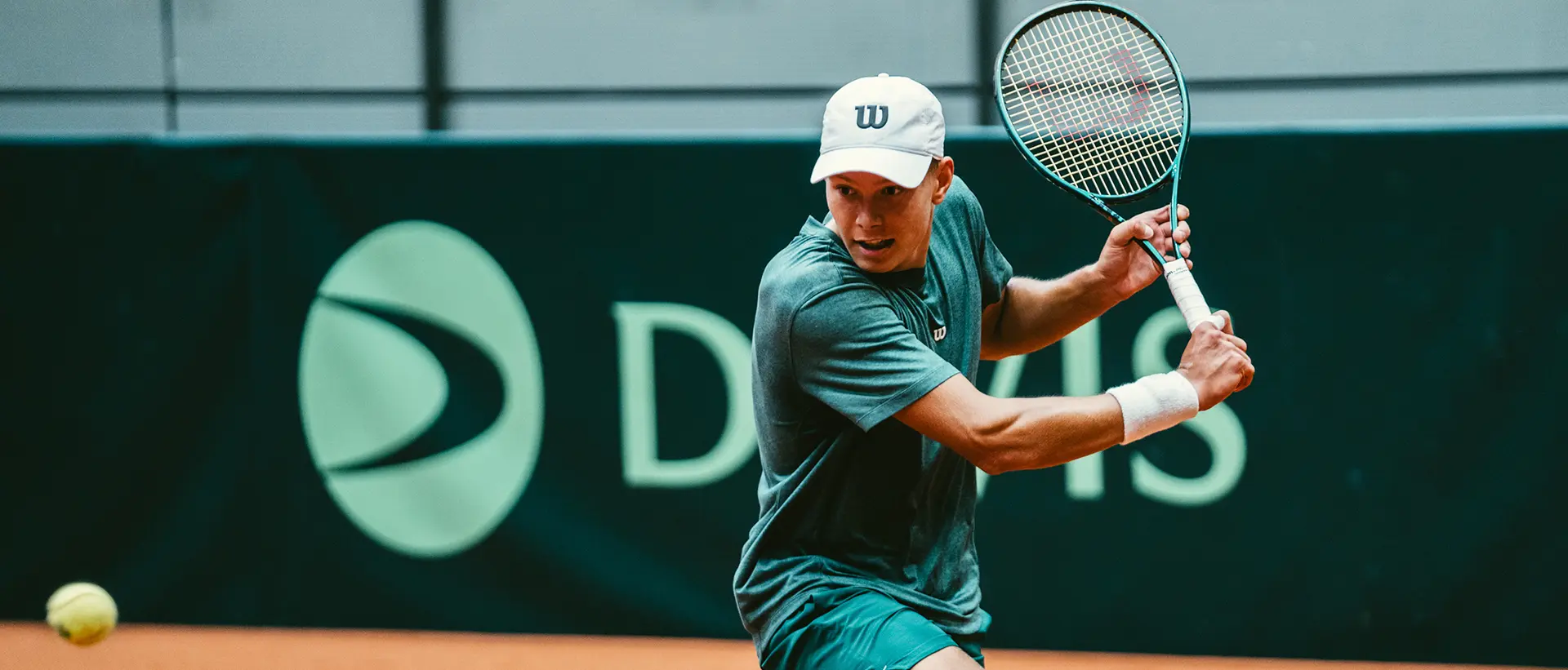
The journey from a hesitant seven-year-old on a local court in Porvoo to a celebrated Grand Slam champion is rarely a straight line. For 18-year-old tennis prodigy Oskari Paldanius, that path has been defined by a transformation of mindset, an unwavering work ethic, and a deliberate move toward the professional ranks. Recently selected for the Finnish Olympic Committee’s prestigious Next Generation Team Finland program, Paldanius stands at the threshold of a career that promises to elevate Finnish tennis to new international heights.
Having concluded his junior career with spectacular victories at the French Open and the hallowed grass courts of Wimbledon, Paldanius has transitioned from a promising talent to a household name in the sport. Yet, as he prepares to navigate the grueling landscape of the professional circuit, he remains grounded, reflecting on a childhood where tennis was merely one of many hobbies, including football, basketball, and gymnastics.
The Genesis: More Than Just a Game
Looking back at his early introduction to the sport, Paldanius admits that the connection was not instantaneous. "I didn’t like my first tennis experience at all," he recalls. Introduced to the racket at age three while watching his parents play, the sport only truly took hold years later when it became a social conduit.
"The joy came from playing with friends," Paldanius explains. "It was about the thrill of the chase—I loved running after the ball. As I began to experience more positive emotions both in practice and in competition, I became hooked."
This internal shift from obligation to passion is a common thread among elite athletes, but for Paldanius, it provided the emotional foundation necessary to endure the sacrifices required for a professional career. By the age of 13, he was already distinguishing himself from his peers, forming a core group of training partners—Linus Lagerbohm, Felix Alopaeus, and Otso Martikainen—who pushed each other to new levels.
Chronology of a Champion: A Rapid Ascent
The progression of Oskari Paldanius has been marked by distinct, high-impact milestones that signaled his arrival on the world stage.
Early Foundations (2018–2021)
At 13, Paldanius had his first taste of international intensity at a tournament in Pajulahden. Despite the domestic setting, the environment—English being the lingua franca and facing unfamiliar opponents—provided a crucial reality check. By 2022, at age 15, he ventured abroad for an ITF U18 tournament in Tartu, Estonia. A clean sweep—five matches, five wins—proved that his game was ready for international scrutiny.
The Breakthrough and the Dip (2023–2024)
The year 2023 served as a coming-out party. Paldanius secured five singles and three doubles ITF titles, vaulting into the junior Top 100. However, the sport is unforgiving. The early months of 2024 brought a dip in form and a subsequent drop in ranking.
"It was a challenging period," he admits. "But it taught me resilience." His resurgence in mid-2024 was nothing short of cinematic: qualifying for a high-level ITF tournament and winning the entire event, followed immediately by another final appearance. This momentum propelled him to the ultimate proving ground: the junior Grand Slams.
The Grand Slam Glory (2025)
The 2025 season began with a semifinal appearance at the Australian Open, a performance that cemented his belief in his own potential. "I was playing well on the other side of the world, in a place I had always dreamed of visiting," says Paldanius. "Everything clicked, and the confidence carried over into the French Open and Wimbledon, where we took the titles."
Support Systems: The Next Generation Team Finland
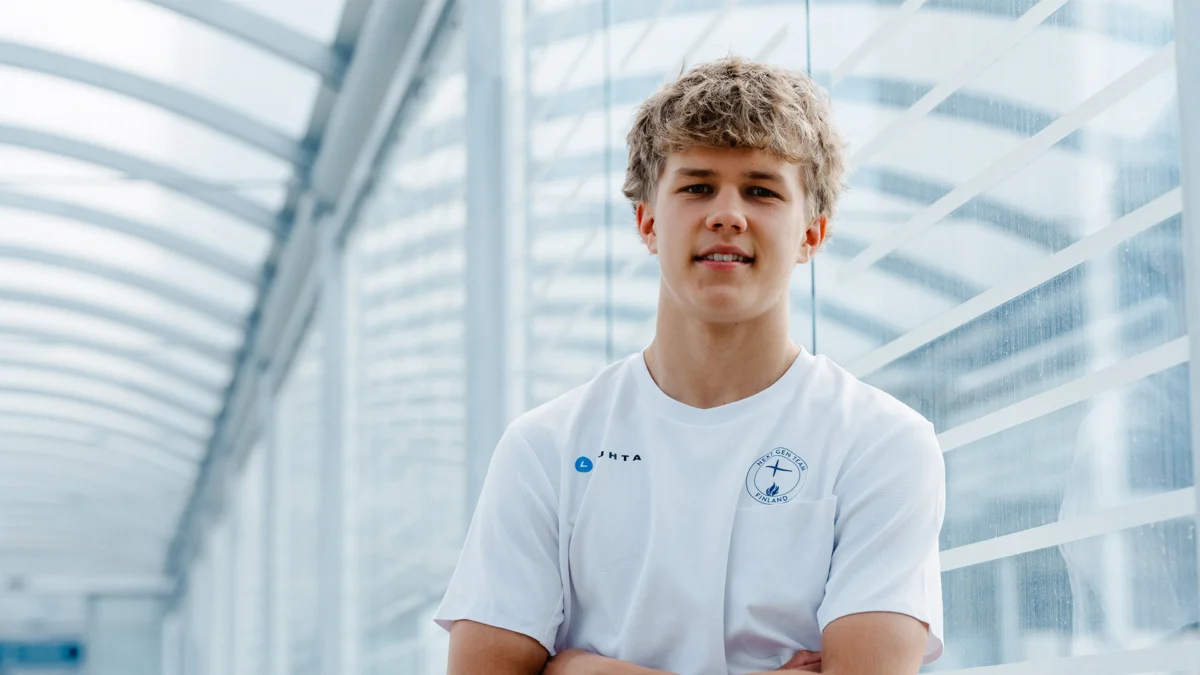
The transition from a junior star to a professional competitor is the most dangerous phase of an athlete’s career. Recognizing this, the Finnish Olympic Committee launched the Next Generation Team Finland program, designed to identify and support high-potential athletes aged 15–22.
Paldanius is one of 21 athletes selected for this inaugural cohort. The program is not merely a title; it provides a comprehensive support package worth over 10,000 euros, encompassing direct funding, specialized expert guidance, high-performance products, and essential services. This holistic approach ensures that talent is not sidelined by a lack of resources, allowing athletes like Paldanius to focus entirely on their development.
The Mental Game: Beyond Technical Proficiency
At the professional level—where Paldanius currently holds a ranking of 1266—the margins for error are razor-thin. When asked what differentiates a junior champion from a tour regular, Paldanius points to the mental sphere.
"At the top level, everyone has their basic technique sorted," he observes. "The difference is how you handle pressure. Everyone can play when the score is level and there is no pressure, but what happens when the match is on the line?"
His approach to this pressure is rooted in a philosophy of positivity. "You can’t achieve that ‘flow’ state with a negative mindset. It requires a quiet confidence and a genuine love for the game." Paldanius notes that while he is naturally social, his career has forced a trade-off. He has been famously labeled the "year-round absentee" at school due to his tournament schedule. Balancing the isolation of travel with the need for personal relaxation with his family is an ongoing discipline.
Implications: The Road to Los Angeles 2028
The ultimate horizon for Paldanius is the 2028 Los Angeles Olympics and the establishment of a sustainable, long-term professional career. He is acutely aware of the road ahead, noting that his "prime time" will likely arrive in the early 2030s.
"I know I am close to the world elite in terms of pure ball-striking and technique," Paldanius explains. "But the serve needs to be more reliable, and mentally, I have to become even tougher. The transition to the adult circuit is the real test."
Strategic Focus Areas:
- Serve Development: Increasing velocity and placement precision to survive the power-hitting dominant in the men’s game.
- Psychological Conditioning: Building the emotional fortitude to perform under the weight of professional expectations.
- Physical Longevity: Utilizing the expert resources provided by the Olympic Committee to prevent injuries and manage the grueling travel schedule.
Official Perspectives and Industry Impact
The success of Paldanius is viewed by the Finnish tennis community as a vital sign of the sport’s health. By becoming the sixth Finnish player to capture a junior Grand Slam title, he has moved past the status of a local curiosity and into the realm of national hope.
Industry experts emphasize that the Next Generation program is a strategic investment. By providing a safety net, the Committee allows young athletes to take the necessary risks to evolve their games rather than playing "safe" to maintain a comfortable ranking. For Paldanius, this means he can continue to aggressively pursue his development without the immediate, crushing pressure of financial instability.
As he prepares for the upcoming season, the focus remains on incremental improvement. The boy who once disliked the tennis court has transformed into a young man who views the court as his primary stage for self-expression. If his trajectory from Porvoo to Wimbledon is any indication, the world should expect to see much more of Oskari Paldanius in the years to come.
His story is a testament to the fact that while talent opens the door, it is the combination of joy, professional support, and mental resilience that carries an athlete across the threshold of greatness.