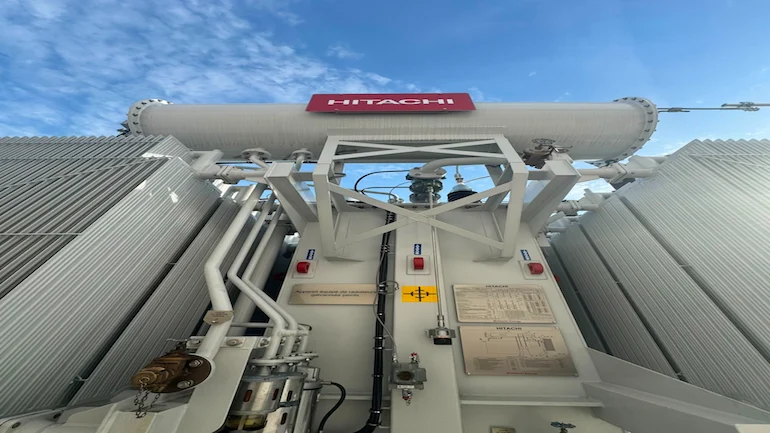
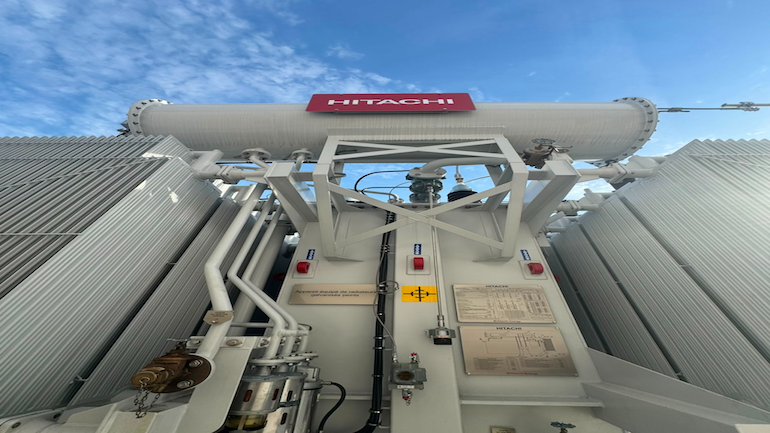
In a significant move to fortify France’s energy infrastructure, Hitachi Energy has finalized a series of long-term framework agreements with Enedis, the country’s primary distribution system operator. The deal, valued at approximately $398 million (€350 million), focuses on the supply of critical distribution and power transformers—components that have become the primary bottleneck in the global transition toward decarbonized energy systems.
As France accelerates its push to electrify its industrial base and heating sectors, the pressure on the national grid has reached unprecedented levels. These agreements represent a strategic effort to bypass the volatility of the global supply chain, ensuring that Enedis has the hardware necessary to modernize the aging grid and accommodate the influx of renewable energy sources.
Main Facts: A Strategic Supply Partnership
The framework agreements solidify a nearly two-decade-long collaborative relationship between Hitachi Energy and Enedis. By securing a long-term commitment, both parties aim to mitigate the risks associated with the current global shortage of electrical components.
Key pillars of the agreement include:
- Financial Scope: A total investment of $398 million dedicated to the manufacturing and supply of high-performance transformers.
- Operational Footprint: Production will be concentrated at Hitachi Energy’s specialized manufacturing facilities in Italy and Poland, leveraging their proximity to the French market to ensure logistical efficiency.
- Technological Integration: The deal goes beyond mere hardware delivery; it includes the implementation of advanced, data-driven asset monitoring and life-cycle management services.
- Environmental Accountability: Each transformer will be accompanied by an Environmental Product Declaration (EPD) verified under ISO 14025 standards, ensuring transparency regarding the carbon footprint and lifecycle impact of the equipment.
Chronology: Two Decades of Infrastructure Evolution
The partnership between Hitachi Energy and Enedis did not emerge in a vacuum. It is the culmination of a twenty-year evolution in how France manages its electricity distribution.
- Early 2000s: The initial foundation was laid as Enedis (then ERDF) sought to standardize its distribution components to improve network reliability across diverse French regions.
- 2010–2020: As the "energy transition" became a central pillar of French policy, the focus shifted from simple maintenance to smart-grid integration. Hitachi Energy served as a primary technology partner in deploying automated monitoring systems.
- 2022–2024: The global supply chain crisis, exacerbated by geopolitical tensions and post-pandemic demand spikes, highlighted the vulnerability of transformer procurement. Lead times for these components stretched to record highs, prompting the current move toward long-term framework contracting.
- September 2026: The formalization of the $398m agreement, designed to provide the certainty required to meet the 2030 energy targets.
Supporting Data: The Scale of the Challenge
To understand the necessity of this agreement, one must look at the macro-economic and technical drivers of the French energy sector.
The Decarbonization Mandate
The French government has set an ambitious target to reduce the share of fossil fuels in its total energy consumption from 60% to 40% by 2030. This shift requires a massive uptick in electrification, particularly in transport (EV charging networks) and residential heating (heat pumps).
The Transformer Bottleneck
Transformers are the "workhorses" of the electrical grid. As the world transitions away from centralized, fossil-fuel-based power plants toward decentralized renewable sources, the transformer demand profile has changed.
- Global Shortage: Increased global investment in grid infrastructure—driven by the US Inflation Reduction Act, the EU’s Green Deal, and similar initiatives in Asia—has led to a surge in demand that manufacturing capacity has struggled to meet.
- Component Lifespan: With the average age of transformers in Western Europe exceeding 30–40 years, the need for replacement is at an all-time high, creating a "perfect storm" of demand.
Official Responses: Aligning Strategy with Reality
The leadership at Hitachi Energy has been vocal about the importance of these agreements as a model for the broader utility sector.
Bruno Melles, CEO of Hitachi Energy’s Transformers business, emphasized that in an era of supply chain unpredictability, "certainty" is the most valuable commodity. "As global demand for grid infrastructure intensifies, long-term agreements provide customers with the certainty, availability, and cost predictability needed to modernize and expand their networks on time," Melles stated during the announcement.
For Enedis, the agreement represents a defensive strategy against inflation and logistical delays. By formalizing this relationship, Enedis can bypass the spot market, where prices for copper, steel, and electrical steel—the primary raw materials for transformers—remain volatile. The partnership also allows for better synchronization of production schedules, ensuring that transformers arrive at project sites exactly when needed, rather than sitting in storage or arriving months late.
Implications: Building the Grid of the Future
The implications of this deal extend far beyond the procurement of metal and wire. It signals a shift in how utility operators view their supply chains.
1. From Transactional to Relational Procurement
By moving toward long-term framework agreements, utilities are shifting away from a transactional model (where the lowest bidder wins a single project) to a partnership model. This fosters innovation, as manufacturers are more willing to invest in new, more efficient transformer designs if they have a guaranteed multi-year pipeline.
2. The Role of Digitalization
A crucial, yet often overlooked, aspect of the deal is the integration of data-driven asset monitoring. Traditional transformers were "dumb" assets; modern units are "smart." By installing sensors that track heat, vibration, and partial discharge, Hitachi Energy and Enedis can transition from "corrective maintenance" (fixing things when they break) to "predictive maintenance" (fixing things before they fail). This is expected to significantly reduce unplanned outages across the French grid.
3. Sustainability and the "Green" Grid
The inclusion of Environmental Product Declarations (EPDs) is a testament to the growing pressure on utilities to report their Scope 3 emissions. As the grid itself becomes "greener" through the integration of wind and solar, the equipment used to manage that power must also be manufactured in an environmentally responsible manner. The ISO 14025 compliance ensures that Enedis is not just decarbonizing the electricity it delivers, but also the hardware it uses to deliver it.
4. Strategic Autonomy
Finally, the reliance on European manufacturing (Italy and Poland) aligns with broader European efforts to achieve "strategic autonomy." By keeping the production of critical energy infrastructure within the EU, the French grid becomes less susceptible to trade disputes or supply chain disruptions originating in other parts of the world.
Conclusion
The $398 million agreement between Hitachi Energy and Enedis is more than just a procurement contract; it is a tactical response to the massive engineering challenges of the 21st century. As France moves toward a future where electricity is the primary engine of its economy, the reliability of its grid will be tested as never before. By securing a reliable flow of transformers, integrating predictive digital technologies, and prioritizing environmental transparency, Enedis is laying the necessary groundwork to meet its 2030 climate goals while ensuring the stability of the French power supply for decades to come.
As the energy sector continues to face the dual pressure of increasing demand and supply constraints, this partnership serves as a roadmap for other national operators—demonstrating that in the race to net-zero, the strength of the grid is only as good as the transformers that power it.