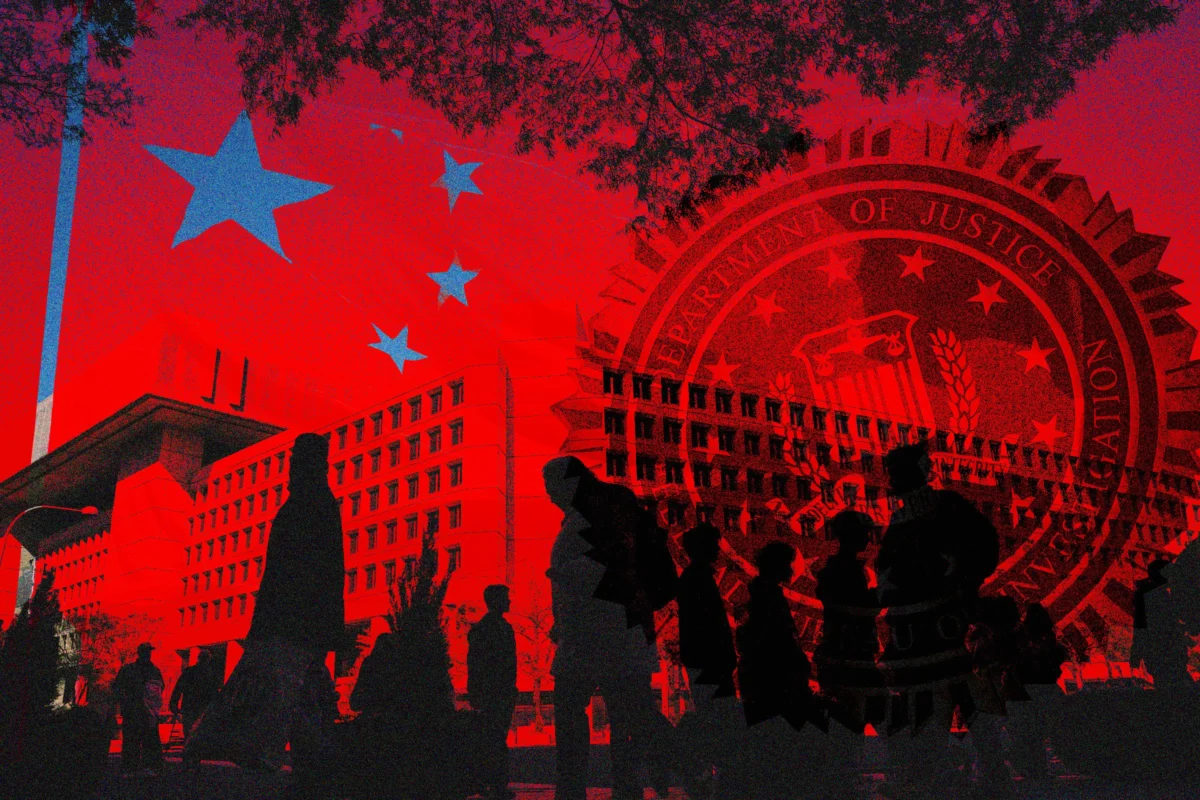
In a sweeping move that underscores the escalating shadow war in cyberspace, the U.S. Department of Justice (DOJ) and the Federal Bureau of Investigation (FBI) have successfully disrupted a sophisticated, multi-year cyber-espionage operation orchestrated by a Chinese state-sponsored hacking collective. The operation, which utilized a sprawling web of hijacked internet-of-things (IoT) devices and compromised commercial networks, targeted the very bedrock of American government and critical infrastructure.
The disruption centers on two specialized tools—QTRouter and QScan—operated by a group identified by the DOJ as "QTFY." This group is allegedly a front for the Nanjing Xinjiuwei Network Technology Company, a private Chinese firm that functioned as a “quartermaster” for the Ministry of State Security (MSS) and the People’s Liberation Army (PLA). By seizing key digital infrastructure, U.S. authorities have pulled back the curtain on a vast, industrial-scale espionage apparatus that has been operating in the dark since at least 2018.
The Anatomy of the Operation: How QTFY Cloaked Its Tracks
The success of China’s cyber-espionage efforts has long relied on the "proxy" model. By routing malicious traffic through third-party devices rather than launching attacks directly from Chinese servers, state-backed hackers have successfully obfuscated their point of origin, making attribution difficult and defense nearly impossible.
The Role of QTRouter and QScan
According to the FBI’s affidavit, the Nanjing Xinjiuwei Network Technology Company provided its state-sponsored clients with a seamless interface for digital warfare.
- QScan: This tool was engineered for reconnaissance. It acted as an automated vulnerability scanner, sweeping the global internet for insecure IoT devices—ranging from smart routers to industrial control sensors—that could be co-opted into a massive botnet.
- QTRouter: This platform managed the "delivery" side of the operation. It allowed clients from the Chinese intelligence apparatus to access the botnet of infected devices, effectively creating a "proxy-as-a-service" architecture.
By utilizing these tools, Chinese hackers were able to bounce their malicious signals across thousands of compromised points of presence. This "hop-scotch" methodology meant that by the time an attack reached its target—such as a terminal at the Department of Energy or the Federal Reserve—the trail of digital breadcrumbs was so fragmented that it appeared to originate from a civilian or commercial source, rather than a military intelligence office in Nanjing.
Chronology of the Espionage Campaign
The campaign revealed by the DOJ is not a recent development; it is the result of years of institutionalized effort.
- 2018–2020: The Foundation. The operation began by targeting low-level IoT devices to establish a foundation of "relay points." During this period, the activity remained largely under the radar as the hackers focused on building the necessary bandwidth to support high-volume, long-term surveillance.
- 2021–2023: Broadening the Scope. As the proxy network grew, so did the ambition of its handlers. The DOJ reported successful breaches—or at least sustained intrusions—into high-value targets including NASA, the U.S. Senate, the Department of Health and Human Services (HHS), and the National Institutes of Health (NIH).
- 2024: The VPN Pivot. In a final, desperate attempt to maintain invisibility, the hackers began hijacking commercial Virtual Private Network (VPN) services. These are the same services used by Chinese citizens to bypass the "Great Firewall." By blending their malicious, state-sponsored traffic with the benign, encrypted data of millions of ordinary users, the hackers created a "needle in a haystack" problem that confounded traditional security filters.
- Late 2024: The Takedown. Following a joint investigation involving the FBI and threat intelligence researchers at Lumen Technology’s Black Lotus Labs, the U.S. government executed a coordinated takedown, seizing the domains that powered QTRouter and QScan.
A Staggering Scope: The Targets of Interest
The list of institutions affected by the QTFY campaign reads like a directory of the American federal government. While the FBI has not confirmed the full extent of the data exfiltrated in each instance, the intent behind targeting these specific agencies is clear: intelligence collection on a national scale.
The sectors identified as "targeted" include:
- Government and Legislative: NASA, the U.S. Senate, and the Department of Justice itself.
- Financial and Scientific: The Federal Reserve and the National Institutes of Health.
- Critical Infrastructure: Power companies, telecommunications providers, and major healthcare organizations.
- Defense Industrial Base: Contractors providing proprietary research and logistics support to the U.S. military.
Damon Rouse, a threat intelligence researcher at Lumen Technology, described the scale as "really giant." Unlike other campaigns, such as the notorious "Volt Typhoon"—which appears designed for the pre-positioning of disruptive cyber-sabotage—the QTFY campaign was primarily focused on traditional, deep-state espionage: the slow, methodical collection of information.
Official Responses and the Strategic Shift
The U.S. government’s response to the Nanjing-based operation signals a shift toward more aggressive, pre-emptive disruption. Rather than merely observing the activity, the DOJ is now actively intervening to neutralize the infrastructure before it can be used for further exploitation.
"State-sponsored malicious hackers preying on America’s critical infrastructure will be stopped and prosecuted," stated U.S. Attorney General Todd Blanche. While the statement lacked specific names of indicted individuals, the message to private contractors in China was unmistakable: the U.S. government is no longer content to treat these contractors as distinct from the state entities they serve.
Lumen Technology’s role in the operation was equally pivotal. By "null-routing" the domains used by the hackers—effectively deleting them from the global internet’s map—they cut the lifeline between the hackers and their proxy botnets.
Implications: The Future of Cyber-Conflict
The disruption of the QTFY network, while a significant tactical victory, is unlikely to be the end of the conflict. Experts warn that the "quartermaster" model—where private companies provide infrastructure to state intelligence agencies—is inherently resilient.
The "Egg-on-the-Face" Moment
There is a strategic value to these takedowns beyond just the technical disruption. By exposing the Nanjing Xinjiuwei Network Technology Company, the U.S. has forced a "customer relations" crisis for the firm. In the opaque world of Chinese state contracting, being named by the FBI as the source of a failed operation is a significant reputational blow. It suggests that the "hired help" is no longer as secure or as effective as the CCP demands.
The Inevitable Pivot
However, the adaptability of these groups remains a concern. As Rouse noted, the hackers have proven capable of pivoting from simple IoT botnets to hijacking commercial VPNs. This level of agility suggests that the infrastructure will likely be reconstituted under different names, with different servers, and perhaps different methods.
The Broader Security Landscape
The reliance on proxy networks highlights a fundamental weakness in the modern internet: it was built for trust and connectivity, not for the segregation of state-level malicious traffic. As long as there are millions of insecure IoT devices and thousands of commercial proxies, the cost of entry for state-sponsored espionage remains dangerously low.
The takeaway from the QTFY operation is a sobering one: the era of "quiet" espionage has ended. We have entered a period of constant, high-stakes digital skirmishing where the front lines are not just in the South China Sea or the Taiwan Strait, but inside the routers of American homes, the servers of government agencies, and the VPNs of everyday citizens.
As the U.S. government continues to refine its "hack-back" and "disruption" strategies, the primary challenge remains the pace of innovation. For every proxy network dismantled, a new one is being scanned for, exploited, and brought online in the dark corners of the digital world. The struggle against the Nanjing-based network is not a single battle won; it is a permanent state of vigilance in an interconnected world that was never designed to keep state-sponsored spies at bay.