The professional bodybuilding world remains a landscape defined by subjective scrutiny, where the difference between gold and silver is often measured in the microscopic details of conditioning, muscle maturity, and aesthetic flow. Nowhere was this more apparent than at the 2026 Chengdu China Pro, a pivotal event that has ignited a firestorm of debate within the industry. Following the announcement of Behrooz Tabani as the winner over runner-up James Hollingshead, the bodybuilding community—ranging from elite coaches to armchair experts—has engaged in a heated post-mortem of the decision.
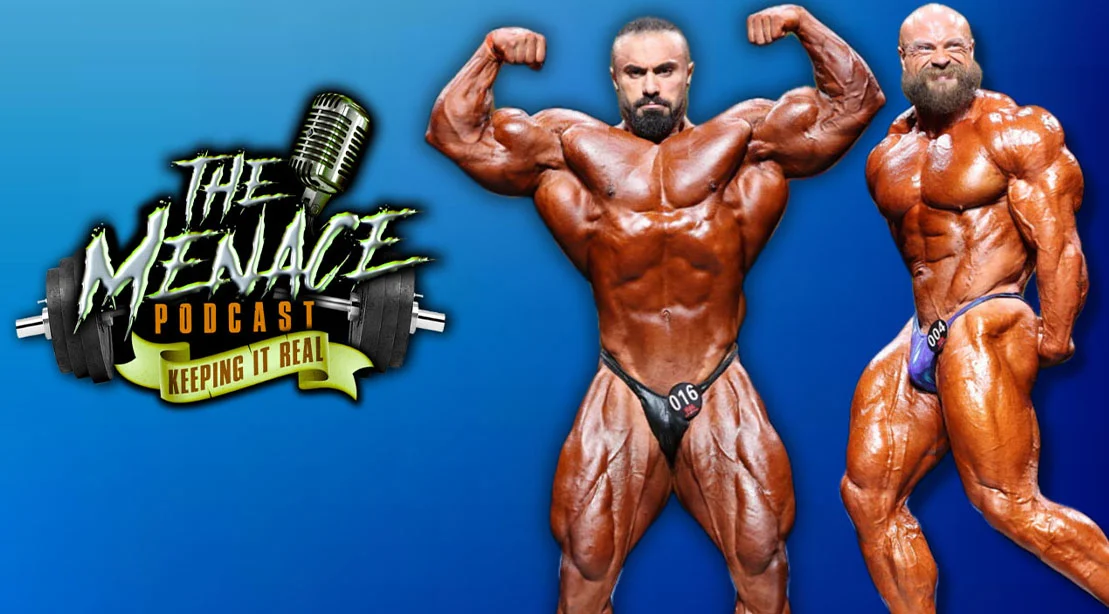
On the latest installment of The Menace Podcast (Episode 296), host Dennis James, joined by legends Milos Sarcev and Chris Cormier, dissected the result. The episode served as a microcosm of the wider discourse, pitting the aesthetic superiority of Tabani against the sheer mass and structural integrity of Hollingshead.
The Main Facts: A Clash of Titans in Chengdu
The 2026 Chengdu China Pro was marketed as a high-stakes battle, offering a crucial pathway to the Olympia stage. When the dust settled, the Iranian standout Behrooz Tabani had secured the victory, effectively punching his ticket to the premier event in the sport. However, the decision was far from unanimous in the eyes of the spectators.
James Hollingshead, the British powerhouse, entered the competition with what many considered his best physique to date. His presence on stage was marked by undeniable density and a structural frame that stood out even in an elite lineup. The contrast between Tabani’s refined, aesthetic-heavy approach and Hollingshead’s rugged, high-density look created a judging dilemma that has kept the forums and social media threads buzzing for weeks.
Chronology of the Debate
The tension began the moment the athletes hit the stage. Throughout the pre-judging and finals, it became clear that the battle for first place was a two-horse race. While Tabani appeared to lead in the initial comparisons, the momentum seemed to shift as the athletes moved through their mandatory poses.
The "Menace" Analysis
Dennis James opened the discussion by demanding raw honesty from his panel, moving past the diplomatic pleasantries that often plague bodybuilding commentary. The conversation quickly turned to Tabani’s physical state.
Chris Cormier, a seasoned veteran of the IFBB stage, was the first to offer a critique. "I have to be honest, I think the travel and the long season took its toll on Behrooz," Cormier noted. "He has looked spectacular for many weeks, but in Chengdu, his legs were down a little bit, and he had a grayness to his skin that didn’t sit right."
The panel briefly debated whether this "grayness" was a genuine physiological issue or merely a byproduct of lighting and broadcast quality. Dennis James acknowledged the visual discrepancy, noting that while the live feed at certain points looked "blotchy," other angles suggested the skin tone was adequate. Ultimately, the panel pivoted to the technical merits of the posing battle.
Supporting Data: Assessing the Aesthetics vs. Mass
To understand why the decision remains contentious, one must analyze the specific criteria utilized by IFBB judges: symmetry, proportion, v-taper, conditioning, and muscular aesthetic.
The Case for Tabani: The Posing Master
Milos Sarcev, known for his obsession with the "art" of bodybuilding, provided a technical defense of the judges’ decision. While he conceded that Hollingshead gave an incredible performance, he argued that the fundamental criteria for bodybuilding victory favor the specific look Tabani brought to the table.
"If you look at the criteria—symmetry, proportion, v-taper, aesthetics, conditioning, shape, tie-ins, and striations—you have to look at the front double biceps pose," Sarcev explained. "In that specific pose, James does not have a physique to beat Behrooz."
Supporting this, Dennis James pointed out that Tabani’s back lat spread displayed a superior flare and width compared to the British competitor. For the judges, these "shape" and "flow" elements often outweigh the "raw size" elements that Hollingshead brought in abundance.
The Case for Hollingshead: Density and Proportion
Conversely, those arguing for a Hollingshead victory point to his undeniable structural dominance. Throughout the contest, Hollingshead’s legs exhibited a level of deep, sweeping muscle separation that arguably eclipsed Tabani’s.
"Is James harder? Absolutely," Dennis James conceded during the podcast. This sentiment reflects the broader fan consensus that Hollingshead was the more "hardened" athlete on stage. In bodybuilding, the "hard" look—where the muscle fibers are clearly etched and the water retention is minimized—is often the deciding factor in close calls. However, as the panel noted, the judges clearly prioritized Tabani’s lines and his ability to hold the stage through fluid, confident posing transitions.
Official Responses and Industry Sentiment
The debate has transcended the podcast studio, spilling into the YouTube comments section and social media platforms. The reaction is a testament to the polarized nature of modern bodybuilding fans.
One representative fan comment read: "Let’s make peace with this; this was one of Behrooz’s least impressive outings, but he still had the tools to edge James out." This highlights a growing sentiment that even a "sub-optimal" Tabani is still a formidable contender capable of winning against a "peak" Hollingshead, provided the aesthetics are prioritized.
Another viewer noted, "James has better proportions," suggesting that the fans are looking at different metrics than the official judges. The recurring theme in the fan discourse is that while Tabani’s win was "not a robbery," it was certainly a result that prioritized the "classic" aesthetic over the "power-bodybuilding" look that Hollingshead embodies.
Implications for the 2026 Olympia
The results in Chengdu have significant implications for the upcoming Olympia. For Behrooz Tabani, the victory is a vindication of his training methodology, though he enters the Olympia with a clear directive from the community: he must bring a sharper, more vibrant look to avoid the critiques regarding his skin tone and leg volume.
For James Hollingshead, the result serves as a "near-miss" that has arguably elevated his profile more than a lower-tier victory would have. He has proven that he can stand toe-to-toe with the best in the world and force a split decision. The "near-robbery" narrative often generates a sympathy boost for athletes in the following shows, potentially setting Hollingshead up for a strong performance in his next outing.
The Future of Judging
The 2026 Chengdu Pro controversy serves as a reminder of the sport’s enduring subjectivity. As the panel on The Menace Podcast concluded, bodybuilding is not a sport measured by a tape measure or a stopwatch; it is an visual art form.
The judges’ decision to favor Tabani sends a message to the rest of the professional circuit: despite the push for massive, extreme conditioning, the classic pillars of the sport—the v-taper, the aesthetic flow, and the art of the pose—remain the ultimate currency of the IFBB stage. Whether the fans agree or disagree, the decision is locked in, and the sport continues to evolve as athletes navigate the thin line between mass and symmetry.
As fans look toward the next major event, the question remains: will the judges continue to reward the "aesthetic" package of a bodybuilder like Tabani, or will the "hard, dense" look of athletes like Hollingshead force a change in the judging paradigm? If the discourse from Chengdu is any indication, the debate is far from over.