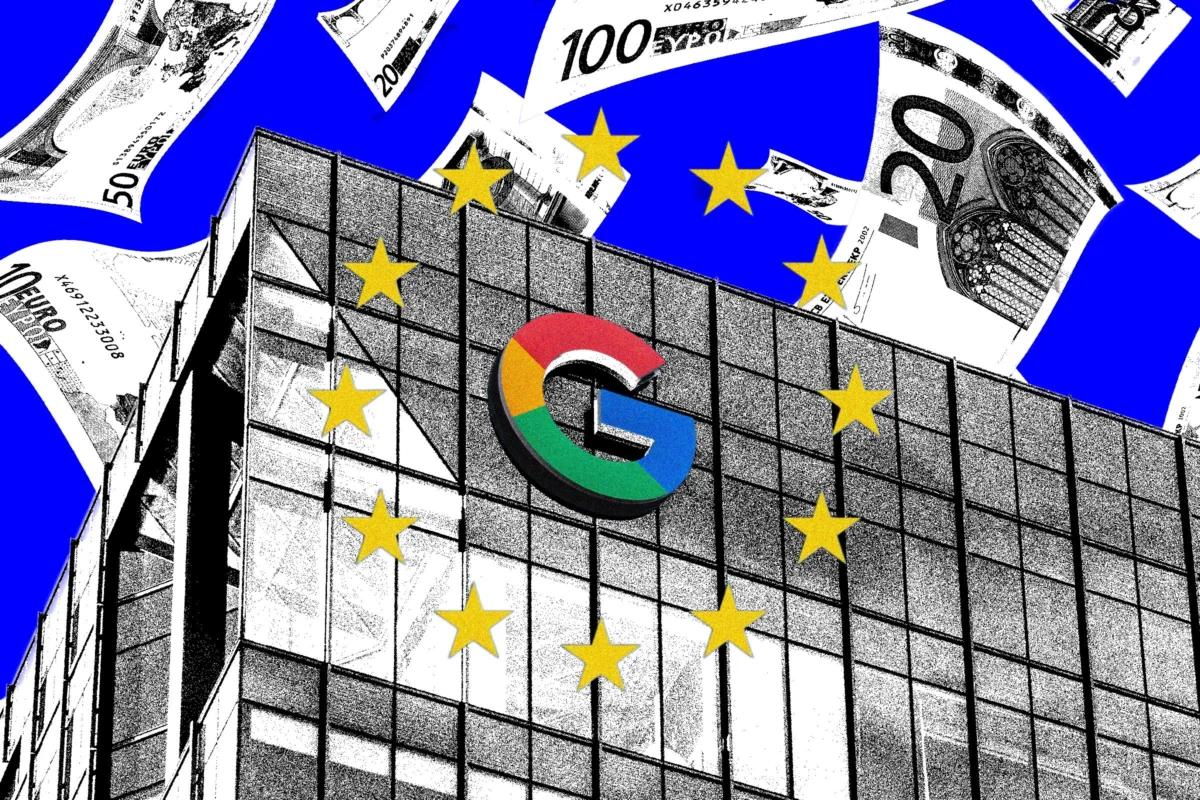
The European Commission has escalated its long-standing battle with Big Tech, slapping Google with a staggering $1 billion penalty for what regulators describe as systemic competition law violations. This latest enforcement action, centered on the European Union’s landmark Digital Markets Act (DMA), marks a significant turning point in the bloc’s effort to break the stranglehold of platform gatekeepers over digital ecosystems.
The fine follows a protracted investigation into Google’s search engine dominance and its control over the Play Store. Regulators concluded that the tech giant systematically funneled users toward its own proprietary services—such as travel, shopping, and local transport—at the expense of third-party competitors. By leveraging its role as the primary gateway to the internet, the Commission argues, Google has stifled innovation and artificially tilted the playing field in its favor.
The Chronology of Conflict: A Decade of Regulatory Friction
The current penalty is far from an isolated incident; rather, it represents the latest chapter in a decadelong struggle between Brussels and Mountain View. Since the early 2010s, the European Union has pursued a aggressive antitrust strategy, aiming to force Google to decouple its search dominance from its other burgeoning commercial verticals.
- 2018: The Commission handed down a record-breaking $4.1 billion fine, alleging that Google forced smartphone manufacturers to pre-install Google Search and Chrome as a condition for accessing the Play Store. That decision was famously upheld by a high-level European court in July 2026, signaling that the EU’s legal arguments against the company’s "tying" practices remain ironclad.
- 2024–2025: As the Digital Markets Act moved from policy to implementation, the EC intensified its scrutiny of "self-preferencing." Investigators began auditing how Google’s search algorithms prioritize its own properties, such as Google Flights and Google Maps, over independent rivals.
- 2026: The Commission formalized its charges under the DMA, demanding that Google fundamentally restructure how it displays search results and how it processes in-app transactions.
This history suggests that the EU is no longer content with mere financial penalties. The recent billion-dollar fine is accompanied by a mandate for structural change, signaling a move from punitive fiscal measures to operational behavioral shifts.
The Core Allegations: Deconstructing the "Gatekeeper" Monopoly
At the heart of the European Commission’s case is the concept of the "special responsibility" held by dominant market players. Kathryn McMahon, an associate professor of law at the University of Warwick, notes that under EU competition law, firms with significant market power are prohibited from engaging in practices that distort the competitive landscape.
"Certainly, the stakes are really high for companies. How they are ranked affects their businesses a great deal," McMahon explains. "The way EU competition law looks at it, firms in a dominant position—like Google—have a special responsibility not to distort competition."
Search Rankings and Self-Preferencing
The Commission has ordered Google to cease the preferential treatment of its own services. For years, critics have argued that Google’s search results act as a "black box," where the company’s own travel, accommodation, and shopping comparison tools are given prominent "above-the-fold" placement. By forcing these tools to compete on equal footing with third-party providers, the EU hopes to revitalize the European digital market, allowing smaller startups to gain visibility.
The Play Store and Financial Control
Beyond search, the investigation scrutinized the Play Store’s ecosystem. Google has long required developers to use its own billing system, taking a commission on every sale—a practice often referred to as an "app tax." The EC has now ruled that Google must allow app developers to communicate and transact with users outside of the Play Store environment. This change effectively breaks Google’s monopoly on in-app payments, potentially lowering prices for European consumers.
Perspectives from the Frontlines
The official response from both the regulator and the regulated highlights the deep ideological divide regarding the future of the internet.
Teresa Ribera, an executive vice president at the European Commission, framed the decision as a defense of the consumer. "The best products should succeed because they’re better, not because they’re owned by the company running the search engine," Ribera stated. "European consumers have a right to be told by app developers where to sign up to the best offers, even when the app store owner does not get a cut."
Conversely, Google has pushed back aggressively. Kent Walker, president of global affairs at Google, characterized the ruling as a victory for a vocal minority of competitors rather than for the average user. "This isn’t fair competition; it’s product degradation driven by a small group of self-serving complainants, with European businesses and consumers taking the hit," Walker said in a statement to WIRED.
This sentiment is echoed by industry trade groups. Daniel Friedlaender, senior vice president at CCIA Europe, argues that the EU’s heavy-handed enforcement may ultimately backfire. "Reducing the quality of what Europeans have access to is not a positive outcome," Friedlaender warned, suggesting that the forced changes could make apps harder to find or less secure for the average user.
Geopolitical Implications: The Transatlantic Flashpoint
The timing of this $1 billion fine is particularly sensitive given the current geopolitical climate. Recent vows by US President Donald Trump to impose steep tariffs on European nations that restrict American technology companies have cast a long shadow over the proceedings.
Observers see the move as a high-stakes gamble by the EU. By continuing to levy massive fines against US tech giants, Brussels is essentially testing the durability of its regulatory sovereignty against potential trade retaliation.
"The latest penalty is quite a strong response, in the context of the transatlantic complaints—the way that Trump can leverage fines," says McMahon. "It shows the Commission is willing to be tough, regardless of external political pressure."
The White House has remained largely silent on the specific ruling, but the potential for a broader trade war remains a significant concern for the tech sector. If the EU continues to target the core revenue models of US companies, Washington may respond with trade barriers that could disrupt everything from automobile exports to agriculture, turning a digital regulation dispute into a full-scale economic conflict.
The Road Ahead: Compliance or Continued Litigation?
Google has signaled that it will consider appealing the penalty, a move that would keep the issue tied up in the European court system for years. However, the company has also proposed specific modifications to its Play Store policies and search display formats. The European Commission has acknowledged these proposals as "progress towards compliance," though it remains to be seen whether these changes will satisfy the stringent requirements of the Digital Markets Act.
For the average European user, the immediate impact remains unclear. While the ability to pay for services outside the Play Store may lower costs, there are valid concerns regarding user experience and security. If the "gatekeeper" model is dismantled, the responsibility for vetting apps and ensuring secure transactions may shift from a centralized authority to a fragmented landscape of third-party developers.
Summary of Implications
- For Consumers: Potential for lower prices and greater choice in apps and travel services, though with potential trade-offs in interface convenience and security.
- For Competitors: A long-awaited opportunity to compete on a level playing field without the shadow of Google’s search algorithm favoring its own vertical services.
- For Google: A fundamental threat to its revenue model, requiring a transition from a closed ecosystem to a more open, interoperable platform.
- For the EU: A validation of the Digital Markets Act, proving that the bloc is willing to enforce its laws even against the most powerful corporations on the planet, despite the risk of geopolitical backlash.
As the legal battles continue, one thing remains certain: the era of unchecked digital dominance is coming to a close in Europe. The billion-dollar fine is not merely a penalty; it is a clear message that the architecture of the modern internet is no longer the sole prerogative of the companies that built it.