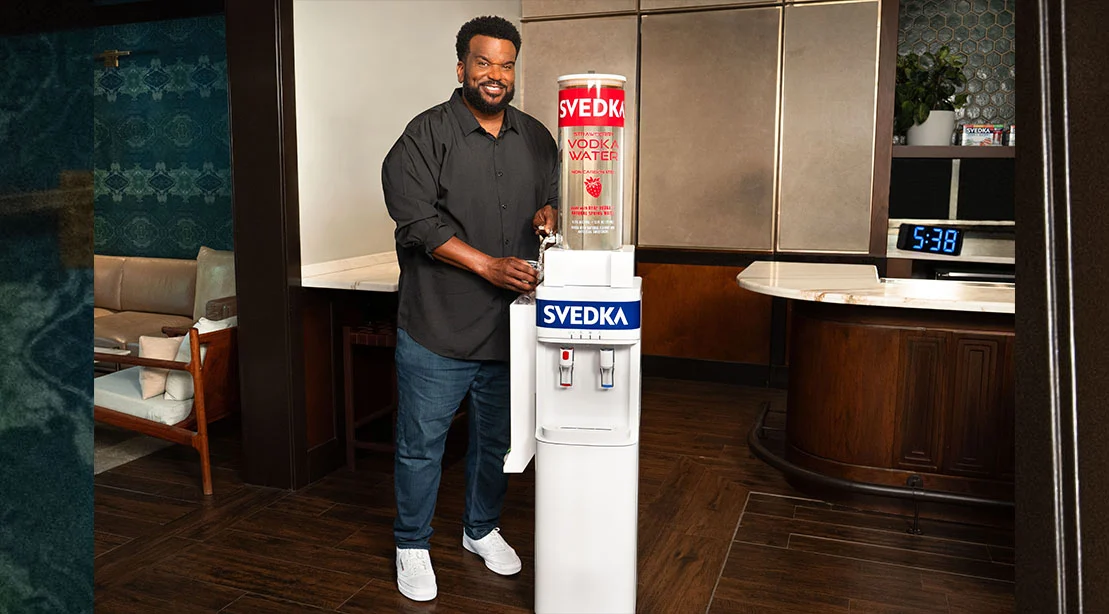
Craig Robinson has spent his career mastering the art of the relatable workplace personality. For nine seasons on The Office, his portrayal of Darryl Philbin provided a grounded, steady hand amidst the controlled chaos of Dunder Mifflin. Today, Robinson is channeling that same workplace familiarity into a new venture, partnering with Svedka for the launch of "Svedka Water" and a limited-edition Vodka Water Cooler.
Yet, for the Chicago-born actor and comedian, this collaboration is more than just a brand alignment—it is a reflection of a man who has fundamentally rewritten his own internal script. Having lost nearly 50 pounds through a strategy rooted in patience, incrementalism, and radical honesty, Robinson’s transformation serves as a blueprint for those overwhelmed by the noise of modern fitness culture.
The Office Legacy Meets Modern Refreshment
The partnership between Robinson and Svedka centers on the "Svedka Vodka Water Cooler," a five-foot-tall, tongue-in-cheek homage to the office gathering spot. While it functions as a traditional water dispenser, it features a concealed tap that provides chilled Svedka for after-hours relaxation.
"It’s super cool," Robinson tells Muscle and Fitness. "Being a part of The Office, this kind of adds onto that legacy. It’s centered around the workplace. It’s water-cooler talk, and it’s familiar. So, it just kind of goes with my brand."
For Robinson, the partnership feels organic because it mirrors his current philosophy: maintaining a balance between his professional life, his public persona, and a newfound commitment to personal wellness. His approach to alcohol, much like his approach to diet, has shifted from excess to "bare minimum," a change that has allowed him to sustain his momentum in a demanding industry.
Chronology of a Transformation: From Wake-Up Call to Daily Ritual
Robinson’s health journey was not sparked by a high-octane fitness retreat or a viral influencer challenge. Instead, it began in the most mundane, yet profound, of places: the doctor’s office.
The Scale Revelation
Many individuals find themselves in a state of denial regarding their physical health, and Robinson was no exception. He had a specific number in his head—a "peak weight" he believed he had reached. When he stepped onto the scale at a routine check-up, the reality was a staggering 30 pounds higher than his estimate.
"I was mad overweight," Robinson reflects. "I thought I was at this peak weight. I knew where I was and I was over that."
The Near-Miss with Ozempic
Following this realization, Robinson reached a crossroads. He went as far as securing a prescription for Ozempic, a popular GLP-1 receptor agonist that has become a lightning rod for discussions on weight loss. He stood in line, prepared to spend the $1,000 for the medication, before a moment of introspection hit him.
He decided that before relying on external intervention, he owed it to himself to attempt a change through behavioral modification. He stepped out of line, walked away from the prescription, and began his journey toward what he calls "the system."
The "Micro-Habit" Philosophy
Robinson’s approach to physical activity was defined by its simplicity. Rejecting the common trap of "all-or-nothing" workouts, he began by walking on a treadmill for just three minutes a day.
- Month 1: 3 minutes of daily walking.
- Month 2: 6 minutes of daily walking.
- Month 3: 9 minutes of daily walking.
By starting with a duration so short that it felt impossible to fail, Robinson bypassed the common psychological hurdle of "not having enough time." Within weeks, the movement became a non-negotiable part of his schedule. Once the habit was locked in, he integrated intermittent fasting, which he credits with accelerating his progress—at one point losing 19 pounds in a single month.
Supporting Data: The Science of Small Changes
The success of Robinson’s approach is supported by established behavioral psychology. According to researchers like Dr. B.J. Fogg of Stanford University, "tiny habits" are more effective for long-term behavior change than massive, sudden overhauls.
When a goal is too large, the brain perceives it as a threat or a burden, leading to procrastination. By keeping the barrier to entry low—such as three minutes of exercise—the neural pathways required for consistency are built without the resistance of physical or mental exhaustion.
Furthermore, Robinson’s use of intermittent fasting—a practice that involves cycling between periods of eating and fasting—has been shown in various studies to assist with metabolic regulation and caloric restriction. By limiting his eating window, Robinson naturally curtailed the "mindless snacking" that often sabotages weight-loss efforts.
"One of the hardest and easiest things to do is to not eat," Robinson notes. "It’s hard because you’re not eating, and it’s easy because you don’t have to do anything."
The Reality of Non-Linear Progress
One of the most refreshing aspects of Robinson’s narrative is his admission of failure. Late last year, he confessed that he "fell off," allowing old habits—soda, pizza, and gumbo—to creep back into his diet.
Rather than viewing these slips as failures that warranted abandoning the entire project, Robinson treated them as data points. He recognized the shift, reassessed his choices, and steered himself back to the routine. This "non-linear" mindset is crucial. It differentiates a lifestyle change from a diet.
"If I’m 100 percent honest, I have fallen off," Robinson says. "I started allowing things back in my life."
He emphasizes that he hasn’t sworn off his favorite foods forever. Instead, he practices intentional indulgence. A slice of pizza is not a moral failing; it is a planned event. This shift from "total restriction" to "intentional consumption" is what prevents the burnout often associated with extreme dieting.
Implications for a High-Pressure Career
The impact of this transformation has rippled into every facet of Robinson’s life. As he prepares to join the voice cast of Toy Story 5 and continues to tour the country with his stand-up and music, the demand for high energy and stage presence is constant.
The Mirror Effect
During a recent tour in Los Angeles, Robinson caught a glimpse of himself in a mirror before taking the stage. Seeing a leaner, more vibrant reflection provided a psychological lift that he claims directly impacted his performance.
"I was like, ‘Oh, there he is,’" Robinson recalls. "It just lifted me, man. It made everything—the notes felt brighter. I was singing and playing, and I just felt more playful."
This anecdote underscores the symbiotic relationship between physical health and mental confidence. For a performer whose livelihood depends on the ability to connect with an audience, the reduction in weight and the improvement in his fitness baseline have functioned as a "force multiplier" for his creativity.
Final Reflections: A Call to Consistency
Craig Robinson’s journey serves as a powerful antidote to the toxic "hustle culture" that permeates the fitness industry. In a world of aggressive boot camps and complex nutritional supplements, his advice remains starkly simple:
- Start impossibly small: "Start with one pushup and do it for a month. Then next month, two pushups a day."
- Focus on control: Identify the variables you can manage today, whether it’s a three-minute walk or skipping a late-night snack.
- Practice patience: Allow yourself the grace to slip, and the wisdom to return to your routine without shame.
- Prioritize systems: As Robinson puts it, "You fast, you work out, you eat right, you get your rest, get your water—wash, rinse, repeat."
Robinson is not claiming to be a fitness guru or a transformation influencer. He is simply a man who recognized that his health was a "work in progress" and chose to manage it with the same steady, reliable, and calm demeanor that made him a household name on The Office. By treating his health as a daily habit rather than a destination, he has ensured that his performance—both on stage and in life—will continue to resonate for years to come.