In the modern era of fitness, social media feeds are saturated with "PR culture"—a relentless pursuit of one-rep maxes, heavy triples, and the quest to lift as much weight as possible. While the principle of progressive overload remains the bedrock of hypertrophy, a dangerous misconception has taken root: the belief that heavier is always better, regardless of execution.
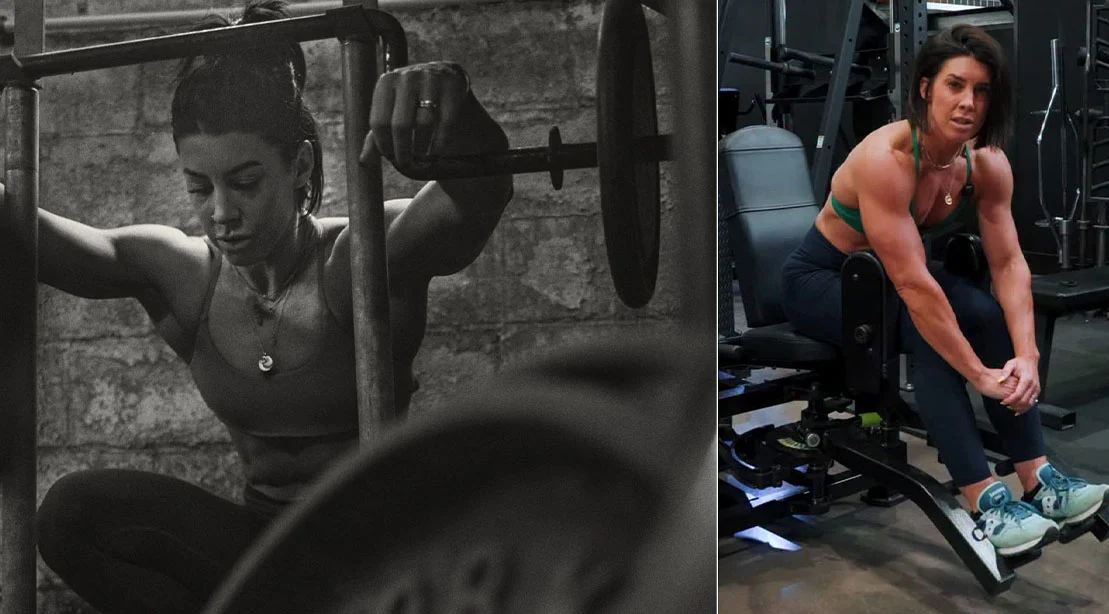
However, former Olympia Women’s Physique Champion Dana Linn Bailey argues that this "ego-lifting" approach is a fast track to injury and stunted progress. For the millions of aspiring athletes looking to build a physique that is as functional as it is aesthetic, the secret lies not in the weight on the bar, but in the integrity of the movement.
The Physiology of Failure: Muscles vs. Tendons
To understand why heavy lifting often goes awry, one must distinguish between muscle adaptation and connective tissue adaptation. Muscles are highly vascularized tissues; they respond relatively quickly to the stimulus of resistance training by breaking down and rebuilding through protein synthesis.
Tendons and ligaments, conversely, are avascular. They receive significantly less blood flow, which means their rate of adaptation to mechanical stress is significantly slower than that of skeletal muscle. When an athlete consistently loads the bar beyond their capacity for perfect form, they are placing the structural integrity of their joints at risk.
Going too heavy, too fast, creates a dangerous imbalance. The muscle may be strong enough to initiate a lift, but the tendons and ligaments—overwhelmed by the extreme load—become susceptible to micro-tears, inflammation, and eventual catastrophic failure. These injuries don’t just sideline an athlete for a week; they can set progress back by months, effectively negating any perceived gains from the heavier load. As Bailey emphasizes, longevity is the ultimate game. If you aren’t in the gym, you aren’t growing.
The "Ego Trap" and the Mechanics of Movement
The core philosophy championed by Dana Linn Bailey is simple: Range of motion (ROM) is the non-negotiable metric of success.
In an Instagram reel that resonated with her global following of over two million, Bailey posed a provocative question: "Check your ego. Are you going too heavy?" The answer, she suggests, is usually found by observing how your body performs a movement under load compared to how it performs it without weight. If your form degrades the moment you add plates, you are no longer training the target muscle; you are training your joints to compensate for a load they aren’t ready to handle.
Identifying the Telltale Signs of Overloading
To help athletes identify when they have crossed the threshold into unproductive lifting, Bailey provides specific diagnostic cues for common compound movements.
1. The Squat: Depth is Not Optional
The squat is the king of leg exercises, but it is also the most frequently butchered. Bailey notes that if you can achieve full depth with a bodyweight squat but your range of motion shortens as you add plates, you haven’t lost mobility—you’ve lost the strength required to control that load through the full arc of the movement. Your squat should look identical whether it is loaded with 45 pounds or 400 pounds. If you are cutting depth to add weight, you are prioritizing ego over leg development.
2. The Bench Press: Full Contact
A common sight in commercial gyms is the "bounce." Athletes often shorten their range of motion, failing to make contact with the chest to handle heavier loads. If the bar doesn’t touch your chest, your pecs aren’t getting the full stretch necessary for maximum growth. Losing a few plates to ensure the bar hits the chest will trigger greater muscle fiber recruitment and ultimately lead to a stronger, more complete bench press in the long run.
3. The Hip Thrust: The Back Compensation
The hip thrust is a glute-isolation powerhouse, but it is often misused. At the top of the movement, your knees should be horizontally aligned with your hips. When the weight is too heavy, the body instinctively recruits the lower back to finish the rep, leading to arching and hyperextension. This is a clear red flag that the load has exceeded your gluteal capacity, shifting the burden to the lumbar spine, which is a recipe for chronic injury.
4. The Leg Press: The Illusion of Progress
"Knees are barely bending," Bailey says of the common leg press error. When athletes load the machine with every plate in the gym and perform "quarter reps," they are essentially performing a high-intensity stretch of the joints without actually training the muscles. Full, controlled lowering of the weight is essential for hypertrophy. If you aren’t reaching the bottom of the stretch, you are merely moving weight, not building muscle.
5. The Shoulder Press: Avoiding the Half-Rep
Shoulder presses are notorious for being performed with forced, involuntary half-reps. Whether you are using dumbbells or a barbell, your overhead movement should maintain a consistent, deliberate path. If you are being forced into a shorter range of motion or losing control at the bottom, it is time to strip the weight.
Chronology of Gains: The Science of Progressive Overload
The history of bodybuilding is littered with athletes who transitioned from "heavy and sloppy" to "controlled and precise" and saw an immediate surge in development. The chronology of progress is rarely linear. It follows a specific pattern:
- The Learning Phase: Mastering the biomechanics of a movement with little to no weight.
- The Integrity Phase: Adding resistance while maintaining the exact form learned in phase one.
- The Plateau Phase: Recognizing that form is beginning to slip, signaling a need to stabilize the weight.
- The Progression Phase: Once the strength matches the form, the weight is increased—but only to the point where the next set can be performed with the same integrity.
This cycle is the only sustainable way to build a physique. By prioritizing form, athletes effectively increase the "time under tension"—the duration the muscle is actually working. A lighter weight moved through a full, perfect range of motion provides a far superior hypertrophic stimulus than a heavier weight moved through a truncated, compensatory arc.
Implications for the Future of Training
The shift away from ego-lifting has massive implications for the fitness industry. We are seeing a move toward "smart training," where athletes prioritize biomechanical efficiency over raw numbers. This is not just about aesthetics; it is about the long-term health of the musculoskeletal system.
Professional bodybuilders, like Bailey, serve as the best examples of this transition. By focusing on the quality of the contraction rather than the magnitude of the load, they maintain the longevity required to compete at the highest level for decades. For the amateur lifter, the implications are even more profound: by adopting these principles, you minimize the risk of career-ending injuries while maximizing the metabolic stress on the muscle.
Ultimately, the goal of resistance training is to create a stimulus that forces the body to adapt. If the stimulus is poorly applied, the body compensates rather than adapts. By stripping the ego from the equation, you allow the muscles to bear the burden they were designed to carry, rather than offloading that stress onto your tendons, ligaments, and spine.
Conclusion: Less Load, More Gains
The journey toward a muscular physique is a marathon, not a sprint. The temptation to stack on the plates to signal strength to others is a psychological hurdle that every lifter must overcome. As Dana Linn Bailey eloquently reminds us, the world of bodybuilding is defined by those who understand that less load—when applied with precision—leads to greater gains.
In your next session, take a moment to evaluate your range of motion. Are you performing the exercise, or is the weight performing you? If you find yourself cutting corners, take the plates off. Your joints will thank you, and more importantly, your physique will reflect the discipline of a true athlete. Strength is not measured by the number on the plates; it is measured by the quality of the rep.
To learn more about training with proper form and to follow Dana Linn Bailey’s journey, visit her official Instagram profile.