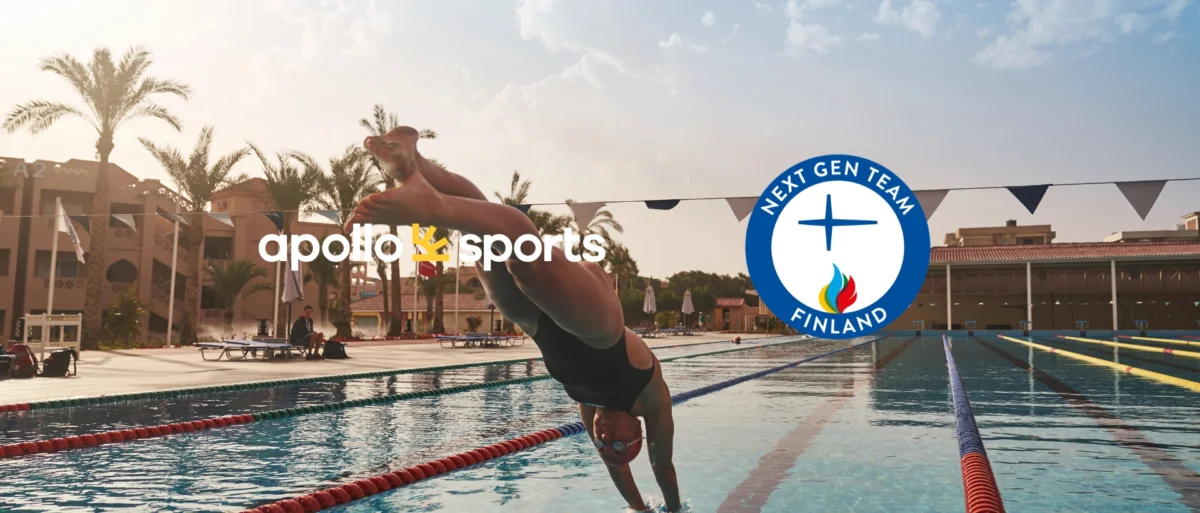
In a strategic move aimed at fortifying the foundation of Finnish elite sports, the Finnish Olympic Committee has announced a landmark partnership with Apollo Sports. This collaboration is designed to provide comprehensive support to the "Next Generation Team Finland"—a handpicked group of 21 emerging athletic talents—as they navigate the arduous journey toward international podiums and professional success.
By integrating world-class training facilities with structured developmental support, the partnership seeks to bridge the gap between national-level promise and global competitiveness. As Finland looks to secure its standing in the international sports arena, this initiative represents a proactive investment in the human capital of the nation’s athletic future.
The Core Mission: Identifying and Cultivating Potential
The Next Generation Team Finland is not merely a roster; it is a meticulously curated individual support program. The initiative is built on the philosophy that identifying future success stories early is only half the battle; the real challenge lies in providing these athletes with the environment necessary to sustain high-intensity growth.
The team, currently comprising 21 athletes across a diverse spectrum of disciplines, represents the vanguard of Finnish sports. The program is designed to provide these individuals with the resources that often remain out of reach for developing athletes: mental coaching, nutritional guidance, recovery protocols, and, crucially, access to elite training environments.
The Role of International Exposure
A central tenet of the partnership is the provision of high-quality international training camps. Beginning in the autumn of 2026 and extending through 2027, Apollo Sports will leverage its global network of sports-oriented resorts to host these athletes. Among the key facilities involved are the renowned Playitas Resort in Fuerteventura and the "Powered by Playitas" collection, including the state-of-the-art Porto Myrina in Greece.
These locations are not chosen for their leisure appeal but for their infrastructure. For an elite athlete, the ability to train in specialized conditions—whether it be track surfaces, aquatic facilities, or climate-controlled environments—is a non-negotiable requirement for reaching the next tier of performance.
Chronology of the Initiative
The development of the Next Generation program follows a broader trend in Finnish sports administration: a move toward centralized, high-efficiency support systems.
- Foundation of the Next Generation Program: The Finnish Olympic Committee established the framework for the Next Generation program to provide a structured pathway for athletes transitioning from junior to senior elite levels.
- Negotiation Phase (Early 2026): Discussions between the Olympic Committee and Apollo Sports began with a shared vision of combining private sector logistics with public sector athletic goals.
- The Partnership Agreement (August 2026): The formal agreement was finalized, cementing Apollo Sports as a primary partner for athletic training camps and infrastructure support.
- The Pilot Phase (Autumn 2026): The first series of international training camps will commence, allowing the 21 selected athletes to test new training regimens in optimized conditions.
- Expansion and Scaling (2027): The partnership will expand its support throughout 2027, focusing on long-term training cycles and sustained international competitive experience.
Supporting Data: Why Specialized Facilities Matter
The transition from a promising athlete to a world-class professional is often defined by the "marginal gains" philosophy. Scientific literature on athletic performance consistently emphasizes that the difference between the podium and the periphery is determined by the quality of daily recovery and the consistency of training loads.
The Science of the "Camp" Environment
Training camps are essential for several reasons:
- Isolation from Distractions: By removing athletes from their daily routines, they can enter a "high-performance bubble" where every hour is dedicated to training, nutrition, or recovery.
- Environmental Optimization: Facilities like Playitas offer specialized equipment and climate-specific training that may not be available in Finland, particularly during the winter months.
- Cross-Discipline Synergy: Bringing 21 athletes from different sports into the same environment fosters a culture of excellence. Cyclists, swimmers, and track athletes can share insights on mental preparation, injury prevention, and performance psychology.
According to the Finnish Olympic Committee’s internal metrics, the primary bottleneck for young athletes is often not the lack of talent, but the lack of consistent, high-level, and injury-free training blocks. By providing a "plug-and-play" environment, the Apollo Sports partnership directly addresses these logistical hurdles.
Official Perspectives: Aligning Vision and Execution
The partnership has received strong endorsement from the leadership at the Finnish Olympic Committee and Apollo Sports, both of whom view this as a symbiotic relationship.
Janne Hänninen, Director of High-Performance Sports, Finnish Olympic Committee
Hänninen emphasizes that talent is a raw material that must be processed correctly to yield results. "The development of a young athlete requires more than just natural talent and motivation; it requires high-quality coaching, a functional support network, and conditions that support both intense training and rigorous recovery," he stated.
Hänninen views the Apollo Sports partnership as a cornerstone of a long-term strategy. "Our work to support the next generation requires diverse partners who understand the nuances of elite sports. I am extremely pleased that Apollo Sports is bringing their expertise to support our next generation of athletes."
Daniel Giray, Head of Sports at Apollo
From the perspective of the private partner, the focus is on the "quality of the daily grind." Giray notes that international camps are meant to supplement, not replace, the fundamental work done in Finland.
"Growing to the top requires long-term work and a high-quality daily life," says Giray. "International training conditions complement the work done in the home country and allow for training cycles designed for the specific needs of each sport. We want to help build environments where a young athlete can focus entirely on training and recovery."
Broader Implications for Finnish Sports
The impact of this partnership extends beyond the 21 athletes directly involved. It serves as a proof-of-concept for how the private sector can engage with the national sports ecosystem.
Strengthening the Commercial Model
Timo Ronkainen, Commercial Director of the Finnish Olympic Committee, points out that the program’s success has garnered significant attention from the Finnish business community. "The exceptionally high level of interest from companies in this program gives us faith in the development of the Finnish sports support system," he says.
The reality of modern sport is that it is capital-intensive. By creating a professional, transparent, and high-impact program like "Next Generation," the Committee is making it easier for corporate sponsors to see the direct return on their investment—not just in terms of marketing, but in the tangible success of young Finnish athletes on the global stage.
The "Multiplier Effect"
When these 21 athletes gain experience at international training camps, they bring that knowledge back to their home clubs and training groups. This "multiplier effect" ensures that the benefits of the program permeate throughout the Finnish sports landscape. Furthermore, by professionalizing the support structure, the program helps prevent the premature burnout of young talent—a common issue in high-pressure sports environments.
Conclusion: A Long-Term Vision
The partnership between Apollo Sports and the Finnish Olympic Committee is a significant step forward for the Next Generation Team Finland. By combining the logistical excellence of a leading travel and sports-resort operator with the high-performance expertise of the Olympic Committee, the program provides a stable foundation for the nation’s most promising talent.
As these 21 athletes embark on their training cycles in Fuerteventura, Greece, and beyond, they do so with the backing of a system designed to maximize their potential. For Finland, the goal is clear: to ensure that when the next generation of champions reaches the international stage, they are not only prepared to compete but are ready to win.
For further information and media inquiries, please contact:
- Finnish Olympic Committee: Karri Koivu | [email protected] | +358 40 511 7721
- Apollomatkat (Apollo Sports): Satu Kontulainen | [email protected] | +358 40 523 4447