In the world of high-end cutlery, the barrier between a "reliable tool" and an "everlasting obsession" is often measured in millimeters and spring tension. Since Bill McHenry and Jason Williams patented the "crossbar lock" in 1996—a mechanism later popularized by Benchmade as the Axis lock—the folding knife industry has remained largely tethered to the original design’s reliance on Omega-style springs. For three decades, this mechanism has been the gold standard for everyday carry (EDC) enthusiasts.
However, in the summer of 2026, Idaho-based custom maker TJ Schwarz shattered the status quo. With the release of the Schwarz Knives Enduro, the industry is witnessing not just a new knife, but a fundamental reimagining of how a crossbar lock functions.
The Core Facts: Innovation Under the Hood
At its heart, the Enduro is a masterclass in American craftsmanship. Handmade in small, meticulous batches, the knife features a 3.3-inch blade forged from MagnaCut—a steel currently reigning supreme for its unparalleled balance of corrosion resistance, edge retention, and toughness. The handles are constructed from robust G10, providing a secure, ergonomic grip.

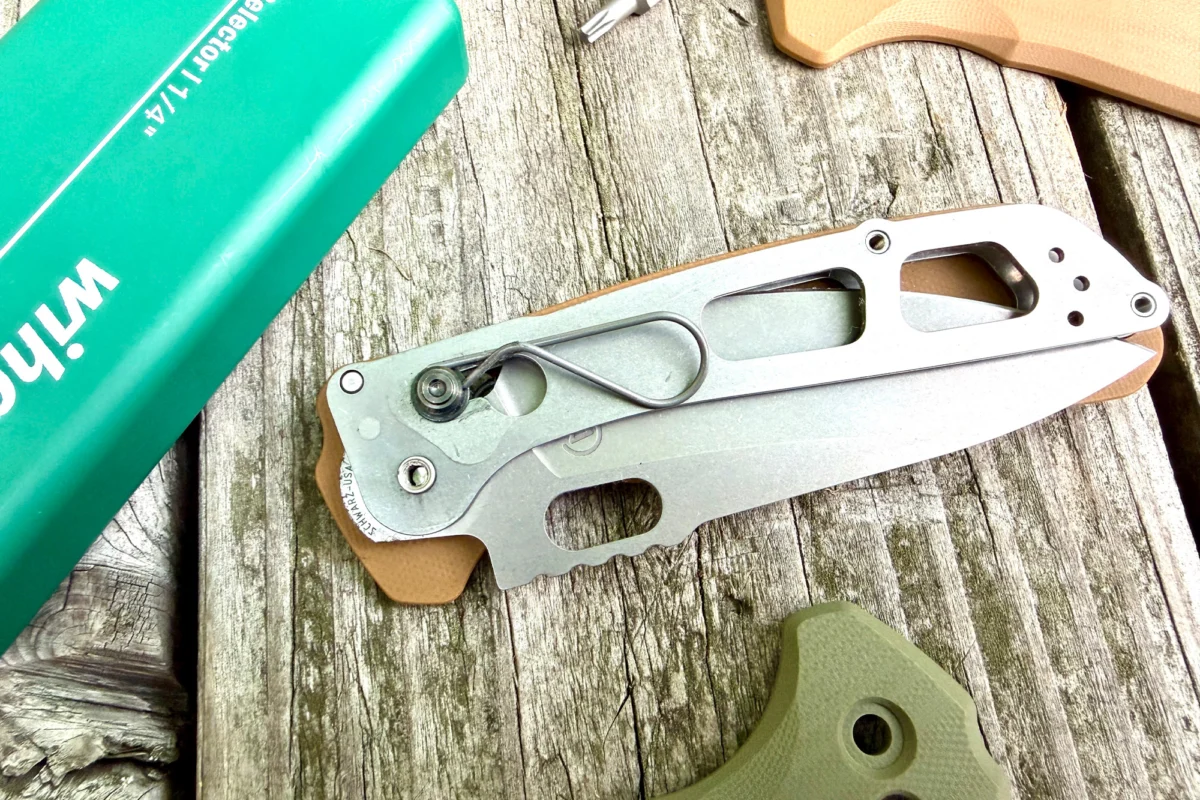
But the defining feature, and the reason this knife has sent shockwaves through the enthusiast community, is the "Enduro Spring." Moving away from the delicate, wire-like Omega springs that have plagued crossbar locks for years, Schwarz has introduced a patent-pending, hand-bent clip design. It functions similarly to a cotter pin, offering a level of structural integrity that effectively eliminates the common failure points associated with traditional crossbar mechanisms.
A Chronology of the Crossbar Lock
To understand why the Enduro is being hailed as a milestone, one must look at the history of the locking mechanism it updates.
- 1996: Inventors Bill McHenry and Jason Williams file the original patent for the crossbar lock. This design offered a distinct advantage: it allowed for a "fidget-friendly" open-and-close action while remaining inherently strong.
- 1999: The mechanism hits the mainstream market through a partnership with Benchmade Knives. It quickly becomes the industry benchmark.
- 2000s–2020s: Despite the lock’s popularity, the "Omega spring" becomes its Achilles’ heel. Over years of heavy use, these springs can fatigue or snap, rendering the lock useless. While manufacturers refined materials and tolerances, the fundamental design of the spring remained largely stagnant.
- Summer 2026: TJ Schwarz announces the Enduro. By replacing the Omega spring with a proprietary, thicker, and more resilient "Enduro Spring," the brand addresses the primary complaint of long-term owners.
Supporting Data: Why the "Hump" Matters
The technical departure from tradition is not merely aesthetic; it changes the user experience entirely. The Enduro Spring provides a distinct, tactile "hump" during the closing process.

Unlike standard crossbar locks that glide smoothly, the Enduro behaves with a deliberate, heavy-duty resistance. This creates a detent-like effect, ensuring that the knife locks into place with a definitive, satisfying snap.
Specifications at a Glance
- Blade Length: 3.3 inches
- Overall Length: 7.80 inches
- Material: MagnaCut Steel
- Locking Mechanism: Patent-pending Enduro Spring Crossbar
- Hardware: T6 Torx
- Manufacturing: Handmade in Idaho, USA
For the end-user, this means more than just longevity. It provides an immediate, visceral feedback loop that confirms the lock has engaged. During testing, the blade showed zero signs of degradation, even when subjected to the rigors of a particularly wet, demanding summer season—a testament to both the heat-treatment of the MagnaCut and the robust nature of the frame construction.
Official Perspectives: The Maker’s Intent
TJ Schwarz has built a reputation on meticulous attention to detail. His workshop, located in Idaho, operates on the principle that if you are going to produce a tool, it should be capable of surviving the life of its owner.

When asked about the design, the consensus from the shop floor is clear: they didn’t want to reinvent the wheel, but rather, they wanted to ensure the wheel never stops turning. By choosing to use a thicker, hand-bent component, the company essentially decided to prioritize durability over the ease of manufacturing.
"The goal wasn’t to make it easy to build," says industry analyst Nick LeFort. "The goal was to make it impossible to ignore. When you hold an Enduro, you feel the weight of the design choices. Every line, every screw, and every spring is there because it serves a function that exceeds current market standards."
The Implications for the EDC Market
The release of the Enduro poses a fascinating question for the knife market: Is the consumer ready for a higher-priced, "over-engineered" product in an era of $50 budget folders?

The "Fidget" Factor
One of the most significant implications of the Enduro is the shift in user behavior. Because the mechanism is unique and robust, it invites interaction. It is not a knife that stays tucked away in a drawer; it is a companion for the pocket. The tactile resistance—that slight "pop" of the spring—creates an addictive quality that will likely define the "Enduro Effect" for years to come.
The Price of Craftsmanship
Critics point to the price point as a potential barrier for entry. In a market flooded with mass-produced, budget-friendly options, the Enduro stands in the luxury tier of daily tools. However, the value proposition is aimed squarely at the enthusiast who understands the difference between a tool that is replaced and a tool that is inherited.
Long-term Reliability
The most profound implication is the potential for a shift in design philosophy across the industry. If the Enduro proves as durable as initial testing suggests, other manufacturers may find themselves forced to revisit their own locking mechanisms. The patent-pending nature of the Enduro Spring suggests that Schwarz Knives is confident they have solved a problem that has persisted for thirty years.

Final Verdict: Is It Worth the Investment?
The Schwarz Knives Enduro is not a knife for the casual user who views their gear as disposable. It is a precision instrument designed for those who value the intersection of art, engineering, and utility.
While the tactile response of the spring may surprise those accustomed to the "buttery smooth" action of standard folders, that resistance is a hallmark of the knife’s soul. It is a reminder that you are engaging with a custom-built mechanism that was designed to be used, abused, and passed down.
In a world of mass-produced, automated manufacturing, the Enduro stands out as a defiant, hand-crafted statement. Whether it signals the end of the traditional Omega spring or simply serves as a premium alternative, one thing is certain: the Enduro is not a knife meant for a display case. It was born for the pocket, the field, and the long haul. If you are looking for a tool that transcends the ordinary, the Enduro is, without question, the new standard to beat.