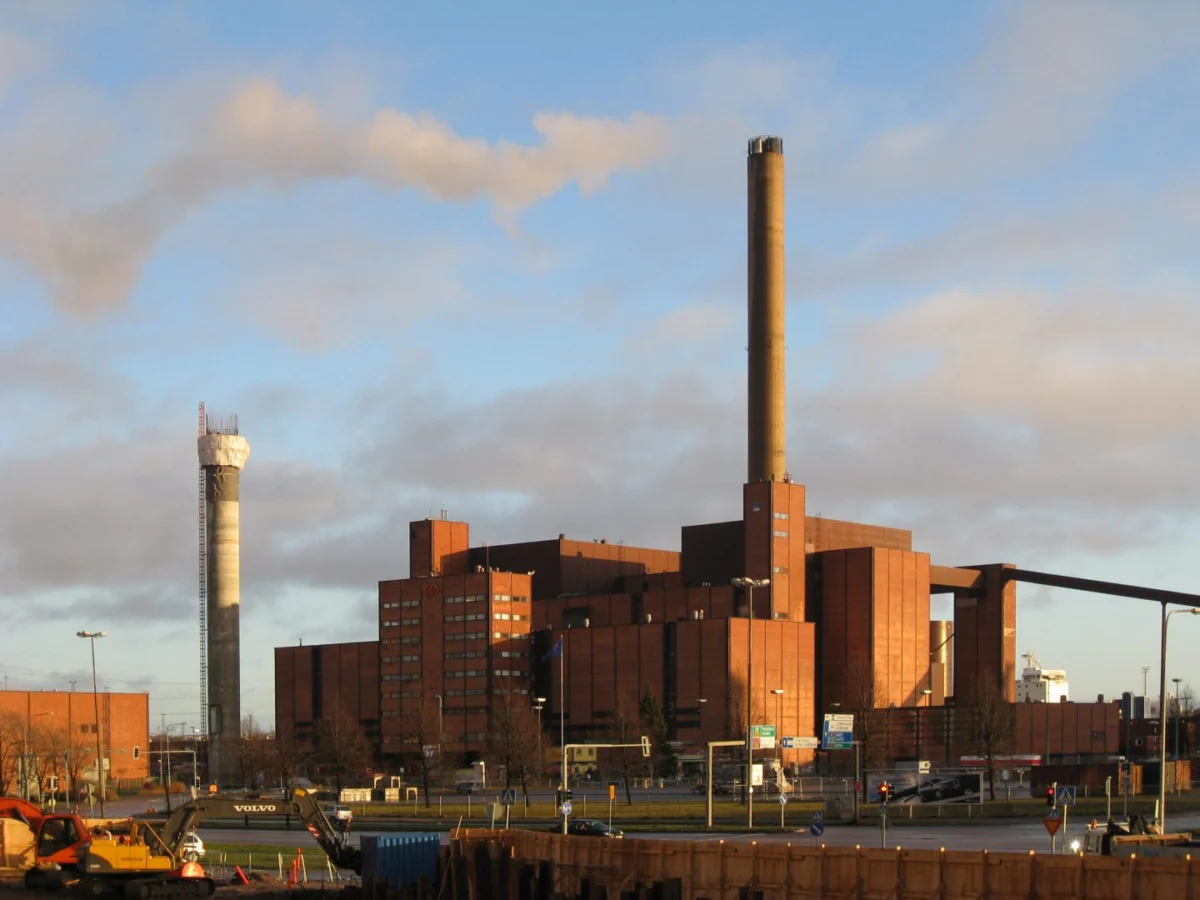
The transition to a carbon-neutral energy landscape in Finland is currently facing a complex regulatory bottleneck. At the center of the debate is a proposed amendment to the legislation governing energy guarantees of origin and sustainability criteria. The Finnish Association for Nature Conservation (Suomen luonnonsuojeluliitto) has issued a critical response to the government’s draft proposal, arguing that while the recovery of waste heat is vital for climate goals, the current legislative trajectory risks diluting the definition of "waste heat" and undermining the incentives for genuine circular economy practices.
Main Facts: The Core of the Dispute
The Finnish government is currently reviewing a legislative update that would modify the Act on Guarantees of Origin for Energy and the sustainability criteria for renewable energy. The core of the controversy lies in a proposed expansion of the definition of "waste heat."
Under the new draft, heat generated by waste-to-energy plants—facilities that incinerate municipal and industrial waste to produce heat and electricity—would, under certain conditions, qualify for a "waste heat" guarantee of origin. The Finnish Association for Nature Conservation (FANC) has formally voiced its opposition to this categorization.
Their argument is fundamentally rooted in the hierarchy of energy policy:
- Efficiency first: True waste heat is heat that is a byproduct of an industrial process that would otherwise be lost to the atmosphere.
- The "Burning" Problem: By classifying heat derived from waste incineration as "waste heat," the government is, in effect, providing a regulatory incentive for combustion-based energy production.
FANC warns that this creates a false equivalence. By labeling incineration-derived heat as "waste heat," the market may steer capital investment toward maintaining waste-burning infrastructure rather than prioritizing waste reduction, recycling, and truly energy-efficient industrial processes.
Chronology: A Policy in Transition
The timeline of this regulatory shift reflects the broader European push to harmonize energy labeling, which Finland is now attempting to transpose into national law.
- Early 2023: The European Union updates directives regarding the promotion of energy from renewable sources, emphasizing the need for robust guarantees of origin (GOs) to increase transparency for end-users.
- Late 2023: The Finnish Ministry of Economic Affairs and Employment begins drafting amendments to the national legislation to comply with EU standards while integrating specific Finnish energy sector needs, including the extensive use of district heating.
- Q1 2024: The draft proposal is circulated for stakeholder comments. It includes the controversial provision to expand the waste heat definition to cover certain incineration-based heat production.
- Present Day: The Finnish Association for Nature Conservation, alongside other environmental groups and industry watchdogs, submits their formal response, urging a revision of the criteria before the bill reaches the Parliament for a final vote.
Supporting Data: The Energy Landscape in Finland
To understand why this is a point of contention, one must look at the structural reality of the Finnish energy sector. Finland has a highly developed district heating network, which has historically relied on a mix of fossil fuels, peat, and, increasingly, biomass and waste.
The Role of Waste-to-Energy
Waste incineration is a major component of Finland’s waste management strategy, effectively diverting non-recyclable waste from landfills. However, the carbon intensity of this waste is significant, as it often contains plastics and other fossil-derived materials.
- Biomass Dependency: A substantial portion of Finland’s "renewable" heat production is derived from forest biomass. Critics note that the current sustainability criteria for this biomass are insufficient. If incineration of waste is added to the "waste heat" category, it risks creating a "green" veneer over activities that are, at their core, combustion processes.
- Market Distortion: The energy market relies heavily on price signals. If incinerated heat receives the same regulatory "green" stamp as true industrial waste heat (e.g., from data centers or high-heat industrial processes), the financial attractiveness of developing more innovative, non-combustion heat recovery systems decreases.
The Consumer Perspective
Consumers today are increasingly demanding transparency. They want to know that their heating and electricity bills reflect a sustainable choice. FANC points out that current guarantees of origin are not sufficient to communicate the full environmental impact.
"Pelkkä alkuperätakuu" (a mere guarantee of origin) does not inherently account for the ecological cost of the fuel source. For a consumer, a guarantee of origin for "renewable heat" might be misleading if that heat comes from the intensive burning of forest biomass, which has complex impacts on carbon sinks and biodiversity.
Official Responses and Expert Analysis
The Finnish Association for Nature Conservation (FANC) has not merely criticized the draft; they have provided a roadmap for what they believe is a more sustainable approach.
The Stance of the FANC
Nelli Immonen, an climate expert at the Association, emphasizes that the legislative focus should be redirected toward the "prevention of waste generation." According to FANC, the government should consider the introduction of a waste incineration tax. Such a tax would provide a direct financial incentive to prioritize circular economy solutions—reducing waste at the source rather than relying on incineration for energy.
The "EKOenergy" Alternative
Highlighting their commitment to high standards, FANC points to their own initiative: the EKOenergy label. This international environmental label for energy is more stringent than the standard guarantees of origin required by current law. By promoting a system that goes beyond the regulatory minimum, the Association aims to show that it is possible to provide consumers with credible, high-quality environmental data without resorting to the "greenwashing" of combustion-based heat.
The Transparency Obligation
FANC has also supported the proposed obligation for gas and hydrogen sellers to disclose the proportion of renewable energy in their billing. This is a step in the right direction, they argue, as it empowers the consumer to make informed choices. However, they insist that this transparency must be applied to all forms of energy, including heat, and that the definitions used in these disclosures must be scientifically rigorous.
Implications: The Road Ahead
The implications of this legislative choice are profound, not just for the environment, but for the future of Finland’s industrial strategy.
1. Risk to Innovation
If the definition of "waste heat" is expanded, Finland may find itself locked into an incineration-heavy energy model for decades. Infrastructure built today has a long lifespan; once capital is invested in waste-to-energy plants, the "lock-in effect" makes it difficult to pivot to newer, cleaner technologies like large-scale heat pumps or deep geothermal energy.
2. Credibility of Climate Policy
Finland has set some of the world’s most ambitious carbon neutrality targets. Achieving these requires absolute clarity in carbon accounting. If the term "waste heat" is seen as a way to hide the emissions associated with waste incineration, it will damage the credibility of Finland’s overall climate policy in the eyes of both the public and international observers.
3. The Circular Economy Paradox
The core tension is between the energy sector and the waste management sector. From a waste management perspective, burning waste is often the "least-worst" option compared to landfilling. However, from a climate perspective, it is a significant source of emissions. The government’s challenge is to ensure that the regulation of the energy sector does not inadvertently incentivize the production of waste just to keep the incinerators running at capacity.
Conclusion: A Need for Precision
The Finnish Association for Nature Conservation’s intervention serves as a necessary check on the government’s current proposal. By demanding a more precise definition of waste heat and advocating for policies that favor waste reduction over waste combustion, the Association is pushing for a truly sustainable energy transition.
As the legislative process continues, the government must balance the immediate need for reliable heat production with the long-term necessity of a circular economy. The decision will determine whether Finland remains a leader in climate-smart energy policy or whether it chooses a path of convenience that compromises its environmental integrity. For the consumer, the issue remains clear: a label is only as good as the reality it represents. If "waste heat" starts to mean "burning trash," the public trust in the green transition may be the first thing to evaporate.