In the modern wellness landscape, few figures have polarized the public quite like Bryan Johnson. The tech entrepreneur and subject of the Netflix documentary Don’t Die has become the face of a high-stakes, multi-million-dollar experiment: the quest to turn back the biological clock. While most people mark their existence by the number of candles on their birthday cake, Johnson is obsessed with a different metric: his "biological age."
Johnson’s regimen—which includes dozens of daily supplements, aggressive skin treatments, and even controversial plasma infusions—is fueled by a singular goal: to achieve the lowest possible biological age. He claims these efforts have rendered him 5.1 years younger than when he began. Yet, this narrative is not without its skeptics. A New York Times investigation recently challenged his metrics, suggesting his biological age may have actually increased by a decade. This discrepancy highlights the central tension of the longevity movement: Is biological age a precise scientific tool, or is it a marketing mirage?
The Science of Aging: Chronological vs. Biological
To understand the current obsession, one must first distinguish between chronological and biological age. Chronological age is the simple passage of time—the years you have spent on Earth. Biological age (bio age) is a measure of your internal physiological state.
Consider a tale of two 50-year-olds. "Chang" leads a sedentary, high-stress life in a polluted urban center, fueled by processed foods and nicotine. "Jabari," conversely, is a physically active mountain dweller who prioritizes whole foods, meditation, and consistent movement. While they share the same birth year, their cellular health likely diverges sharply. Scientists use "biomarkers"—measurable indicators of biological processes—to quantify this divergence. Whether through telomere length (the protective caps on chromosomes) or DNA methylation (a process that chemically alters DNA), these tests attempt to translate complex biological data into a single, understandable number.
A Chronology of the Bio-Age Boom
The interest in measuring aging did not appear overnight. It is the culmination of decades of research that has slowly bled into the mainstream:
- 1990s–2000s: Researchers identify telomeres as a potential "molecular clock" for cellular aging.
- 2013: Steve Horvath introduces the "Horvath Clock," a method for calculating biological age based on DNA methylation patterns. This becomes the gold standard for scientific aging studies.
- 2020s: Longevity influencers like Peter Attia, Andrew Huberman, and Joe Rogan bring the conversation to millions of listeners.
- Present Day: The market is flooded with direct-to-consumer blood, saliva, and urine testing kits, making bio-age data accessible to anyone with a credit card.
Decoding the Biomarkers: What Should You Measure?
If you are looking to assess your own health, you do not need to be a billionaire. Many clinically validated biomarkers are already available through your primary care physician.
The "Free" Indicators of Longevity
Before turning to expensive commercial tests, experts suggest looking at functional markers that indicate how well your body is actually performing.
- The Sitting-Rising Test (SRT): This assesses strength, balance, and flexibility. Lowering yourself to the floor and rising without support is a powerful predictor of all-cause mortality.
- Grip Strength: Often overlooked, handgrip strength is a surprisingly accurate proxy for overall muscle mass and neuromuscular health. Weak grip strength has been linked to higher rates of cardiovascular disease and cognitive decline.
- Balance (The One-Legged Stance): Standing on one leg for 10 seconds or more is more than a test of coordination; it involves the integration of the eyes, inner ear, and brain. Inability to hold this pose is a red flag for neurological and physical deterioration.
- Fatigability: The Pittsburgh Fatigability Scale helps measure how quickly you wear out. Persistent, unexplained exhaustion is often a leading indicator of an underlying health issue.
- Body Composition: Weight on a scale is an outdated metric. Focusing on muscle-to-fat ratio via tape measurements or DEXA scans provides a much clearer picture of your metabolic health.
The Clinical Standard
For those seeking objective data, your doctor’s office remains the best laboratory. Annual blood panels covering cholesterol (LDL, HDL, Apo B), fasting glucose, HbA1c, and inflammatory markers like C-reactive protein provide the most actionable insights. These numbers allow for targeted, effective interventions that have been proven to extend life—unlike some of the more "experimental" commercial tests.
Commercial Testing: The High-Tech Frontier
Commercial kits—such as those measuring DNA methylation or telomere length—offer a window into your cellular health, but they come with significant caveats.
The "Individual Organ" Problem: Aging is not uniform. Your liver might be aging at a different rate than your heart or brain. Most commercial blood-based tests provide a "generalized" age, which may not capture the specific health risks an individual faces.
The Sales Trap: Many companies pair their test results with an aggressive push for expensive, proprietary supplement stacks. These should be viewed with extreme skepticism. If a company is profiting from your anxiety, their recommendations may be designed to sell products rather than optimize your health.
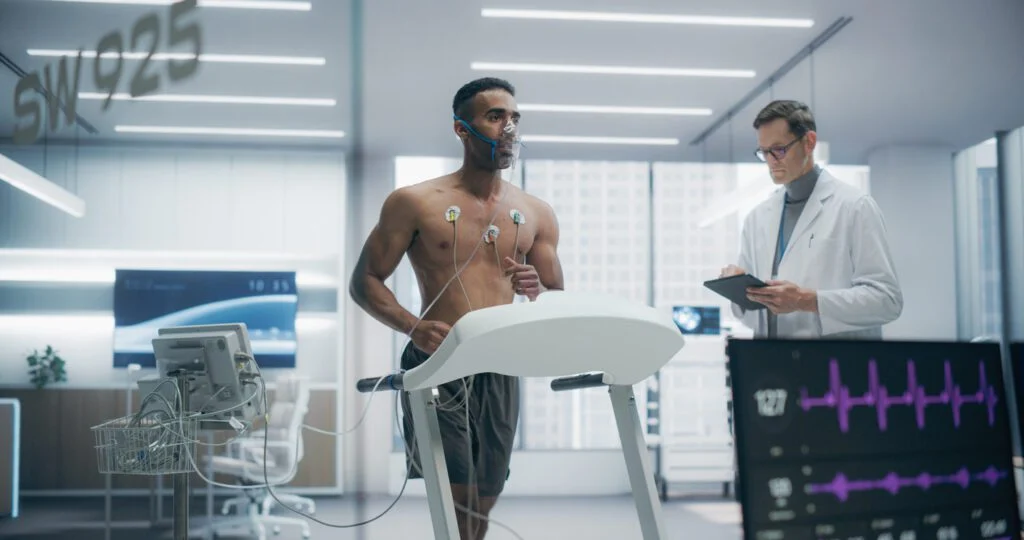
The VO2 Max Factor: Arguably the most scientifically robust metric for longevity is VO2 max—the maximum amount of oxygen your body can utilize during intense exercise. It is a powerful predictor of cardiovascular health and life expectancy. While lab-based testing is the gold standard, smartwatches and field tests like the 12-minute "Cooper Test" offer accessible ways to track your aerobic capacity over time.
Implications: Turning Data Into Action
The danger of the current "bio-age" obsession is the temptation to treat the number as a moral judgment. It is not. It is merely data. The true utility of these tests lies in their ability to inform behavioral change.
The Two Common Pitfalls
- Ignoring the "Big Rocks": Many people obsess over trendy supplements or high-tech infusions while ignoring the "evergreen" basics: consistent sleep, stress management, regular resistance training, and a high-fiber, nutrient-dense diet. These foundational habits are the only proven ways to move the needle on biological age.
- Data Without Action: Knowing your biological age without changing your lifestyle is like checking your reflection in a mirror to see spinach in your teeth and then walking away without removing it. If the data does not lead to a shift in how you move, eat, or sleep, it is a waste of resources.
The Verdict: Is It Worth It?
For the average person, the "bio age" trend serves as a double-edged sword. On one hand, it has successfully gamified health, motivating thousands to exercise, monitor their blood markers, and take their longevity seriously. On the other, it risks promoting a "quick fix" mentality where consumers look for magic bullets in a test tube rather than in the gym or the kitchen.
If you are a professional in the health space, the goal is to shift the conversation from "optimizing for a number" to "optimizing for functional longevity." The most effective health strategy is not the one that promises the most dramatic reversal in a lab report; it is the one you can sustain for the next forty years.
As the science of aging continues to evolve, we will undoubtedly see more accurate, affordable, and personalized tests. But until then, the best indicator of your future is not an expensive DNA kit—it is the consistency with which you treat your body today. True "reverse aging" isn’t found in a vial of plasma; it is built in the daily, often boring, but profoundly effective habits that sustain life.