Introduction: The Mystery of the Clammy Base Layer
During periods of intense physical exertion, the human body acts as a biological furnace, often generating sweat faster than it can evaporate into the surrounding air. When evaporation fails, liquid sweat accumulates on the skin, necessitating a sophisticated transport system to move that moisture away from the body. For decades, outdoor enthusiasts have relied on "moisture-managing" base layers to solve this problem, yet many hikers have experienced the frustrating reality of a garment that promised to keep them dry but instead left them feeling soaked and chilled.
A few months ago, I conducted a performance evaluation of three distinct base-layer garments, which yielded significant performance discrepancies. This sparked a fundamental question: Which fabrics are truly effective at moving liquid sweat away from the skin and into the next layer of clothing?
To solve this, I developed a specialized liquid transfer test. By tracking liquid water as it migrates through a simplified clothing system, the test measures three variables: how much water remains on the "skin," how much is retained within the base layer, and how much successfully migrates to the outer layer. The findings challenge many industry assumptions and provide a clearer, more technical understanding of why some fabrics thrive under pressure while others fail.
Chronology: From Anecdote to Empirical Testing
The journey toward understanding moisture transport began with anecdotal evidence from high-exertion mountaineering, where the "clammy" sensation of a wet base layer is often the precursor to hypothermia.
- Initial Assessment: The process started with a limited evaluation of three fabrics. While differences were noted, the mechanism of why they differed remained opaque.
- Expansion of Scope: To establish a broader baseline, I expanded the study to eight different fabric types, ranging from traditional synthetics to specialized mesh and insulation-based designs.
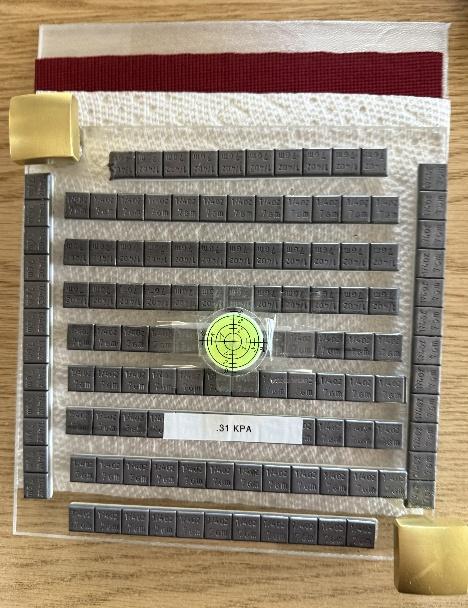
- Data Modeling: Utilizing a proprietary test device (Figure 1), I simulated the pressure-based environment of a hiker wearing a pack or moving under heavy load, capturing liquid movement in real-time.
- Theoretical Validation: I cross-referenced these results with foundational physics literature, including the 19th-century work of Young and Laplace and the 1921 breakthrough studies by Washburn on capillary flow.
Supporting Data: The Tug-of-War of Moisture
The core of this research rests on the distinction between hydrophobic and hydrophilic fiber behavior. Contrary to popular marketing, the performance of these fabrics is not dictated by their ability to "wick" alone, but by their interaction with physical pressure.
Hydrophobic Fabrics: The Pore-Space Paradox
Hydrophobic base layers are often marketed as "staying dry." In a literal sense, this is accurate: the fibers themselves do not absorb water. However, the study revealed a critical flaw: fabrics are predominantly empty space.
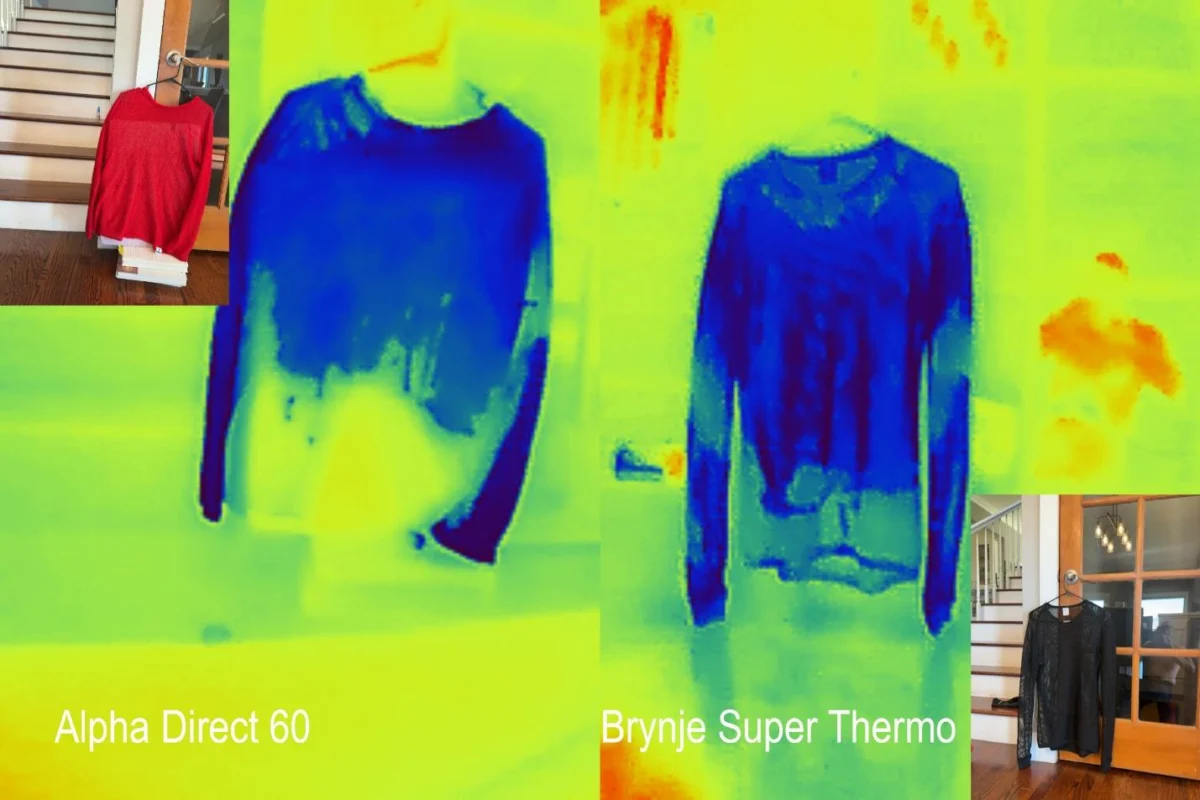
When a hydrophobic garment is subjected to high-intensity exertion, liquid sweat does not disappear; it settles into the interstitial pore spaces between fibers. My testing showed that even when fibers are repellent, the fabric can become saturated with liquid water. For instance, in our testing, a Brynje mesh shirt retained 87 grams of sweat, while an Alpha Direct shirt trapped 62 grams.
The determining factor for whether a garment feels "wet" is the balance between the rate of sweat ingress and the rate of liquid transfer. Hydrophobic fabrics require external pressure to force water through their structure. This pressure—generated by pack straps, body movement, or garment tension—is essential for moving sweat away from the skin. If the "breakthrough pressure" is not met, the water remains trapped against the skin, rendering the hydrophobic property moot.
Hydrophilic Fabrics: The Trap of Capillary Action
Hydrophilic fabrics, such as merino wool or certain treated synthetics, work by absorbing moisture through capillary action. While effective at pulling sweat from the skin, this strength is also a significant weakness.
Because these fabrics possess hydrogen bonding sites, they are chemically inclined to hold on to water. Once the liquid is absorbed, it requires a significant "draw" from the receiving layer to move the water further. If the outer layer is already saturated or lacks the capacity to wick, the hydrophilic base layer acts as a reservoir, trapping moisture against the skin and inhibiting the body’s ability to cool down efficiently.
The Physics of Breakthrough Pressure
The study identifies "breakthrough pressure" as the primary metric for performance in hydrophobic layers. Based on the Laplace-Washburn equation, this pressure is a function of:
- Pore Size: Larger openings generally facilitate easier flow, provided the structure is well-connected.
- Contact Angle: A measure of how a droplet sits on the fiber. Angles above 90° signify hydrophobic behavior.
- Pathways: The three-dimensional arrangement of yarns determines whether water can move through the garment or if it will pool in constricted areas.
My testing confirmed that fabrics with larger, well-connected pores and higher contact angles were generally more effective at transferring moisture when subjected to the localized pressures typical of hiking. Conversely, fabrics with dense, constricted pathways frequently acted as barriers, causing the very sweat buildup they were designed to prevent.
Implications for Future Design and Selection
The findings of this study have profound implications for both manufacturers and consumers.
For Manufacturers
The data suggests that "moisture management" marketing is often too reductive. Designers should prioritize:
- Optimizing Pore Geometry: Rather than just fiber chemistry, the structural pathways within a fabric must be engineered to facilitate low-pressure liquid transfer.
- Layer Synergy: A base layer should not be tested in a vacuum. Its performance is inextricably linked to the moisture-handling capacity of the mid-layer or shell placed over it.
For Consumers: How to Read the Market
When selecting a base layer, consumers should move beyond the "wicking" label and consider the activity level:
- High Exertion/Cold Conditions: If you are wearing a heavy pack that creates consistent pressure against your back and shoulders, a high-loft hydrophobic mesh (like the Brynje tested) may provide the best balance of air circulation and moisture breakthrough.
- Low to Moderate Exertion: Hydrophilic fabrics remain excellent for regulating temperature during lower-output activities, as they hold moisture in a way that allows for more gradual, controlled evaporation.
Conclusion: A New Standard for Performance
This research underscores that there is no "miracle fabric." Every base layer is a compromise between moisture absorption, liquid transfer, and thermal retention.
By understanding the physics of capillary flow and the importance of breakthrough pressure, we can stop evaluating gear based on vague marketing claims and start choosing apparel that aligns with the mechanical realities of human physiology. When skin is wet, the question is not just where the water goes, but what forces are pushing it there. Future developments in textile engineering must account for these dynamics to truly improve the comfort and safety of outdoor adventurers.
Summary of Key Findings
- Hydrophobic Saturation: Hydrophobic fabrics can and do become "wet" when liquid fills their internal pore spaces.
- Pressure Dependence: Transfer in hydrophobic layers is not automatic; it is driven by physical pressure that pushes liquid through the fiber matrix.
- The Capillary Trap: Hydrophilic fabrics are highly efficient at pulling sweat from the skin but inherently resistant to releasing that water to subsequent layers.
- Pore Engineering: The structural connectivity of a fabric’s pore network is just as important as the hydrophobic or hydrophilic nature of the fibers themselves.