In the high-stakes world of professional bodybuilding, where every fiber of muscle is analyzed under the microscope of judges and fans alike, technique is everything. Recently, the fitness community found itself embroiled in a digital debate regarding the biomechanics of the narrow-grip lat pulldown—a staple exercise for those seeking a dense, thick, and powerful back.
The controversy ignited when 2019 Mr. Olympia champion Brandon Curry took to social media to shut down critics who were unfairly targeting fellow bodybuilding legend Victor Martinez. The incident highlights a growing disconnect between online "armchair experts" and the actual, nuanced physiological practices of elite athletes. Curry, a master of functional hypertrophy, did not just defend Martinez; he provided a masterclass on why "textbook" form is often an enemy of genuine muscle activation.
The Chronology of a Digital Controversy
The firestorm began beneath a training video posted by Victor Martinez, affectionately known as the "Dominican Dominator." In the footage, Martinez was performing a series of narrow-grip lat pulldowns. To the casual observer, or those trained strictly on rudimentary fitness diagrams, Martinez appeared to be performing the movement "incorrectly." Specifically, the critics pointed to the fact that Martinez maintained a permanent bend in his elbows throughout the duration of the set, refusing to allow his arms to reach full extension at the top of the movement.
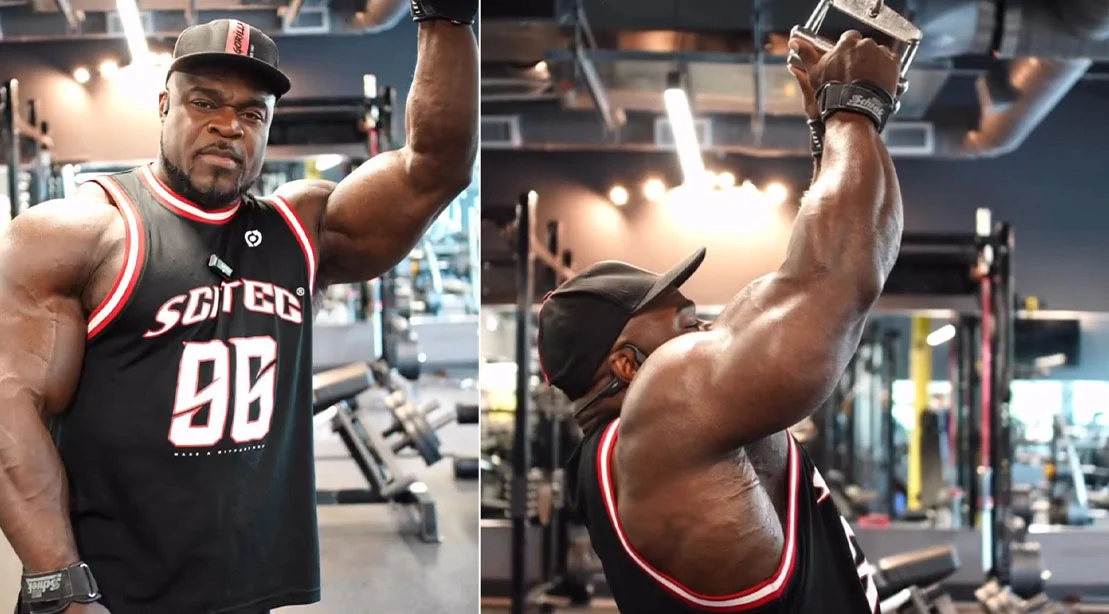
As the comment section began to fill with unsolicited advice and accusations of poor form, the video caught the attention of Brandon Curry. Having spent decades under the iron, Curry recognized that what the commenters saw as a "mistake" was actually a sophisticated technique designed to maximize latissimus dorsi engagement while minimizing bicep interference.
Incensed by the lack of nuance displayed by the digital peanut gallery, Curry recorded his own rebuttal. He did not mince words, aiming to correct the record for his audience of over one million Instagram followers. "I realize a lot of people look at [Martinez] and say that he’s doing it wrong," Curry noted in his video. "Well, I think he’s doing it right."
The Physiology of the Narrow Grip: Why Width Isn’t Everything
To understand the gravity of Curry’s defense, one must understand the biomechanics of back training. The lat pulldown is the quintessential exercise for back development, but its efficacy depends entirely on the intention of the lifter.
Wide Grip vs. Narrow Grip
While a wide-grip lat pulldown is widely accepted as the gold standard for creating the coveted "V-taper"—the wide, winged appearance of the lats—it is not the only tool in the bodybuilder’s arsenal. The narrow-grip variation serves a different, equally vital purpose: adding density and thickness to the middle and lower regions of the back. By narrowing the grip, the lifter changes the line of pull, shifting the mechanical stress away from the outer edges of the lats and toward the mid-back musculature, including the rhomboids and lower traps.
The Myth of Full Extension
The core of the social media critique rested on the concept of "Range of Motion" (ROM). Modern fitness culture often emphasizes moving a weight through the greatest possible distance to achieve hypertrophy. However, in professional bodybuilding, "tension" is a more valuable currency than "distance."
When a lifter allows their arms to fully extend at the top of a lat pulldown, they often shift the tension from the target back muscles onto the tendons of the elbow and the bicep brachii. By keeping the elbow "creased" or slightly bent, as Martinez and Curry advocate, the lifter maintains constant, unyielding tension on the lats. The moment the arm straightens, the muscle essentially "rests" for a split second, and the mechanical advantage shifts away from the back.
Brandon Curry’s Technique: The Scapular Focus
In his instructional breakdown, Curry demystified the movement, turning it from a simple "pull-down" into a sophisticated exercise in scapular manipulation.
The "Bent-Elbow" Mandate
Curry’s primary advice is to begin the movement with the elbow already pre-bent. "One of the most effective ways, I think, is you start with a bent elbow," Curry explained. By keeping the arm in this fixed, semi-flexed position, the lifter prevents the arms from taking over the lift. He cautioned against the urge to flare the elbows outward, which can lead to shoulder impingement and a loss of lat engagement.
The Scapula as the Engine
The most profound takeaway from Curry’s tutorial is the shift in focus from the hands to the shoulder blades. He argues that the arms are "besides the point."
"You’re trying to train your back, not trying to train your arms," Curry emphasized. The movement should not be initiated by the biceps pulling the bar down; rather, it should be initiated by the elevation and subsequent depression of the scapula. When the lifter allows the shoulders to elevate—stretching the lats under load—and then drives the elbows down and back, they are working the muscle through its true functional range.
Supporting Data: Why "Correct" is Relative
Is there scientific merit to Curry’s approach? The answer lies in the distinction between "recreational fitness" and "bodybuilding."
Recreational fitness often promotes general health, joint longevity, and basic strength patterns. In that context, a full range of motion (full extension) is often encouraged to ensure joint health and functional mobility. However, bodybuilding is a sport of targeted hypertrophy. The goal is to isolate a specific muscle group and force it to work harder than it would under "natural" conditions.
Research into EMG (electromyography) activity in back training suggests that constant tension is a primary driver of sarcoplasmic hypertrophy. By keeping the elbows bent, the lifter increases the "Time Under Tension" (TUT) for the lats. When the arm is fully extended, the latissimus dorsi often loses the peak contraction that is necessary to trigger the chemical pathways associated with muscle growth. Thus, for an elite bodybuilder like Victor Martinez, a "shorter" range of motion is actually a more "advanced" range of motion.
Official Responses and the "Expert" Problem
The clash between Curry and the internet critics underscores a pervasive issue in the modern fitness industry: the Dunning-Kruger effect. As social media platforms become the primary source of fitness education, the loudest voices are often those with the least practical experience.
Curry’s response was a stern reminder of the importance of pedigree. "Whenever you think somebody’s doing something wrong, you may just not know the nuance to what they’re really doing right," he noted.
This sentiment is echoed by many professional trainers who see athletes being harassed online for using techniques that differ from textbook diagrams. The "experts" online often fail to account for:
- Injury History: Professional athletes often modify movements to work around decades of wear and tear.
- Individual Biomechanics: Arm length, torso length, and shoulder mobility mean that no two lifters perform an exercise with the exact same geometry.
- Training Goals: A powerlifter training for back strength will use different form than a bodybuilder training for back aesthetics.
Implications for the Future of Training
The incident involving Curry and Martinez serves as a call to action for the fitness community to embrace a more nuanced view of exercise. It is a reminder that the best results often come from experimentation and a deep understanding of one’s own anatomy, rather than a rigid adherence to internet-based "rules."
For the aspiring bodybuilder, the lesson is clear: stop counting inches and start counting contractions. If a specific range of motion leaves your lats feeling exhausted and your biceps feeling fresh, you are likely doing it correctly. If your arms are the limiting factor, you have lost the focus of the exercise.
As Brandon Curry continues to demonstrate, the bridge between an amateur and a champion is often built on the ability to ignore the noise and focus on the physiological reality of the lift. By defending Victor Martinez, Curry didn’t just protect a peer; he protected the integrity of high-level bodybuilding.
In a world where everyone has a camera and a platform, the loudest voices are rarely the most informed. The next time you find yourself scrolling through a comment section, remember the words of the 2019 Mr. Olympia: there is almost always a nuance to what a pro is doing right—a nuance that is often hidden just beneath the surface of the "obvious" form.
To stay updated on Brandon Curry’s training insights and his journey through the professional circuit, you can follow him on his official Instagram page here.