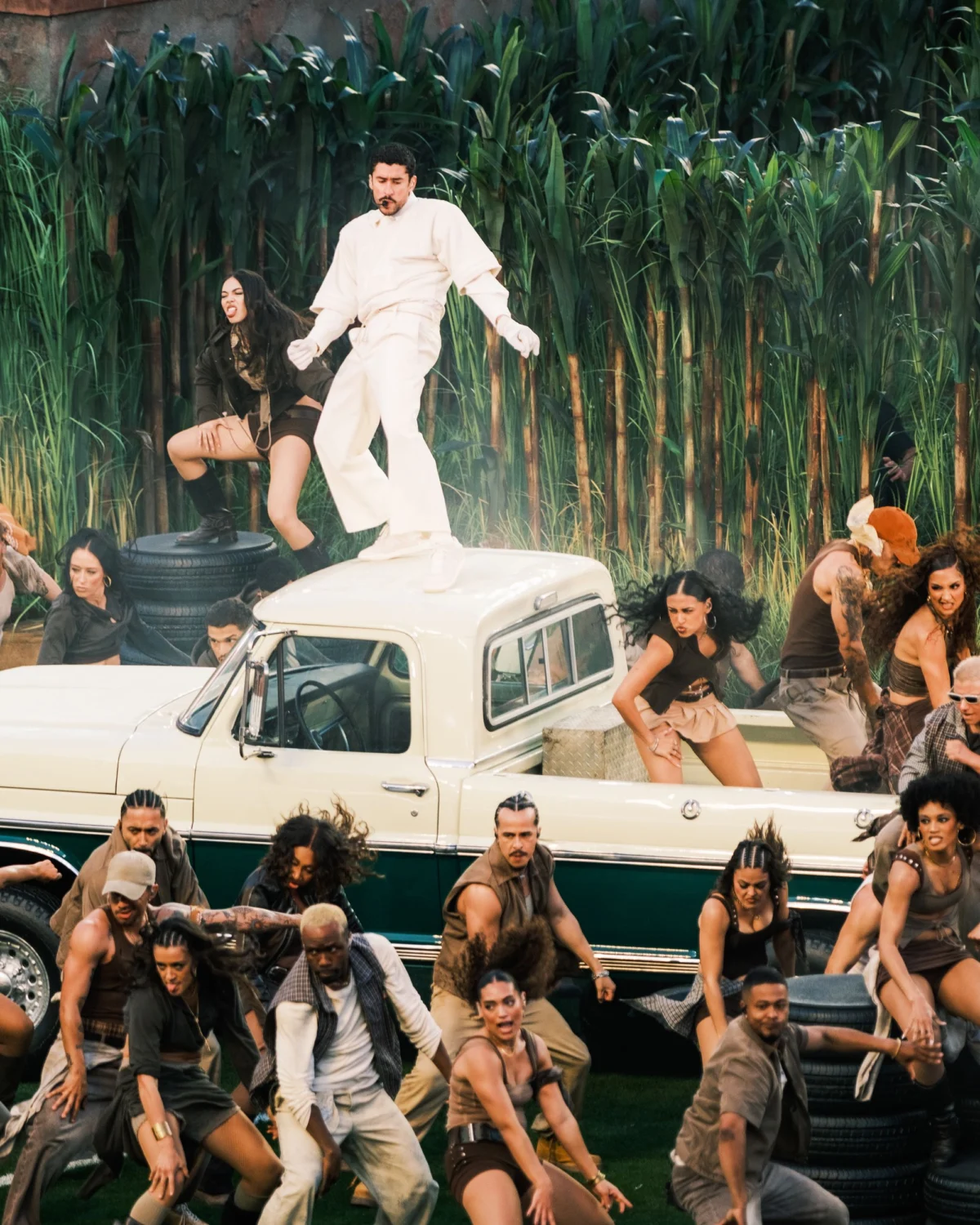
In the high-stakes arena of the Super Bowl halftime show, cultural friction is often as inevitable as the game itself. However, the performance delivered by Puerto Rican global superstar Bad Bunny in February sparked a unique conflagration of controversy. Long before the artist stepped onto the field, his vocal critiques of Immigration and Customs Enforcement (ICE) and his commitment to performing exclusively in Spanish had already made him a target for political pundits and online influencers.
Following a performance that reached a staggering 4.157 billion viewers across broadcast, YouTube, and social media platforms, the backlash intensified. While the spectacle—which featured guest appearances from Lady Gaga and the iconic Maria Antonia Cay—was a commercial and cultural milestone, it simultaneously triggered a flood of formal complaints to the Federal Communications Commission (FCC). A recent Freedom of Information Act (FOIA) request filed by WIRED has unveiled the granular reality of that backlash, revealing a deep-seated polarization regarding language, cultural expression, and the evolving boundaries of broadcast decency.
The Anatomy of the Backlash: A Data-Driven Perspective
The FCC, the federal agency tasked with regulating interstate and international communications, ultimately received 2,155 complaints regarding the Super Bowl broadcast. A comprehensive analysis of these records reveals that the vast majority of the ire was directed squarely at the halftime show.
The data paints a vivid picture of the grievances. The top three states contributing to the complaint volume were Texas, Florida, and California—regions with significant Spanish-speaking populations and robust political discourse. Linguistic analysis of the grievances highlights the drivers of the outrage: 919 complaints explicitly mentioned "Bad Bunny," 735 flagged the use of "Spanish," and 497 utilized the descriptor "vulgar."
These complaints were not merely aesthetic; they were ideological. Many viewers expressed profound discomfort with the perreo—the traditional, high-energy dance style characterized by intense grinding and pelvic motion—which appeared on screens during the performance. One viewer from Leighton, Alabama, wrote, "Bad Bunny performed these lyrics live without apparent censorship. Dancers engaged in perreo-intense grinding, hip thrusting, and twerking simulating sex. Cameras captured close-ups of suggestive contact and pelvic motions, amplifying the explicit nature."
Chronology of a Regulatory Controversy
The tension surrounding the performance began brewing in the weeks leading up to the game, fueled by Bad Bunny’s long-standing public stances on U.S. immigration policy. When the show finally aired, the discourse shifted from preemptive political posturing to post-performance moral outrage.
Pre-Performance Tensions
Before a single note was sung, right-wing influencers and various MAGA-aligned commentators expressed indignation over the selection of a performer who had openly criticized federal immigration agencies. The debate was framed by some as a clash of values, with the artist’s linguistic choice of Spanish being conflated with a perceived lack of American identity.
The Broadcast and the Immediate Reaction
On the night of the show, the scale of the performance—which included a wedding and a tribute to the community heritage of Brooklyn’s Caribbean Social Club—was lost on a subset of the audience who focused instead on the choreography and lyrics. Complaints began hitting the FCC portal almost immediately. Some viewers, including one from Raleigh, North Carolina, conflated the artist’s national origin with his legal status, stating, "There are illegals on my TV screen. I don’t understand Spanish, but I think I heard inappropriate language." It is worth noting that Bad Bunny is a Puerto Rican citizen, and thus a United States citizen by birth.
The Political Escalation
In the days following the event, the focus of the controversy shifted from the general public to the halls of government. Republican lawmakers publicly called for the FCC to launch a formal investigation into both the NFL and NBC. The pressure prompted FCC Commissioner Anna Gomez to request official transcripts of the performance to determine if any broadcast indecency rules had been violated.
The Regulatory Verdict: No Violations Found
Following a thorough review of the transcripts and the broadcast footage, the FCC reached a definitive conclusion: the performance did not violate any federal standards.
Commissioner Gomez, addressing the media through Reuters, noted the lack of merit in the calls for censorship. "I reviewed them carefully, and I found no violation of our rules and no justification for harassing broadcasters over a standard live performance," she stated. The conclusion effectively silenced the calls for punitive action against NBC, reaffirming the broad latitude given to artistic performances on major broadcast networks.
Cultural Anxiety and the "Child-Protective" Narrative
A significant portion of the FCC complaints centered on the presence of children in the viewing audience. This narrative—the "think of the children" defense—has become a standard feature in modern broadcast complaints.
For parents who were fluent in Spanish, the objection was often to the specific nature of the lyrics. For those who did not speak the language, the objection was rooted in the perceived sexualized nature of the choreography. One viewer from Indiana noted that they had looked up translations of the lyrics after the fact and were subsequently disturbed by the content.
Furthermore, the performance included instances of same-sex dancing, which triggered a specific subset of homophobic backlash. A complaint from Winstead, Connecticut, asserted, "On top of incredibly inappropriate songs and lyrics there was also depictions of gay sex openly on the screen and other inappropriate sexual innuendos. This is incredibly inappropriate and not okay when there are CHILDREN WATCHING."
The complaints even reached into public spheres; one viewer reported witnessing parents leaving a local Dave and Busters in Nevada because they were "visibly disturbed" by the display.
Sociopolitical Context: A Pattern of Polarized Consumption
To understand the outcry against Bad Bunny, one must view it through the lens of recent American media history. The Super Bowl has become a lightning rod for sociopolitical anxieties. When Kendrick Lamar performed at the halftime show previously, the nature of the complaints shifted but remained equally entrenched in culture-war rhetoric. In that instance, the FCC received 125 complaints, many of which focused on the lack of "white people" in the performance, reflecting the ongoing right-wing outcry over Diversity, Equity, and Inclusion (DEI) initiatives.
The Bad Bunny complaints appear to be an evolution of this trend, shifting the focus from race-based exclusion to immigration status and linguistic nationalism. The inclusion of thirty complaints featuring the signature Trump-era closing, "thank you for your attention to this matter," suggests that a segment of the complaining public viewed their submissions not just as feedback on television content, but as a formal act of political protest.
Implications for Future Broadcasts
The aftermath of this year’s Super Bowl performance raises critical questions about the role of the FCC in an increasingly fragmented media landscape. As the population becomes more diverse and pop culture continues to transcend traditional linguistic barriers, the gap between what is acceptable to a global audience and what is expected by a traditionalist subset of the American public will likely continue to widen.
While the FCC has maintained a stance of neutrality and adherence to established decency rules, the sheer volume of complaints—however small in comparison to the four billion viewers—demonstrates that the "halftime show" remains a primary battleground for the American culture war. As long as the Super Bowl serves as the ultimate national stage, it will inevitably reflect the anxieties of a nation struggling to reconcile its traditional identity with its global, multicultural reality.
For now, the record-breaking success of the performance stands as a testament to the artist’s reach, while the FCC’s dismissal of the complaints serves as a reminder that, in the eyes of the law, artistic expression—even when provocative—remains a protected element of the American broadcast experience.