Introduction
The Durston Wapta 30 has emerged as a focal point in the ultralight backpacking community, positioning itself as a technical anomaly. In a market segment traditionally defined by minimalist, "sack-like" frameless designs weighing under a pound, the Wapta 30 attempts to bridge the gap between pure minimalism and ergonomic refinement. By integrating advanced Aluula Graflyte fabric with a sophisticated padded hip belt and back panel, Durston has marketed the pack with a deliberate emphasis on "comfort" and "refinement."
However, for the discerning ultralight hiker, a critical question remains: does the Wapta 30 actually achieve the load-transfer mechanics it implies, or are its advantages merely aesthetic and ergonomic? This review seeks to move past the marketing copy to evaluate whether this pack represents a structural innovation or a masterful exercise in user-experience design.
Main Facts: The Anatomy of the Wapta 30
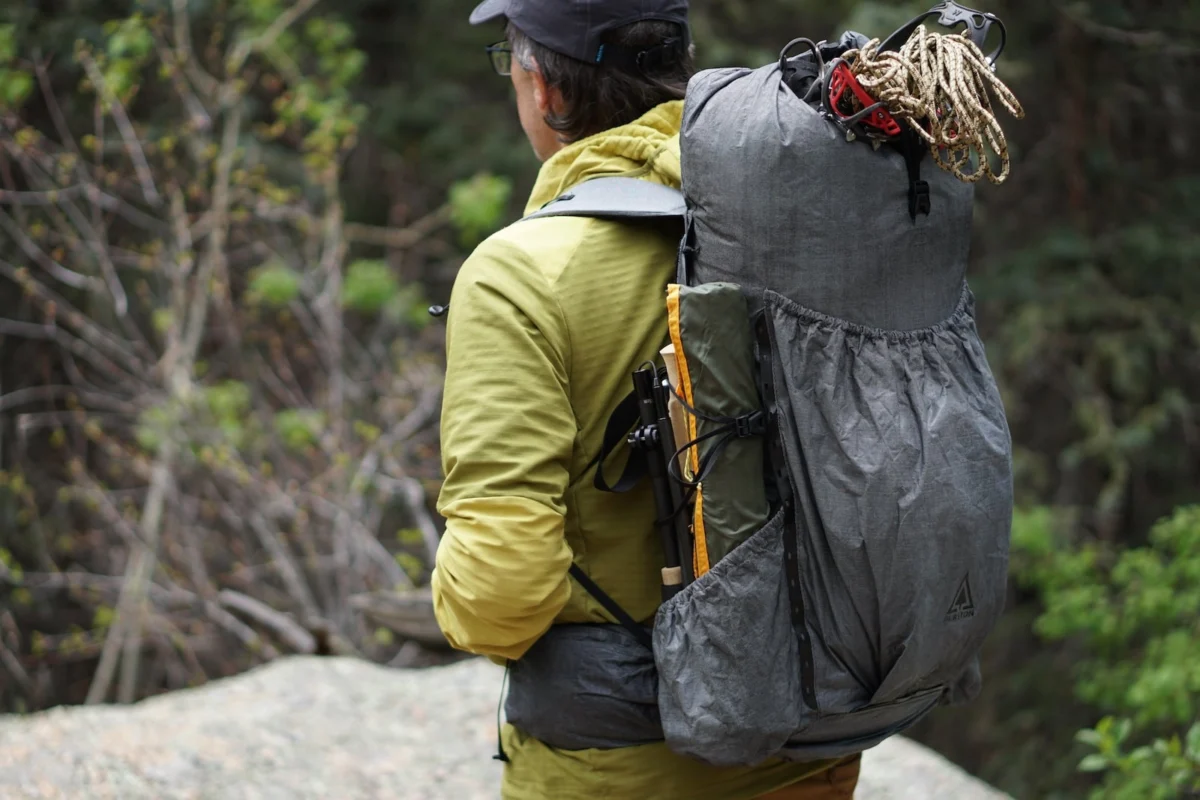
At its core, the Durston Wapta 30 is a 30-liter frameless pack weighing approximately 14 ounces. Its most distinguishing feature is the use of Aluula Graflyte, a high-modulus material that provides exceptional strength-to-weight ratios. Unlike traditional Dyneema Composite Fabrics (DCF) or nylon, Aluula offers a unique stiffness that theoretically aids in maintaining the pack’s structural integrity under load.
Key Specifications:
- Capacity: 30 Liters (Internal/Main Body)
- Weight: ~14 oz
- Load Rating: 25 lbs / 11 kg
- Harness: S-shaped padded shoulder straps with dual integrated pockets.
- Suspension: Frameless; relies on the pack’s geometry and foam back-panel padding.
- Materials: Aluula Graflyte main body, 3D-mesh back panel.
The pack’s layout is expansive, featuring large side pockets, a front mesh stash pocket, and a hip belt that includes integrated pockets. The central inquiry of this analysis is whether the Wapta 30’s "refined" suspension actually shifts weight from the shoulders to the hips—a feat rarely accomplished by true frameless packs—or if it simply improves the perceived comfort of a shoulder-heavy carry.
Chronology of the Review
The testing period for this review spanned three months of varied mountain conditions. To ensure a standardized baseline, I utilized a consistent mountain kit consisting of a 3-season insulation system, a solo tent, technical snow- and rock-scrambling equipment, and a three-day food supply.
- Phase 1 (Week 1–2): Baseline testing in the backcountry with base weights averaging 18 pounds. Total pack weight including consumables peaked at 22 lbs.
- Phase 2 (Week 3–6): Introduction of technical equipment. Carrying a haul rope and heavier rock-scrambling gear pushed total pack weights to 29 lbs, testing the upper limits of the manufacturer’s claimed load capacity.
- Phase 3 (Week 7–12): Comparative analysis against the industry benchmarks, including the Gossamer Gear Mirage 40 (framed) and the Pa’lante V2 (frameless baseline).
During these tests, I focused specifically on the "load-transfer" gap. Most existing commentary treats the absence of "bounce" as evidence of a good suspension. However, in this review, we define effective suspension as the ability of the hip belt to mechanically unload the shoulder straps.
Supporting Data: Comparative Analysis
To understand where the Wapta 30 sits in the pantheon of ultralight gear, it is essential to view it against the backdrop of its competitors.
| Pack | Structure | Load Transfer Mechanism |
|---|---|---|
| Durston Wapta 30 | Frameless | Relies on foam/pack geometry; no frame stays. |
| Gossamer Gear Mirage 40 | Framed | Carbon fiber X-frame; true load transfer. |
| Arc’teryx Alpha SL 30 | Semi-Structural | Bonded foam framesheet. |
| Nashville Cutaway | Soft-pack | Torso-coupled, vest-style stability. |
The comparative data reveals a recurring theme: many modern packs use "vest-style" harness geometry to improve stability, which users often mistake for load transfer. While the Wapta 30’s harness is exceptionally comfortable, the lack of a stiffened framesheet or vertical stays means that as the load increases, the pack bag eventually conforms to the user’s back, shifting the weight back onto the shoulder girdle.
Official Responses and Material Context
In my previous analysis, Advances in Materials and Manufacturing in Ultralight Backpacks, I explored the implications of Aluula Graflyte. Within the context of the Wapta, Durston uses this material to provide a degree of "structural memory." Because the fabric does not stretch or deform as easily as standard sil-nylon, it maintains the internal volume’s shape better under tension.
Durston’s design philosophy, as communicated through official channels, suggests that the "refinement" of the pack is not intended to compete with internal-frame haulers, but to optimize the performance of a frameless carry. The company argues that the integration of the padded hip belt and the specific shaping of the back panel creates a "system" that is more effective than the sum of its parts.
However, when confronted with the question of mechanical load transfer, the manufacturer acknowledges that the pack is optimized for loads within the 20-25 lb range. Beyond this, the physics of a frameless pack—regardless of the fabric used—begin to limit the efficiency of the hip belt-to-shoulder ratio.
Implications for the User
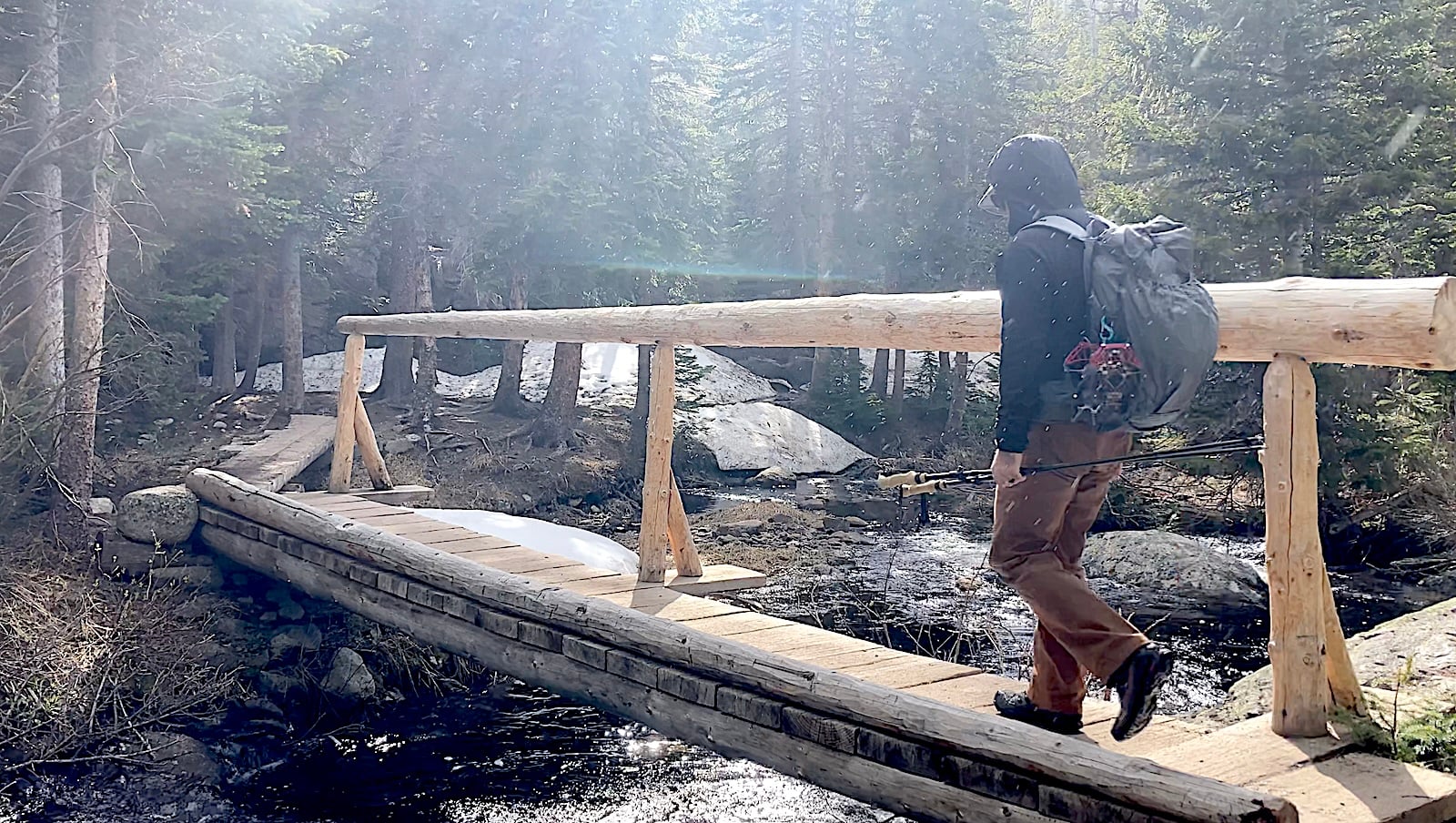
The implications for the consumer are twofold. First, if you are a hiker seeking a sub-20 lb carry, the Wapta 30 is likely one of the most refined and comfortable packs on the market. Its ability to remain stable while scrambling or traversing technical terrain is superior to many of its peers in the "simple sack" category.
Second, if you are looking for a pack to carry 25+ lbs comfortably over long distances, you must manage your expectations. The Wapta 30 provides cushioning, not suspension. The distinction is vital:
- Cushioning: Reduces localized pressure points on the shoulders and hips.
- Suspension: Uses a frame to create a load path that bypasses the shoulders and transfers force to the iliac crest.
The "Stability vs. Transfer" Fallacy
Many reviewers conflate "stability" with "suspension." Stability is the pack’s ability to remain attached to your body without bouncing. The Wapta 30 excels here. However, true load transfer requires a structural member (a stay, a rod, or a rigid framesheet) that resists vertical compression. Without this, even with the most advanced materials like Aluula, the pack will eventually compress under its own weight, rendering the hip belt a stabilizer rather than a weight-bearing device.
Final Verdict
The Durston Wapta 30 is a triumph of design and material application, but it is not a magic bullet for physics. It is the pinnacle of the "comfortable frameless" category. For the fast-and-light thru-hiker who meticulously manages their base weight and values a stable, vest-like feel, the Wapta 30 offers a level of refinement that few other packs can match.
However, those expecting the Wapta 30 to carry heavy, multi-day loads with the ease of an internal-frame pack will find that while the shoulder straps feel great, the weight eventually settles where it always does in a frameless design: on the shoulders. The Wapta 30 is a masterclass in how to build a frameless pack, but it remains, fundamentally, a frameless pack.