The 2026 IFBB Austrian Oak Pro, held on August 24, 2026, was a tale of two distinct narratives. For French-Canadian bodybuilding standout Regan Grimes, the event served as a career-defining milestone, cementing his trajectory toward the pinnacle of the sport. However, the prestige of the stage was momentarily overshadowed by a volatile display of unsportsmanlike conduct in the Classic Physique division, turning a celebration of athleticism into a sobering discussion on professional decorum.
The Path to Vegas: Regan Grimes’ Dominance
In the Open division, the atmosphere was one of calculated intensity. Regan Grimes, known for his refined aesthetics and consistent improvements, delivered a performance that judges found impossible to overlook. Facing stiff competition from a deep field of international talent, Grimes showcased a package defined by exceptional muscle maturity, conditioning, and fluid transitions.
As the final callouts concluded, it was clear that Grimes had surpassed his peers, including runner-up Damian Kuffel and third-place finisher Joan Pradells. With his hand raised in victory, the French-Canadian star solidified his invitation to the Joe Weider’s Olympia Fitness & Performance Weekend.
"We’re going to the Olympia," a jubilant Grimes declared while heading backstage, clutching the trophy that signifies his inclusion among the world’s elite. For Grimes, the victory represents a "better late than never" breakthrough in a season marked by fierce qualification battles. His win in Austria serves as a testament to his tactical preparation and his ability to peak at the most critical juncture of the qualification cycle.
A Stained Podium: The Classic Physique Controversy
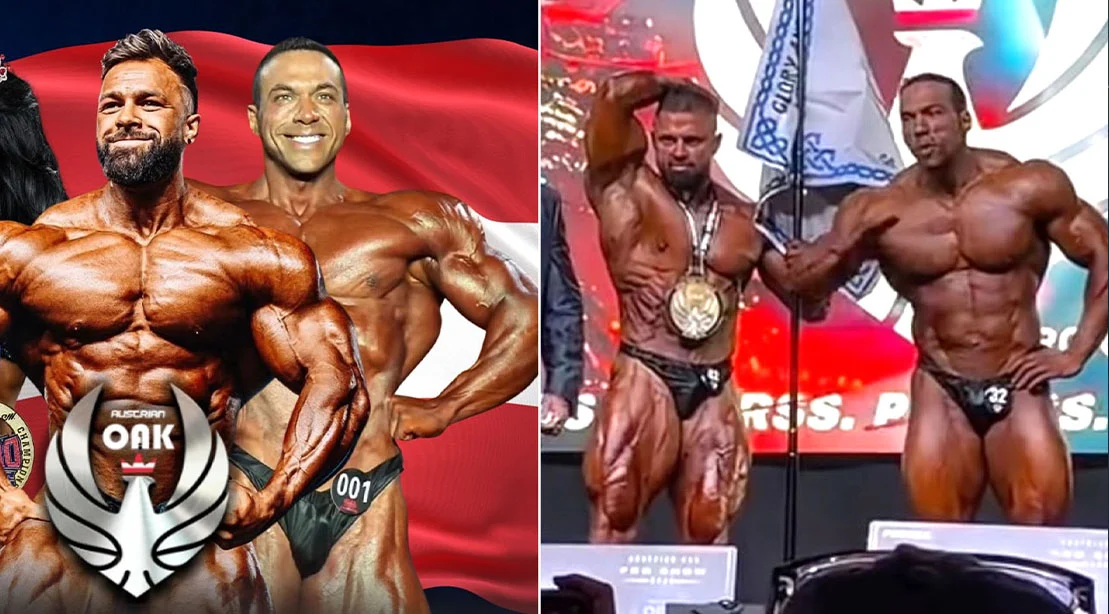
While the Open division proceeded with decorum, the Classic Physique category devolved into a chaotic scene that sent shockwaves through the venue and the online bodybuilding community. The division was topped by Bulgaria’s Zhivko Petkov, who maintained his composure throughout the awards ceremony, followed by Germany’s Florian Hartlage in second place.
The trouble began when Michael Daboul, a seasoned competitor who had high expectations for the event, was announced as the third-place finisher. Visibly incensed by the judges’ decision, Daboul did not retreat to the sidelines. Instead, he approached the judging panel, verbally protesting the results while still on the stage.
The situation escalated quickly as Daboul attempted to walk off the stage in an act of open defiance. Event staff and fellow competitors were forced to intervene, eventually persuading him to return to the lineup for the final photographs. However, the tension remained palpable. Daboul refused to participate in the traditional photo op, opting instead to stand with his hands on his hips in a gesture of blatant frustration while the other podium finishers attempted to maintain professional etiquette.
Chronology of the Incident
The sequence of events highlights the volatility inherent in high-stakes professional sports:
- 18:00 Local Time: The final callouts for the Classic Physique division conclude.
- 18:15: The results are announced; Zhivko Petkov is declared the winner.
- 18:17: Michael Daboul expresses audible disagreement with the panel upon hearing his third-place ranking.
- 18:19: Daboul attempts to exit the stage prematurely, prompting intervention from stage coordinators.
- 18:22: Upon returning to the lineup, Daboul refuses to pose for the official trophy photo, standing apart from the winners.
- 18:30: The event concludes, but footage of the incident goes viral on social media, sparking widespread debate.
- 21:00: Michael Daboul issues a formal apology via his personal social media channels.
Official Responses and Reflections
The fallout from the incident was swift. The bodybuilding community, known for its emphasis on discipline and mutual respect, reacted with a mix of concern and criticism regarding the display. Professional athletes are often viewed as ambassadors of the sport, and such outbursts are frequently seen as detrimental to the professional image of the IFBB.
Later that evening, Michael Daboul addressed the situation directly. In a post on his Instagram profile, the Syrian bodybuilder expressed deep remorse for his conduct. "I really apologize for the way I reacted after the result," Daboul wrote. "I let my emotions take control of me and that is not how I want to represent myself as a professional athlete."
The statement was widely received as a necessary step in rectifying his professional standing. However, the incident raises broader questions regarding the pressure placed on athletes during qualifying events. With the Olympia qualification system becoming increasingly competitive, the psychological burden on athletes to secure a spot in Las Vegas is higher than ever.
Implications for the 2026 Olympia
The Austrian Oak Pro served as a critical barometer for the upcoming Olympia weekend, scheduled for September 24–27, 2026, in Las Vegas.
For Regan Grimes, the victory provides him with the necessary momentum to refine his physique over the next month. His ability to navigate the pressure of the Austrian stage suggests he is mentally prepared for the even greater scrutiny of the Olympia stage.
Conversely, the events surrounding the Classic Physique division serve as a stark reminder of the "human element" in judging. While scoring is based on objective criteria—muscularity, symmetry, and conditioning—the subjective nature of bodybuilding judging will always remain a point of contention. The challenge for the IFBB and its athletes moving forward is to ensure that grievances are aired through the appropriate administrative channels rather than through public spectacles that threaten the integrity of the event.
The Road Ahead
As the sport pivots toward the Olympia, the focus shifts from the controversy in Austria to the physical preparation required to compete against the best in the world. The 2026 Olympia represents the ultimate test for athletes like Grimes, who now have a limited window to make final adjustments to their conditioning.
The sport of bodybuilding relies heavily on the image of strength—not just physical, but mental. While the frustration of an athlete like Daboul is understandable in the heat of a high-pressure competition, the professionalism displayed by winners like Zhivko Petkov and Regan Grimes remains the standard by which the sport seeks to be defined.
As the bodybuilding world turns its eyes to Las Vegas, the lessons from the Austrian Oak Pro—both the success of those who reached the top and the pitfalls for those who lost their composure—will undoubtedly be at the forefront of the conversation. The path to the Olympia is never easy, but it is a path that requires the same level of discipline in character as it does in the gym.
About the Author: Scott ‘Future’ Felstead is a veteran chronicler of the bodybuilding and strength sports landscape, providing deep-dive analysis on IFBB events, athlete profiles, and the evolving culture of professional fitness.