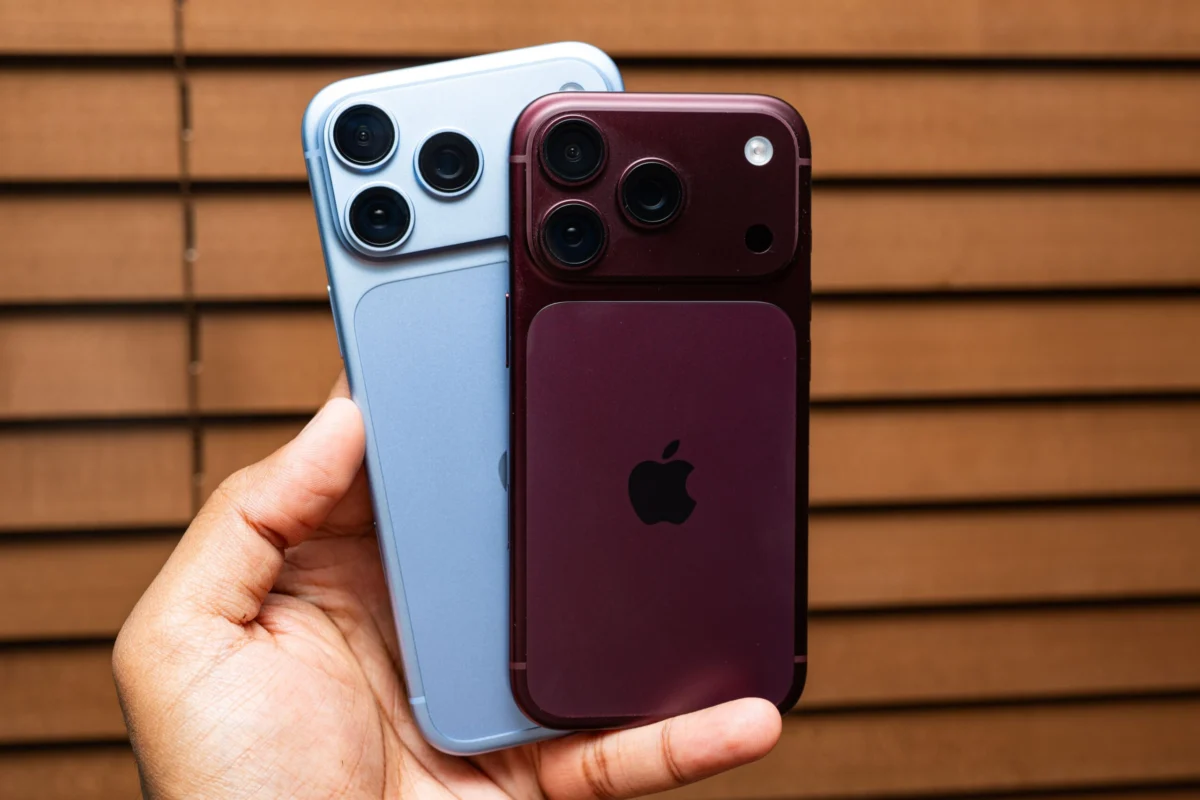
In a technology landscape increasingly obsessed with the "next big thing," Apple’s latest launch arrives with a fascinating duality. While the tech world’s collective gaze is fixed on the impending, high-priced debut of the foldable "iPhone Duo," Apple has quietly refined its bread-and-butter flagship lineup. The iPhone 18 Pro and iPhone 18 Pro Max, priced at $1,199 and $1,299 respectively, represent a significant $100 price hike over their predecessors. Yet, despite the premium, they remain the most grounded, capable, and surprisingly "photographic" devices Apple has ever produced.
The Main Facts: Refinement Over Revolution
At first glance, the iPhone 18 Pro series feels like a quintessential "S-year" upgrade—a familiar silhouette housing internal refinements that prioritize longevity and user control. There is no standard base-model iPhone 18 this year; for the average consumer, the message from Cupertino is clear: wait for the 2027 cycle.

However, for the power user, the 18 Pro series offers substantial quality-of-life improvements. Key features include:
- A20 Pro Silicon: A significant jump in processing power that handles high-end gaming and AI-driven tasks with ease.
- Variable Aperture Optics: A first for Apple, allowing users to mechanically adjust the main lens between f/1.48, f/1.78, f/2.8, and f/4.
- Advanced Thermal Management: A 3x increase in vapor chamber surface area, ensuring sustained performance during intensive tasks.
- iOS 27 & Siri AI: Deep system integration with Apple’s most capable AI assistant to date.
A Brief Chronology of the Pro Evolution
To understand the position of the 18 Pro, one must look at the recent trajectory of Apple’s mobile division. Following the introduction of the Dynamic Island with the iPhone 14 Pro, Apple focused heavily on material sciences—transitioning from stainless steel to titanium with the 15 Pro series.

The iPhone 16 and 17 iterations were characterized by iterative camera sensor upgrades and the slow rollout of Apple Intelligence. The iPhone 18 Pro marks a pivot toward mechanical photography. By reintroducing variable aperture technology—a feature pioneered by early mobile innovators and perfected here through miniaturized blade mechanisms—Apple is signaling that it is no longer content with relying solely on computational photography to bridge the gap between smartphones and mirrorless cameras.
The "Pro" Performance: Benchmarks and Thermal Reality
The A20 Pro chip is, predictably, a powerhouse. In testing, the device handles demanding titles like Control with relative ease. While the graphical fidelity relies on heavy upscaling, the fluidity of the experience is unprecedented for a handheld device.

Crucially, Apple has addressed the "heat-soak" issue that plagued previous Pro models. By expanding the vapor chamber by 300 percent, the iPhone 18 Pro manages heat dissipation across the entire chassis rather than isolating it near the camera bump. This allows the processor to maintain peak clock speeds longer, a necessity for users who engage in professional-grade video editing or high-fidelity gaming on the go.
Battery performance remains the gold standard. The Pro Max, in particular, leverages its larger footprint to house a denser battery, consistently providing two days of moderate use or a full day of "pro-level" heavy lifting, including 4K video recording and 5G streaming.

The Mechanical Revolution: Variable Aperture
The most profound shift in this year’s model is the variable aperture. In the past, smartphone lenses were fixed, forcing the software to rely on digital trickery to achieve depth of field. With the iPhone 18 Pro, the hardware now physically responds to the user’s intent.
- f/1.48: Ideal for low-light scenarios, allowing maximum light intake and creating natural, optical bokeh that feels organic rather than synthetic.
- f/4.0: Designed for group shots, landscape photography, or capturing sharp details where a deep plane of focus is required. It also enables a stunning starburst effect on streetlights and sun glints.
For the photography enthusiast, this is a game-changer. The ability to manipulate shutter speed and aperture directly within the native camera app—without resorting to third-party software—brings the iPhone closer to the experience of using a dedicated mirrorless camera.

Official Stance and Market Positioning
Apple’s official documentation emphasizes "empowerment through control." By providing tools like texture and grain control in Photographic Styles, Apple is conceding that the "perfectly clean" look of previous iPhones was not always the desired aesthetic for the creative community.
When asked about the lack of a standard iPhone 18, industry analysts suggest that Apple is segmenting its market more aggressively than ever. By pushing the "Duo" as the innovation flagship and the "Pro" as the creative workhorse, Apple is effectively bifurcating its user base between those who value form-factor experimentation and those who value raw utility.

Implications for the Smartphone Market
The implications of the iPhone 18 Pro are twofold. First, the $100 price hike suggests that Apple believes it has reached a level of maturity where consumers will pay for incremental hardware improvements, provided those improvements directly benefit the creative workflow.
Second, the move toward manual control signals a shift in the "computational photography" war. As Google’s Pixel series and other Android flagships double down on AI-assisted image manipulation, Apple is betting on the marriage of superior optics and granular manual control. This creates a fascinating divergence:

- The AI-First Approach: Google/Samsung devices that aim to fix the photo after it’s taken.
- The Hardware-First Approach: The iPhone 18 Pro, which aims to provide the tools to capture the perfect shot at the moment of exposure.
The Verdict: Who Should Buy?
The iPhone 18 Pro is a magnificent device, but it is not a mandatory upgrade. If you are currently using an iPhone 16 Pro or 17 Pro, the performance gains and the variable aperture are enticing, but likely insufficient to justify the cost unless your livelihood depends on mobile photography.
However, for those holding onto older models—the iPhone 13, 14, or 15 series—the 18 Pro represents a generational leap. The combination of the thermal management, the refined Dynamic Island, and the tactile freedom of the new camera system makes it the most "professional" device Apple has released in years.

While it currently lives in the shadow of the upcoming folding iPhone Duo, the iPhone 18 Pro reminds us that there is still a massive market for the traditional "candy bar" phone. It is a device that favors the photographer, the gamer, and the user who wants a smartphone that acts like a tool rather than just a screen.
In a world where smartphones are becoming increasingly homogeneous, the iPhone 18 Pro’s insistence on mechanical precision is not just a feature—it is a statement. Apple isn’t just trying to make the best phone; they are trying to make the best camera that happens to be a phone. And for the shutterbugs and power users, that is exactly what the "Pro" label should always mean.