In the world of ultralight backpacking and technical gear, marketing materials are often dominated by the "spec sheet." Consumers are frequently sold on the merits of 210-denier Dyneema Composite Fabric, silicone-impregnated nylons, or high-tenacity Cordura. We are conditioned to equate high-denier fabrics and sophisticated DWR (Durable Water Repellent) coatings with total protection against the elements. However, there is a fundamental disconnect between the laboratory performance of a textile and the functional performance of a finished, stitched, and zippered backpack.
A backpack is more than the sum of its fabric panels. It is a complex assembly of seams, structural anchor points, hydration ports, and closure mechanisms—all of which serve as potential failure points during a downpour. To bridge the gap between theoretical specs and field reality, a new, standardized approach to testing is emerging: the "Shower Test." This method aims to provide a controlled, repeatable baseline for assessing how much moisture actually reaches your gear when the clouds open up.
The Reality of Ingress: Why "Waterproof" is a Misnomer
The term "waterproof" is frequently misused in the outdoor industry. While a fabric might boast a hydrostatic head rating of 20,000mm, that metric applies only to the textile itself. It does not account for the hundreds of needle holes created during the sewing process, the capillary action of nylon webbing at strap anchors, or the inevitable micro-gaps in a roll-top closure.
When a backpack is subjected to sustained heavy rain, the failure rarely occurs in the middle of a fabric panel. Instead, water infiltrates through the path of least resistance. Zippers—even those labeled "weather-resistant" or "aquaguard"—are notorious for allowing moisture to seep through during prolonged exposure. Hydration ports, while convenient, act as open conduits for rainwater to channel directly into the main compartment. Furthermore, the tension applied to seams while a pack is fully loaded can widen stitch holes, turning a seemingly tight construction into a sieve.
Recognizing these vulnerabilities, the industry is moving away from abstract fabric ratings toward practical, system-level evaluation.
The Methodology: A Controlled Shower Protocol
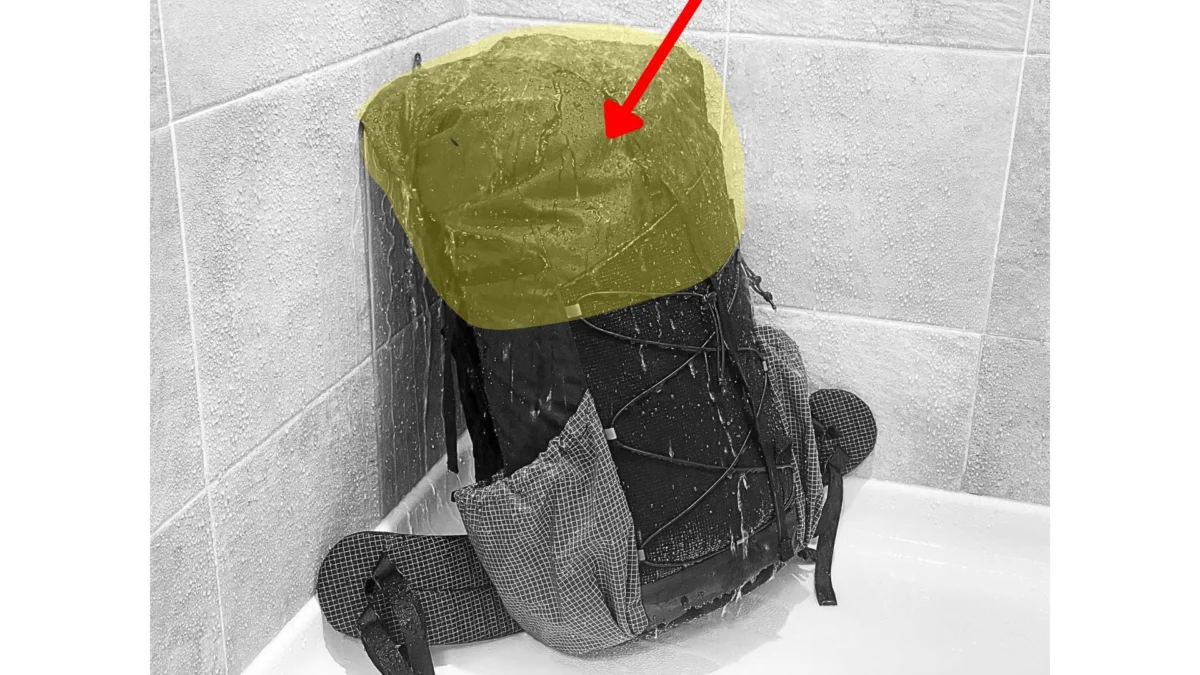
To provide a consistent standard for comparing different gear designs, a simplified, shower-based testing protocol has been developed. This is not intended to replicate the chaotic variables of an alpine storm—which would involve high-velocity wind, body heat, and varying pack angles—but rather to provide a "worst-case scenario" for short-duration, high-intensity water exposure.
The Experimental Setup
The test requires three primary components:
- The Subject: A fully loaded backpack, packed to capacity to ensure that structural features (like side-compression straps and load lifters) are under tension.
- The Witness Material: A large, dry cotton pillowcase placed inside the main compartment. Cotton is chosen for its high absorbency and ability to show even minor dampness, acting as an internal "moisture sensor."
- The Environment: A standard household shower, calibrated to a consistent flow rate and temperature, directed to simulate a sustained, driving rain.
Chronology of the Test
The test follows a strict 30-minute exposure cycle:
- 0:00–0:05 Minutes: Initial saturation of the outer shell. This phase tests the efficacy of the DWR coating and the speed at which the fabric "wets out."
- 0:05–0:20 Minutes: Sustained exposure. This tests the seam-sealing integrity and the ability of zippers and roll-tops to prevent water migration.
- 0:20–0:30 Minutes: Peak saturation. At this stage, the pack’s internal drainage and overall structural moisture management are evaluated.
Once the 30-minute timer expires, the pack is removed from the shower, the exterior is briefly patted dry to prevent transfer, and the witness material is extracted and inspected.
Supporting Data and Comparative Analysis
The utility of this method lies in its ability to differentiate between "water-resistant" designs. In preliminary trials, researchers have identified three distinct tiers of performance:
- High-Performance Sealing: Packs utilizing fully welded construction or heat-taped seams with minimal external zippers showed near-zero moisture on the witness material.
- Moderate Performance: Packs with taped seams but conventional zipper access for external pockets showed localized dampness, usually concentrated around the zipper teeth or anchor points.
- Basic Performance: Packs that rely solely on fabric water resistance without seam sealing showed significant water ingress within the first 10 minutes, with the pillowcase exhibiting heavy saturation near the pack’s base and seam intersections.
These results underscore a vital lesson for the consumer: Construction methodology is more predictive of success than fabric choice. A pack made of ultra-expensive, waterproof laminate that lacks taped seams will consistently underperform against a cheaper, well-constructed, and sealed nylon pack.
Official Industry Responses and Perspectives
Leading gear manufacturers have long been aware of this discrepancy. While many brands conduct internal "rain room" testing, these results are rarely shared with the public, often due to liability concerns or the difficulty of standardizing performance across diverse environments.
"We recognize that users want transparency," says a lead design engineer from a prominent technical pack manufacturer. "However, the variables of the outdoors are nearly impossible to codify. A pack that holds up in a shower test might fail when it is pressed against a wet tent floor, or when the user’s sweat creates a localized humidity trap inside the bag. We encourage users to use these tests as a baseline, not a guarantee."
Independent testers and outdoor advocates argue that such transparency is exactly what the industry lacks. By providing a standardized, DIY-friendly test, consumers are empowered to make more informed purchasing decisions. It shifts the power dynamic from marketing-heavy "spec sheets" to performance-based evidence.
Implications for the Modern Backpacker
The implications of these findings are twofold: for the manufacturer and the end-user.
For the Manufacturer: Design for Failure
The data suggests that designers must prioritize "moisture management" rather than "moisture prevention." Since absolute waterproofing is nearly impossible in a flexible, stitched system, designers are increasingly focusing on features like:
- Internal Liners: Rather than relying on the pack fabric, internal waterproof liners (or pack liners) are becoming the industry standard.
- Drainage Ports: Strategically placed grommets at the base of pockets to prevent water pooling.
- Redundant Closures: The use of double-roll-top systems or magnetic seals to prevent moisture ingress at the pack’s main entry point.
For the Consumer: Managing Expectations
For the backpacker, the takeaway is the necessity of an "additive protection strategy." Regardless of the pack’s rating, the smart hiker assumes that water will enter. This leads to the widespread adoption of:
- Dry Bags: Keeping high-stakes gear (down insulation, electronics) in dedicated, waterproof dry bags inside the main compartment.
- Pack Covers: While limited in high-wind conditions, they provide a vital secondary barrier for heavy, prolonged precipitation.
- Routine Maintenance: Re-applying seam sealer and DWR treatments to ensure that the pack’s "first line of defense" remains effective.
Conclusion: The Path Toward Standardized Transparency
The "Shower Test" is a modest proposal that carries significant weight. It strips away the marketing jargon and exposes the harsh reality of gear performance. By adopting this simple, 30-minute diagnostic tool, the outdoor community can move toward a more honest conversation about what our gear can—and cannot—do.
As we continue to push the boundaries of distance and duration in the wilderness, our gear must be able to withstand more than just the claims on a hangtag. We are entering an era where the informed consumer demands proof over promise. While the shower test is not a replacement for a 1,000-mile thru-hike, it serves as a critical bridge, ensuring that when the skies turn gray, our gear remains as prepared as we are.
Ultimately, the most effective tool in your kit is the knowledge of how your equipment functions. Whether you are trekking through the temperate rainforests of the Pacific Northwest or enduring a sudden summer thunderstorm in the Rockies, understanding the limitations of your pack is the first step toward a drier, more comfortable, and safer backcountry experience.