Introduction: The Myth of the "Wicking" Fabric
During high-intensity outdoor activities, the human body acts as a biological furnace. To maintain core temperature, we produce sweat—a cooling mechanism that is essential for survival but problematic for gear performance. When the rate of sweat production exceeds the rate of evaporation, liquid water accumulates on the skin. The primary job of a base layer is to transport this moisture away from the skin and into the outer layers of the clothing system.
For years, outdoor enthusiasts have relied on the term "moisture management" to describe this process. However, recent, rigorous laboratory testing suggests that our understanding of how base layers function is fundamentally flawed. While many garments are marketed as "wicking," they often behave as sponges, trapping sweat against the skin even as they are advertised to keep the wearer dry.
This investigation moves beyond marketing claims to answer a singular, critical question: When skin is wet, where does the water actually go? By tracking the physical movement of liquid through eight different fabric architectures, we have uncovered why some layers effectively transfer moisture while others become saturated, heavy, and uncomfortable.
Chronology of the Investigation: From Observation to Analysis
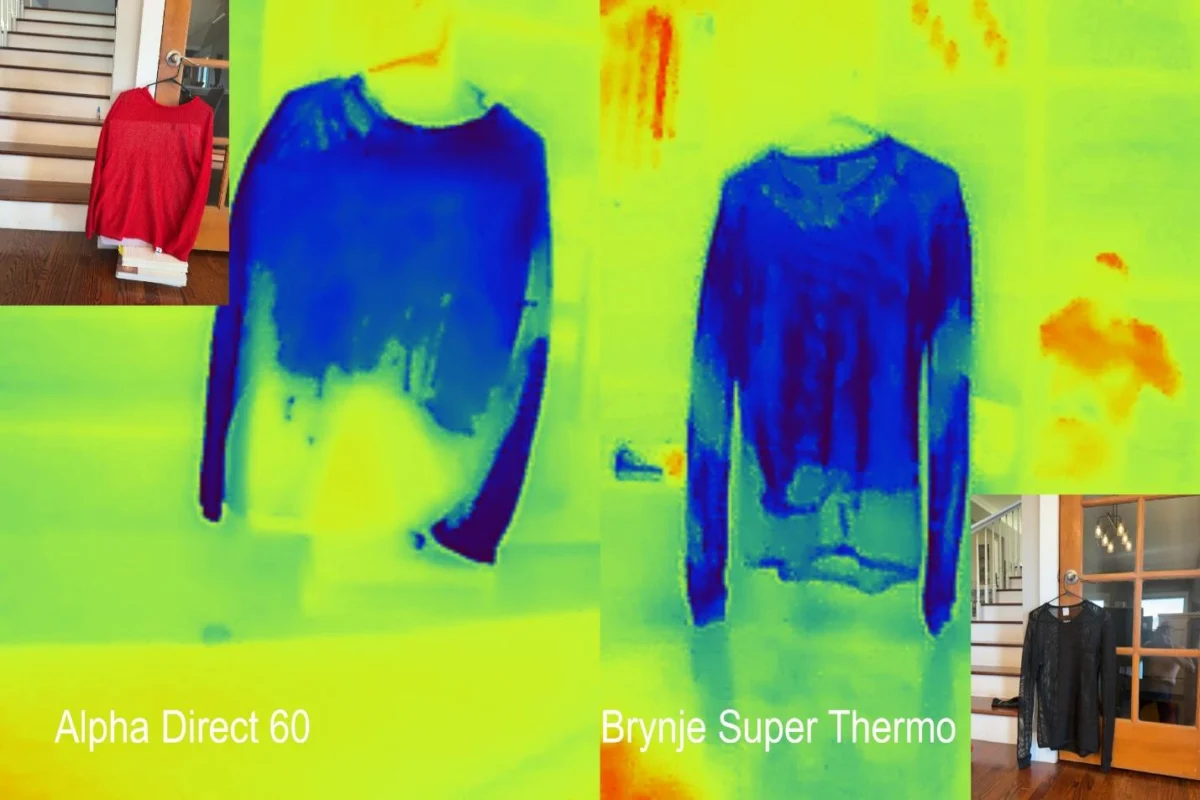
The genesis of this study began months ago during a comparative evaluation of three common base-layer garments. While the garments showed clear performance differences, the standard metrics—breathability and moisture vapor transmission—failed to explain why some felt "clammy" despite being high-end technical gear.
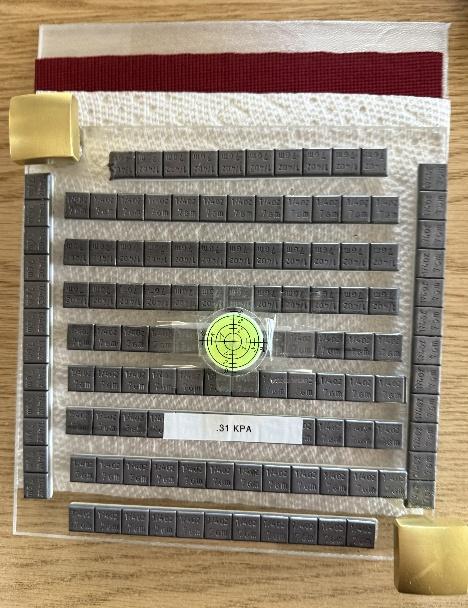
To bridge this gap, a specialized liquid transfer test device was developed (see Figure 1). This apparatus simulates a simplified clothing system, tracking water as it migrates from a synthetic "skin" surface, through the base layer, and into an external receiving layer.
As the testing expanded from three fabrics to eight, a clear, consistent pattern emerged: the performance of a base layer is not defined by its ability to "wick," but by the physics of its pore structure and the chemical affinity of its fibers. This testing protocol, which utilizes principles established by Young, Laplace, and Washburn, provides a standardized way to measure the "breakthrough pressure" required to move liquid through a textile.
Supporting Data: The Physics of Moisture Transport
The performance of a base layer is governed by two primary physical categories: hydrophobic (water-repelling) and hydrophilic (water-attracting) fabrics.
Hydrophobic Fabrics: The Pressure Paradox
Hydrophobic base layers—often crafted from polypropylene or treated synthetics—are marketed on the premise that they do not absorb water. However, the data reveals a nuance: while the fibers do not absorb water, the garment certainly can.
Fabrics are essentially porous structures composed of empty space. Even if the fibers repel water, liquid sweat can pool in the interstitial spaces between yarns. Our testing showed that hydrophobic garments could retain significant amounts of liquid sweat without the fibers themselves ever becoming "wet" in the traditional sense.
The critical metric here is breakthrough pressure. Hydrophobic fabrics act as a barrier to liquid moisture until the pressure exerted by the body—via pack straps, tight-fitting seams, or the sheer weight of accumulated sweat—forces the liquid through the pores.
- Observation: Larger pore openings correlate with lower breakthrough pressures.
- Implication: A fabric with large, open pores might feel dry initially but can become saturated if it cannot transfer liquid faster than the body produces it.
Hydrophilic Fabrics: The Trap of Capillary Action
Hydrophilic materials, such as merino wool or cotton blends, function via capillary action, pulling moisture into the fiber structure. While this makes them highly effective at dispersing moisture, it creates a "retention trap."
Because these fibers actively bond with water molecules, they are inherently inclined to hold onto that moisture. Transferring water to an outer layer becomes a competition between the base layer’s internal suction and the outer layer’s ability to pull that moisture away. When the receiving layer becomes saturated, the transfer process stalls, leaving the hydrophilic base layer acting like a wet compress against the skin.
Implications for Gear Selection and Design
The findings of this study have profound implications for how outdoor athletes should approach their layering systems. The "moisture management" marketing that dominates the industry often ignores the reality of liquid-state water transport.
- The Saturation Threshold: Both hydrophobic and hydrophilic fabrics have a saturation point. If the production rate of sweat exceeds the transfer rate of the fabric, the base layer will inevitably become wet.
- Layering Synergy: The effectiveness of a base layer is dependent on the layer above it. If your mid-layer or shell is not designed to accept moisture, even the best "wicking" base layer will fail.
- The Importance of Fit: Because hydrophobic fabrics rely on pressure to force moisture through pores, the fit of a garment is a variable in its performance. Compression or localized pressure points can actually assist in pushing sweat through the fabric, potentially increasing comfort in high-output scenarios.
Official Perspective and Theoretical Foundation
The results presented here align with the foundational work of Washburn (1921), who formalized the dynamics of capillary flow. By applying these century-old physical principles to modern synthetic textiles, we can move away from subjective "feel" and toward objective measurement.
While the eight fabrics tested provided a diverse data set, it is important to note that these results are not universal. However, the observed behaviors—specifically the competition for water between layers and the role of pore-size-dependent breakthrough pressure—are consistent with established laws of fluid mechanics.
Summary for the User
- If you are a high-exertion athlete: Look for fabrics with high-density, small-pore structures if you prefer a system that requires more pressure to "open" the flow, or consider the potential for moisture retention in hydrophilic layers during long-duration activities.
- The "Clammy" Factor: If you feel wet, your base layer is likely saturated. This is not necessarily a sign of a "bad" product, but rather a limitation of the current moisture transfer rate of your entire system.
By understanding that sweat management is a game of physical pressure and surface chemistry, consumers can move beyond the marketing jargon. The next time you are on the trail, remember: your base layer isn’t just a piece of fabric; it is a complex, porous machine tasked with managing the most difficult fluid in the world—your own sweat.
Appendix: Technical Definitions
- Contact Angle: A measurement of how a liquid droplet sits on a surface. Angles below 90° indicate hydrophilic (water-attracting) behavior; angles above 90° indicate hydrophobic (water-repelling) behavior.
- Breakthrough Pressure: The specific amount of physical force required to push liquid water through the pores of a hydrophobic textile.
- Capillary Action: The ability of a liquid to flow in narrow spaces without the assistance of, or even in opposition to, external forces like gravity.