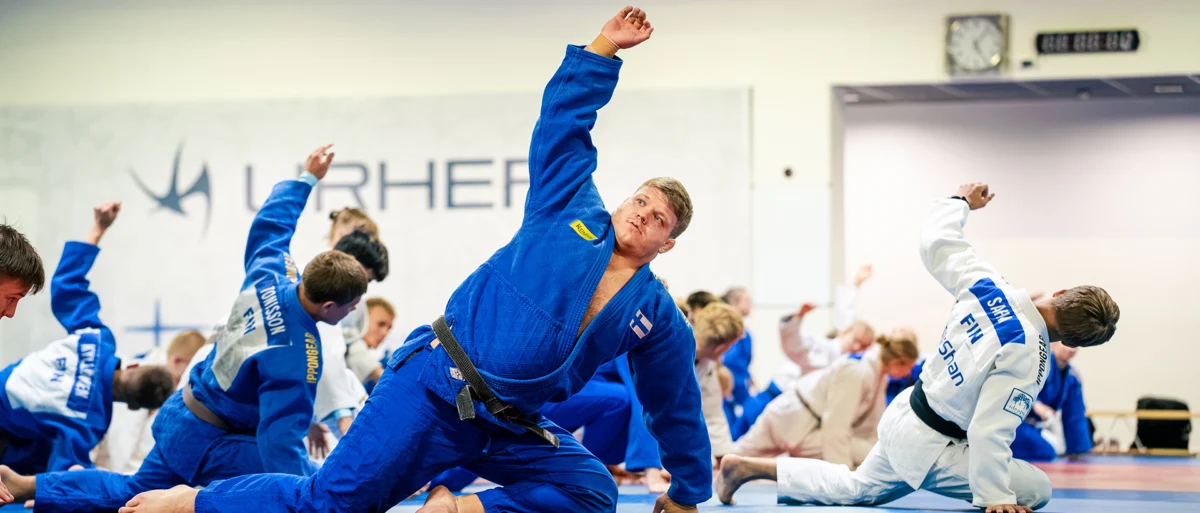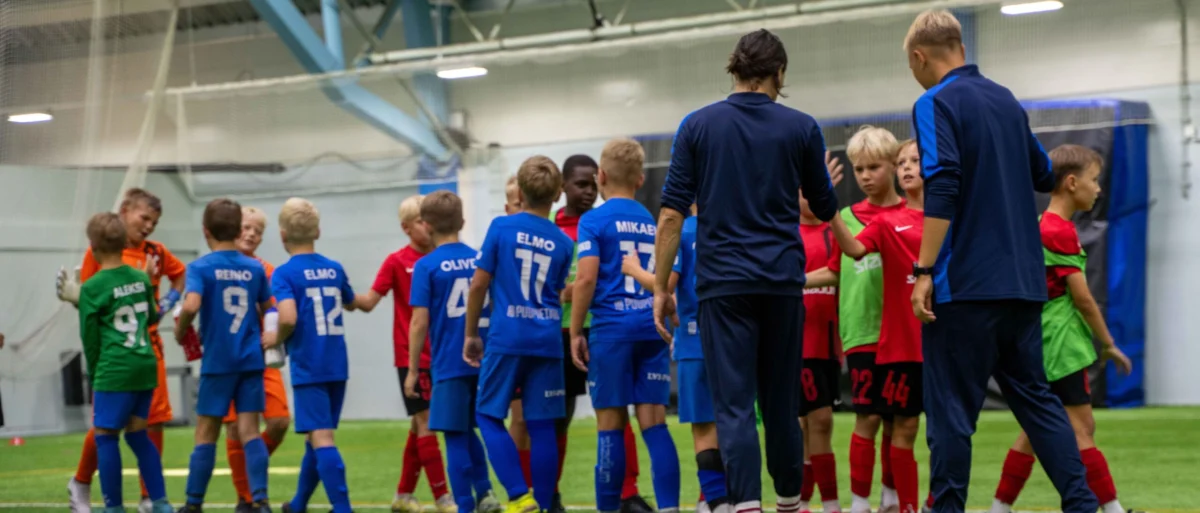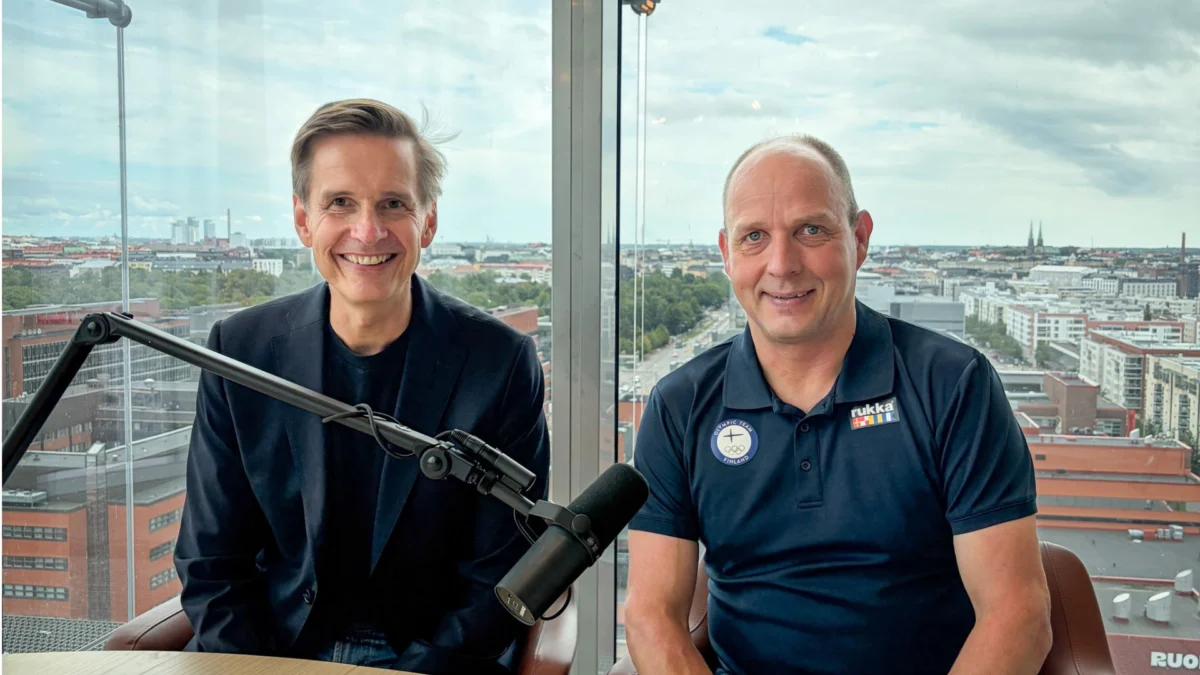
In the high-stakes world of elite sports, the margin between a gold medal and a missed opportunity is often razor-thin. It is a domain where performance is not just a metric—it is the ultimate, non-negotiable outcome. But can the rigorous methodologies of the Olympic arena be translated into the boardroom? In the latest episode of the Better is Possible podcast, host Sami Laine sits down with Janne Hänninen, the High-Performance Director at the Finnish Olympic Committee, to dissect the philosophy of growth, the anatomy of motivation, and why Finnish corporate culture might have something to learn from the track and the training camp.
The Core Thesis: Performance Over Paper Goals
The conversation between Laine and Hänninen arrives at a pivotal time. In the spring of 2026, a joint study by Deloitte and Demos Helsinki sent shockwaves through the Finnish business community. By interviewing twenty international CEOs and senior leaders managing Finnish enterprises, the study sought to identify why, despite high levels of technical competence, some Finnish companies struggle to achieve aggressive growth.
The findings highlighted four "brakes" on growth: overly conservative goal-setting, an aversion to risk, a tendency to prioritize consensus over constructive conflict, and an obsession with operational efficiency at the expense of genuine innovation.
For Hänninen, these findings mirror challenges he sees in the athletic world. He posits that the primary disconnect often lies in the confusion between a "dream" and a "goal."
"A dream is a destination, but a goal is a commitment to the work required to get there," Hänninen explains. "Many twenty-year-old athletes dream of Olympic gold, but very few have it as a tangible goal. A goal must be tied to the daily, incremental improvements that make the dream possible. If you aren’t willing to change your daily habits, your goal is merely a fantasy."
Chronology: From the Track to the Director’s Office
To understand Hänninen’s perspective, one must look at his trajectory. A former speed skater who competed at the highest levels, Hänninen’s career has been a masterclass in shifting from personal performance to structural leadership.
- The Athlete Phase: Early in his career, Hänninen learned that motivation is not a constant; it is a resource that must be managed. He noted that during his active years, motivation was often sustained by short-term, iterative milestones rather than the distant horizon of the Olympic Games.
- The Transition: Upon moving into coaching and later administrative leadership at the Olympic Committee, Hänninen realized that "giving" someone motivation is impossible. Instead, a leader must create an environment where high standards are the default, and where the feedback loop is so clear that improvement becomes the only logical path forward.
- The Current Era: Today, as the High-Performance Director, Hänninen focuses on systemic change. He views his role not as a dictator of tactics, but as a facilitator of a culture where the "best idea wins," regardless of who proposes it.
Supporting Data: The Efficiency Paradox
The Deloitte/Demos Helsinki report serves as a critical benchmark for this discussion. When international leaders look at Finnish management, they see a culture that excels in execution but fears disruption.
Hänninen aligns with this assessment, arguing that elite sports are actually more "disruptive" than most corporate environments. "In sports, you cannot hide from the data," he says. "If you are not improving, you are losing. In business, you can sometimes mask stagnation with clever accounting or by focusing on efficiency—doing the wrong things better. That is a trap."
He points to the "70-20-10" model favored by Norway’s elite sports systems:
- 70% Learning by doing: Real-world problem solving.
- 20% Mentoring: Peer-to-peer knowledge transfer.
- 10% Formal education: Structured training.
Finnish sports—and by extension, many Finnish companies—often fall into the trap of over-relying on the 10% (seminars and formal training) while neglecting the 70% (collaborative, real-world friction).
Official Responses and Strategic Shifts
Hänninen’s approach at the Finnish Olympic Committee is rooted in "radical collaboration." He openly rejects the top-down leadership style that is still common in many legacy organizations.
"I resist the idea that, as a Director, I must dictate every tactical movement," Hänninen asserts. "Strategy is born from the network. If we aren’t having the difficult, often uncomfortable conversations about how to improve, we aren’t actually leading—we are just managing."
This sentiment is echoed by the international leaders in the study, who suggest that Finnish companies need to embrace "constructive conflict." In a team, if everyone agrees, it usually means that either someone isn’t being honest, or the ambition is too low to challenge the status quo.
Implications: Building a Culture of High Performance
The implications for the private sector are clear: the transition from "good" to "elite" requires a fundamental shift in how we handle risk and failure.
1. Re-evaluating Risk
In the corporate world, failure is often treated as a career-ending event. In elite sports, failure is treated as a data point. "The athlete who wins is rarely the one who trained the hardest; it is the one who trained the smartest," Hänninen notes. Smart training involves taking calculated risks, failing, analyzing the result, and iterating. Companies that fear failure will inevitably stagnate because they stop experimenting.
2. Radical Honesty
Hänninen emphasizes that a coach-athlete relationship is built on the ability to point out flaws without destroying the relationship. This requires a high degree of psychological safety. He argues that corporations often prioritize "being nice" over "being effective." True respect, in a high-performance context, is the willingness to tell a colleague exactly what needs to be fixed so that the collective goal can be achieved.
3. Breaking the Silos
The Norwegian model of success is predicated on "forced interaction." By concentrating expertise and requiring experts from different disciplines to solve problems together, they create an ecosystem where innovation is a byproduct of daily work. Hänninen observes that Finland remains too "siloed"—lajien välinen (inter-sport) cooperation is often sidelined in favor of protecting individual turf.
Conclusion: The Path Forward
The dialogue between Sami Laine and Janne Hänninen offers a sobering but optimistic roadmap. The "growth brakes" identified in the Deloitte/Demos study are not insurmountable; they are, in fact, cultural habits that can be unlearned.
Whether it is in a speed skating rink or a boardroom in Helsinki, the principles of high performance remain universal:
- Define the goal, then commit to the daily work.
- Prioritize the "best idea," not the "senior idea."
- Measure what matters, and be honest about the results.
- Create environments where conflict is seen as a tool for progress, not a threat to harmony.
As Hänninen concludes, "Every day, I ask myself: ‘What must I do today to ensure our ultimate objective becomes reality?’ That is a question every leader should be asking their team every single morning."
By shifting the focus from internal consensus to collective growth, Finnish leadership can move beyond the invisible barriers that currently hold it back, turning ambition into achievement—one daily, deliberate step at a time.