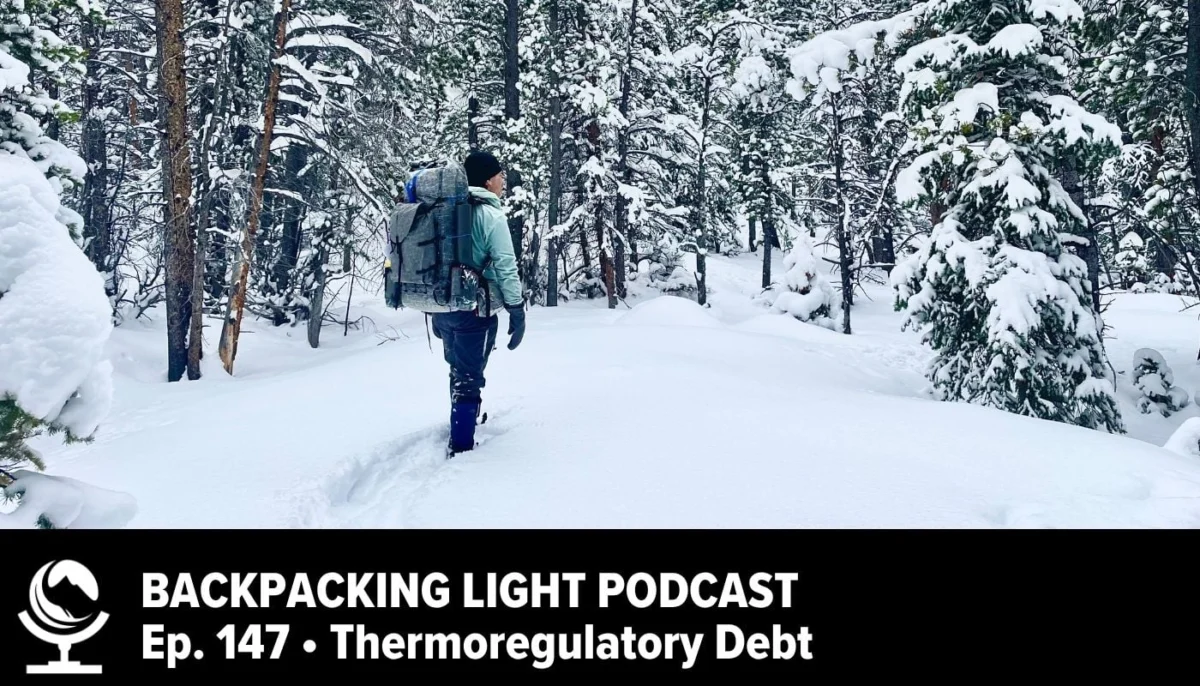
In the unforgiving environment of the backcountry, the difference between a successful expedition and a life-threatening emergency often comes down to a series of micro-decisions. In a recent, highly acclaimed episode of the Backpacking Light Podcast, host Ryan Jordan introduces a compelling new framework for wilderness survival: Thermoregulatory Debt.
By drawing a parallel between physiological heat management and financial debt, Jordan provides a mental model that is as practical as it is intuitive. The central premise is simple yet profound: cold-weather safety is not just about the gear you carry, but the timing of when you use it. Failing to adjust your insulation at the right moment doesn’t just make you uncomfortable; it creates a compounding physiological deficit that is notoriously difficult to reverse.
The Core Concept: Why "Debt" is the Perfect Analogy
For many outdoor enthusiasts, the technical jargon of thermodynamics—conduction, convection, radiation, and evaporation—can feel academic. However, the analogy of debt and finance serves as a bridge, making these complex physical interactions immediately actionable.
In this model, "debt" is the cumulative result of small, seemingly harmless delays in adjusting your clothing system. When you are hiking, your body generates heat. If you fail to vent that heat through pit zips or by removing a layer, you begin to sweat. That moisture—the "interest" on your debt—begins to compromise your insulation. If you ignore the initial signals of warmth, you are essentially borrowing comfort from your future self. By the time you reach camp or stop for a break, the debt comes due. When you finally stop moving, your metabolic heat production drops, the moisture in your layers turns cold, and you suddenly find yourself shivering, unable to perform basic tasks.
Chronology of the Physiological Breakdown
To understand how this "debt" accumulates, we must look at the three distinct phases of thermoregulatory failure as outlined in the podcast.
1. The Decision Phase: The Root of the Problem
The journey toward thermoregulatory debt begins with a failure to act. Whether it is a lack of discipline, a desire to "push through" a section of the trail, or simply a miscalculation of the environment, the decision phase is where most errors occur. It involves ignoring the body’s early warnings: the sensation of dampness under a shell, the slight buildup of heat, or the encroaching wind.
2. The Physiological Imbalance
Once the decision to ignore the environmental shift is made, the body enters a state of imbalance. Heat is being trapped, or conversely, heat is being lost at a rate the body cannot sustain. Moisture begins to migrate through your base layers into your insulation. Once insulation becomes damp, its thermal efficiency plummets. This is the moment the "interest rate" on your debt begins to skyrocket.
3. Delayed Impairment
The final phase is the most dangerous. This is when the athlete stops to rest or reaches camp. Because they are no longer generating high levels of metabolic heat, the reality of their compromised layering system sets in. The result is acute discomfort, shivering, and, most importantly, a loss of physical capability. This is the "bankruptcy" of the system—you no longer have the physical energy or dexterity to fix the problem.
The Three Pillars of Debt
The Backpacking Light framework breaks these failures down into three interlocking categories, each of which must be managed to maintain a "solvent" physical state.
Moisture Debt
Moisture is the silent killer. It accumulates through sweat, internal condensation, or external precipitation. When moisture enters the insulation layer, it drastically increases heat loss. The podcast emphasizes that moisture management is not just about keeping dry; it is about managing the migration of water vapor so that it does not settle in your lofted layers.
Heat Debt
Heat debt occurs when your environmental heat loss outpaces your metabolic production. While it seems like an obvious threat, it becomes exponentially harder to reverse once the first two debts have taken hold. If your clothing is wet and your energy reserves are depleted, your body is effectively incapable of generating enough heat to "repay" the debt.
Performance Debt
This is the most critical consequence for the backcountry traveler. Performance debt manifests as a loss of fine motor skills—the loss of finger dexterity, sluggish mobility, and, eventually, impaired cognitive function. When you cannot open a food wrapper, light a stove, or pitch a tent because your hands are too cold to function, you are in a high-risk situation.
Personal Anecdote: As one experienced listener noted, continuing to use numb, white fingers—a condition often referred to as "frost nip"—is a dangerous gamble. "I used to just continue using my fingers… but I think that causes permanent sensitivity," they noted. "Now I stop using them and rewarm. If my body is cold, blood is rerouted from my fingers to keep my torso and head warm, which makes them more likely to get frost nip."
Practical Interventions: Staying Solvent in the Wild
The podcast offers several actionable strategies to avoid falling into this trap. The goal is to move from a reactive posture—where you fix problems after they arise—to a proactive one.
- Vent Early and Often: Do not wait until you are fully sweating to open your gear. The moment you feel the slightest increase in core temperature, increase airflow.
- Anticipate the Shift: Adjust your layers before you change your output. If you are about to begin a long, strenuous climb, remove a layer before you start. If you are about to stop for lunch, put on your insulation while you are still warm from the hike.
- Protect Dry Insulation: Always keep your primary camp insulation separate from the moisture-prone active layers. If your sleeping insulation gets wet, you have effectively lost your last line of defense.
- Fuel the Furnace: Caloric intake is the fuel that powers your internal furnace. Do not wait until you are exhausted to eat; your body requires constant energy to maintain the metabolic heat necessary to combat environmental exposure.
Supporting Data and Materials
The episode also highlights the role of material science in preventing moisture debt. The discussion touches upon the efficacy of specialized fabric structures—such as the "fishnet" designs seen in products from brands like Brynje. Unlike traditional solid knits, these open-mesh structures are designed to maximize breathability and drying speed. By pulling moisture away from the skin and allowing it to evaporate through the layering system rather than saturating the base layer, these materials serve as a tactical tool to manage debt.
Implications for Backcountry Safety
The implications of the "Thermoregulatory Debt" model are significant for both novices and seasoned thru-hikers. It shifts the focus away from the "latest and greatest" gear toward the management of the gear you already own.
The podcast suggests that a hiker with modest equipment who understands the timing of their thermal regulation will consistently outperform a hiker with expensive, high-tech gear who ignores the state of their own physiology. It emphasizes that the backcountry is an environment of constant change, and the traveler must be in a state of constant reassessment.
Furthermore, the model addresses the cognitive load of survival. By simplifying the complex science of heat management into the "debt" analogy, it provides a mental heuristic that can be easily remembered under the stress of fatigue, altitude, or harsh weather. When you are tired, you don’t want to calculate heat transfer coefficients; you want to know if you are "in debt."
Conclusion: A New Standard for Wilderness Education
While the Backpacking Light episode covers a wide array of topics, including critiques of current industry articles and gear reviews, the framework of Thermoregulatory Debt stands out as a foundational concept. It serves as a reminder that wilderness safety is not a passive state, but an active, ongoing negotiation with the environment.
By treating heat and moisture as limited resources—or as a currency to be managed—we can better prepare for the realities of the trail. The next time you are on a ridge line, feeling the wind cut through your shell, or feeling the initial burn of a climb, take a moment to evaluate your balance sheet. Are you investing in your future comfort, or are you accumulating a debt that you may not be able to pay? In the backcountry, the difference is not just theoretical—it is survival.