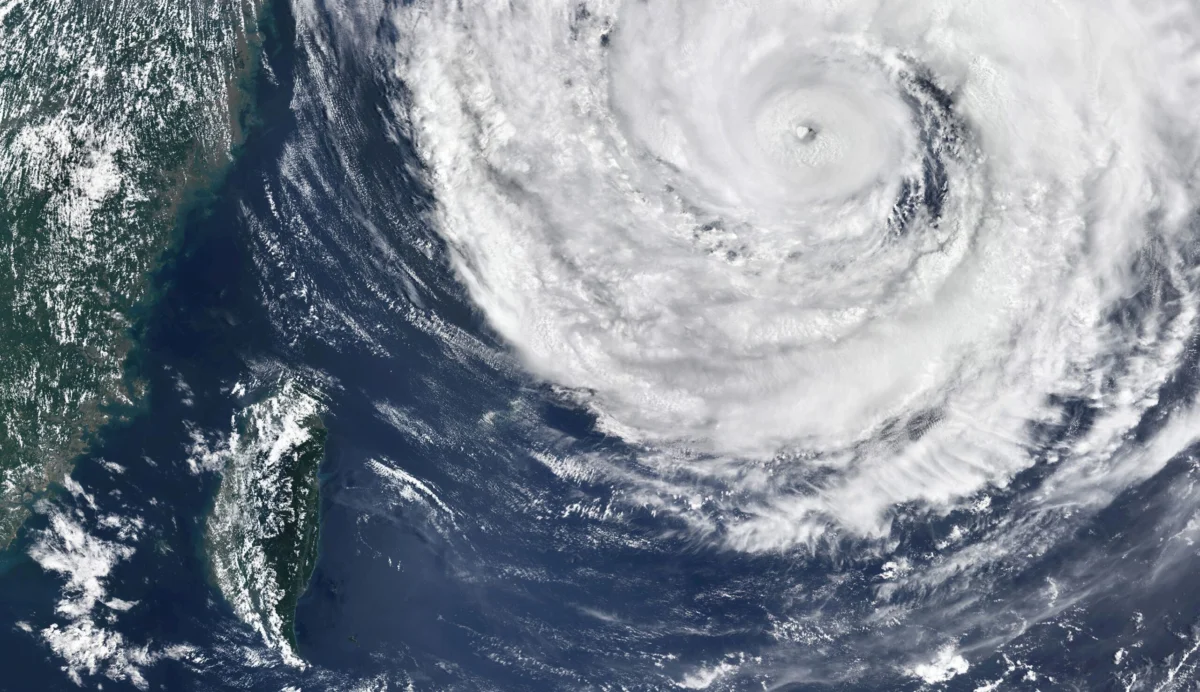
The global climate system has entered a period of profound instability, marked by a “super El Niño” event so intense that it has forced the world’s leading meteorological authorities to abandon their traditional language of cautious probability. In an update that has sent shockwaves through the scientific community, the World Meteorological Organization (WMO)—the United Nations’ specialized agency for weather and climate—has declared a “nearly 100% likelihood” that this historic phenomenon will persist through February.
For the WMO, this represents an unprecedented departure from standard reporting. “This is the first time that a WMO El Niño/La Niña Update has been so unequivocal,” the agency stated in its latest briefing. This level of certainty, rooted in a vast, interconnected network of global sensors and climate modeling, signals that the planet is not merely experiencing a cyclical weather event, but a “supersized” climate anomaly that threatens to rewrite the rules of global meteorology.
The Anatomy of an Anomaly: Understanding the Super El Niño
At its core, El Niño is a naturally occurring phenomenon characterized by a significant warming of sea surface temperatures in the eastern tropical Pacific. This shift in the thermal profile of the ocean disrupts the normal atmospheric circulation, acting as a massive heat engine that exports volatility across the globe.
While El Niño events are part of the Earth’s natural variability, the current iteration is different in scale and force. Scientists have been tracking the development of this event since early this year, observing as the Pacific waters warmed to levels that defied historical norms. The current forecast suggests this will be the most powerful El Niño on record by a significant margin, with impacts already manifesting in the form of extreme heat, shifting precipitation patterns, and ecological disruption.
A Chronology of Escalation
The journey toward this historic climate event did not happen overnight; it is the culmination of a year of compounding anomalies.
- Early 2024: Climate models began flagging anomalous warming in the equatorial Pacific, prompting initial warnings from international meteorological bodies.
- Mid-2024: As the event gained momentum, the “super” classification was applied by researchers as oceanic heat content reached record-breaking levels.
- Summer 2024: The Northern Hemisphere experienced its hottest summer in recorded history. While climate change provided the baseline, the El Niño event acted as a force multiplier, “juicing up” heatwaves across the United States, Europe, and Asia.
- Late 2024 (Present): The WMO confirms the event’s persistence through February, effectively locking in a period of extreme global temperatures that will likely define the climate narrative for the coming year.
- Looking Ahead: Scientists warn that because the atmosphere requires time to process the massive influx of heat released by the Pacific, the thermal impacts will continue to ripple outward, likely making 2025 and 2026 record-breaking years for global heat.
Data Points and the Climate Math
The implications of this event are best understood through the lens of climate data. El Niño typically nudges the global average temperature upward by approximately 0.1 to 0.2 degrees Celsius (0.2 to 0.4 degrees Fahrenheit). However, the intensity of this current event suggests that the “boost” could be significantly higher.
This extra warming is particularly dangerous because it is being layered onto the steady, upward trend of anthropogenic (man-made) climate change. A recent report by the UN Environment Programme (UNEP) underscores this grim reality: the world is projected to cross the 1.5-degree Celsius warming threshold—a critical tipping point defined by the Paris Agreement—much sooner than previously anticipated.
When we consider that this El Niño is interacting with oceans that are already warmer than at any point in the industrial era, we are witnessing a compounding effect. As UN Secretary-General António Guterres aptly noted, “The planet is in uncharted waters, and those waters are heating up.”
Official Responses and the Call for Resilience
The international response to the WMO’s update has been one of urgency. The Secretary-General’s statement served as a clarion call, framing the event not just as a weather forecast, but as a systemic threat to global food security, public health, and economic stability.
“El Niño is being supersized before our eyes,” Guterres said. “The science leaves no room for doubt: we are in the danger zone of extreme weather.”
The WMO’s move to issue such an unequivocal update is a calculated attempt to mobilize governments. By removing the ambiguity typical of long-range forecasts, they are providing policymakers with a clear window of opportunity to implement disaster risk reduction strategies, adjust agricultural planting cycles, and prepare infrastructure for the volatile months ahead.
The Human Cost: A World in Disarray
While the peak of the El Niño event is still several months away, the humanitarian and ecological costs are already mounting.
Agriculture and Food Security
In Sudan, the impact is visible in the dried-up banks of the Nile, where water scarcity is exacerbating a long-standing hunger crisis. Farms that once provided essential sustenance are now lying barren, demonstrating how quickly a shift in weather patterns can collapse local food systems.
Water Infrastructure
In Puerto Rico, the reality of the situation has forced authorities to implement aggressive water rationing. The combination of erratic rainfall and aging, inflexible infrastructure has left the island vulnerable to the dry conditions brought on by the Pacific’s shifting currents.
Ecological Disruption
Marine ecosystems have not been spared. In the eastern Pacific, the warming waters have thrown fisheries into chaos. Many species are migrating in search of cooler temperatures, disrupting local economies and traditional livelihoods that have relied on these waters for generations.
The Expert Perspective: Entering the Unknown
Perhaps the most sobering assessment comes from Daniel Swain, a climate scientist at the University of California Agriculture and Natural Resources. Swain suggests that the magnitude of this event exceeds the scope of our current analytical tools.
“This is probably one of the larger, if not the largest, climate events—aside from long-term warming—that anybody alive is potentially ever experiencing,” Swain explains. His caution is not born of alarmism, but of an acknowledgment of complexity. Because we have never witnessed an El Niño of this intensity in a world already struggling with the baseline of climate change, the outcomes are, in many ways, unpredictable.
“There’s certainly going to be dramatic outcomes from this,” Swain adds, noting that we should prepare for the unexpected. The systemic nature of the event means that a drought in one region could lead to a price spike in global commodities, which in turn could impact energy policies or migration patterns in entirely different hemispheres.
Conclusion: A Race Against Time
The message from the international scientific community is clear: the “super El Niño” is a red alert for humanity. It is a manifestation of a climate system that is being pushed beyond its historical bounds.
As António Guterres concluded in his statement, “The race now is between rising risks and our commitment to take climate action and protect people. We must win that race.”
Winning this race will require more than just acknowledging the forecast. It requires a fundamental shift in how we approach climate resilience, moving from reactive disaster management to proactive, systemic adaptation. As the world prepares for the months of extreme heat and unpredictable weather that lie ahead, the WMO’s warning serves as a final, unmistakable signal that the era of stability is over, and the era of active climate management has begun.