The narrative surrounding the global digital infrastructure sector has been dominated by a singular, persistent question: Just how much computing power will the Artificial Intelligence revolution require? Investors, tech titans, and governments are engaged in a frenetic debate over the scale of future demand and the astronomical capital expenditure required to fuel it.
Yet, this conversation often misses a more fundamental, physical reality. While the financial appetite for data centres is effectively limitless, the physical capacity to construct them is not. New analysis from GlobalData reveals that the industry is trapped in a structural paradox: despite scaling construction at an unprecedented rate, the pipeline of planned projects has ballooned so significantly that the industry is now staring down a nine-year backlog. The primary constraint on the digital future is no longer funding or interest—it is the physical limitation of the global supply chain.
A Chronology of Unprecedented Scaling
To understand the current impasse, one must look at the velocity of the sector over the last decade. In 2018, the global data centre industry was a different beast entirely. GlobalData records indicate that approximately 60 major data centre projects were completed worldwide that year. It was a period of steady, manageable growth.
However, the arrival of the generative AI era fundamentally shifted the equilibrium. By 2025, that annual completion figure had surged to roughly 270 projects. This represents a fourfold increase in delivery speed in just seven years—a growth rate that would be considered miraculous in almost any other construction sector.
Despite this heroic scaling, the industry’s "delivery velocity" has been dwarfed by the sheer volume of project announcements. Today, there are approximately 2,500 active data centre projects in various stages of development globally. When juxtaposed against the 2025 completion rate, the math is sobering: the industry is facing a backlog that will take roughly nine years to clear. If one uses the more conservative five-year average completion rate, that window stretches to nearly 11 years.
Data-Driven Realities: The "Deliverability Gap"
The nine-year figure serves as a vital diagnostic tool rather than a deterministic forecast. It highlights a critical "deliverability gap." It is important to note that this number assumes all 2,500 projects are of equal complexity, which is rarely the case. A hyperscale campus—designed to house tens of thousands of servers and powered by dedicated substations—is not equivalent to a small regional edge facility.
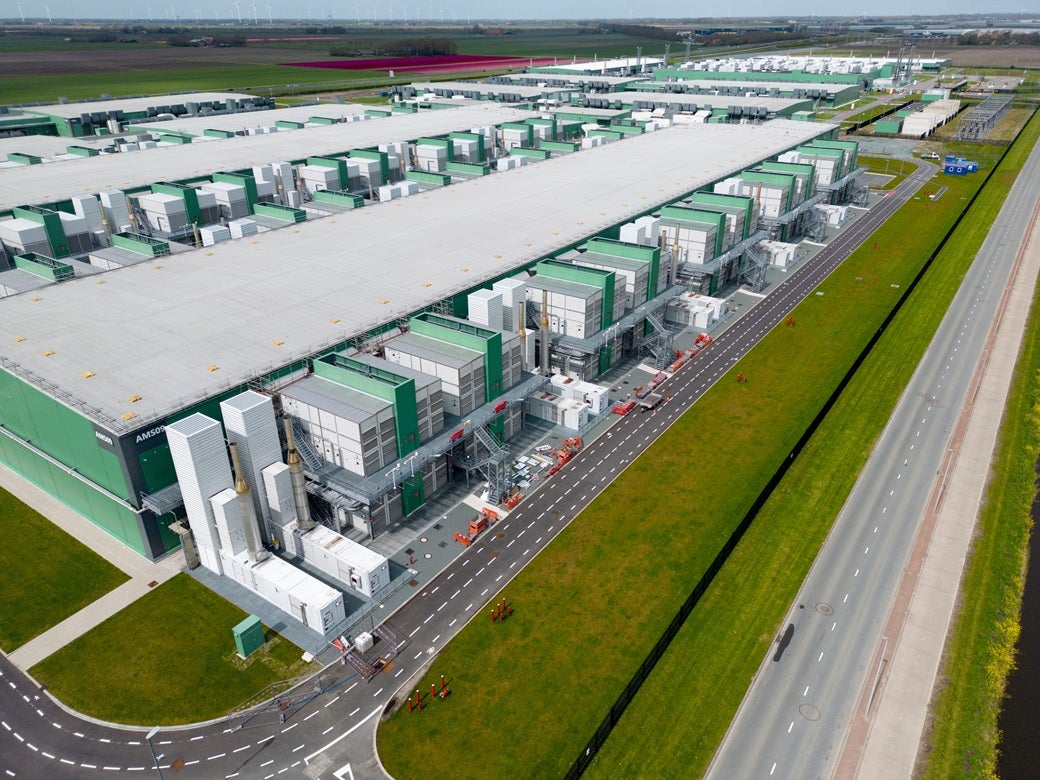
Furthermore, market volatility will inevitably lead to project attrition. Some developments currently in the pipeline will undoubtedly be cancelled, delayed, or downsized as market conditions fluctuate. This "natural thinning" of the pipeline will mathematically shorten the queue, but it does not resolve the core problem: the industry’s reach has significantly exceeded its grasp.
The implications for the construction ecosystem are profound. Every project in the pipeline relies on the same finite pool of resources: land, grid-scale power, high-voltage electrical components, specialized contractors, and skilled labor. Because these inputs are shared across the entire industry, they cannot be expanded with the same speed as an announcement in a corporate press release.
Where the Shortages Bite Hardest
The bottleneck is not monolithic; it is a series of interconnected physical constraints that create a "choke point" for global digital growth.
1. The Electrical Grid and Long-Lead Components
The most acute shortages are currently found in electrical distribution equipment. Transformers, switchgear, and high-voltage grid connections have become the "gold" of the infrastructure world. Lead times for these essential components have stretched from months to years. In many jurisdictions, a project is effectively held hostage by the local utility provider’s ability to upgrade the regional grid to accommodate the massive energy loads required by modern AI training clusters.
2. Specialized Mechanical and Electrical (M&E) Expertise
Data centre construction is a highly specialized craft. The mechanical and electrical packages required to cool and power high-density racks are far more complex than those found in traditional commercial real estate. There is a global dearth of contractors capable of executing hyperscale M&E packages at speed. When multiple hyperscalers enter a single market—such as Northern Virginia, Frankfurt, or Singapore—they are essentially bidding for the same small pool of specialized talent, driving costs up and timelines out.
3. The Commissioning Crisis
Perhaps the most overlooked constraint is the availability of commissioning engineers. These professionals are the "final mile" experts who test and bring a facility into operational status. Without them, a multi-billion-dollar building is essentially a hollow shell. As the number of completed projects rises, the demand for this specialized workforce has outstripped supply, creating a secondary bottleneck that prevents finished buildings from coming online.
Implications for the Global Economy
The current state of the industry has created a bifurcated economic landscape. For the developers and operators, the primary risk is no longer market demand, but the "time-to-market" penalty. In a sector where speed is the primary currency, a delay of 18 months can mean the difference between capturing a dominant market position and being rendered obsolete by a faster competitor.
The Supplier Advantage
The current environment has fundamentally altered the power dynamics in the supply chain. Those companies that manufacture the scarce inputs—such as electrical infrastructure giants and grid-connection engineering firms—are currently in a position of supreme advantage. Unlike the developers, who are suffering under the weight of project queues, these suppliers are seeing sustained high-margin demand that is likely to persist for a decade.
The Downstream Risk
Conversely, companies further down the construction chain face significant exposure. For many, revenue is only realized once a project reaches a specific stage on-site. When the pipeline is clogged with "paper projects" that are waiting for power or permitting, these firms face long periods of uncertainty. A massive, bloated pipeline is, for them, a risk factor rather than a business opportunity.
Conclusion: The Need for Rationalization
The nine-year backlog reveals that the data centre boom is not merely a financial phenomenon; it is a structural challenge that requires a more disciplined approach to planning. The industry is currently operating in a "gold rush" mindset, but the infrastructure to support such rapid expansion is not yet fully mature.
For stakeholders—from hyperscalers and investors to the contractors on the ground—the priority must shift from the quantity of announcements to the deliverability of the pipeline. The successful players in the coming decade will not be those who announce the most projects, but those who can secure the supply chain, manage the grid-connection risk, and reliably move projects from the drawing board to the server rack.
As the industry moves toward 2030, the "deliverability gap" will likely act as a natural regulator. Those who fail to account for the physical limits of the supply chain will find their capital tied up in stalled projects, while those who prioritize logistical certainty will define the next chapter of the digital age. The data centre race is no longer a sprint to announce; it is an endurance test of engineering, procurement, and construction.