This week, the world of professional bodybuilding descends upon Las Vegas for the annual Olympia weekend, a spectacle that has defined the pinnacle of human physique for over half a century. However, amidst the familiar thunder of heavy lifting and the blinding flash of stage lights, the IFBB Pro League is introducing a paradigm shift. For the first time in history, the Olympia stage will host the "Fit Model" division, a category that intentionally turns the dial back on the industry’s long-standing trend of "bigger and harder."
To the purists who have followed the sport since Larry Scott hoisted the first Sandow trophy in 1965, the addition of a 12th division might feel like a dilution of the sport’s core mission. Yet, to dismiss Fit Model as merely "another category" is to ignore the complex, cyclical nature of competitive physique athletics.
The Chronology of Expansion: From 1965 to 2026
Since its inception, the Olympia has been a living, breathing entity that mirrors the changing aesthetic standards of global fitness culture. The progression has been relentless: from the pure muscularity of Men’s Bodybuilding to the specialized nuances of 212, Classic Physique, Men’s Physique, Bikini, Figure, Wellness, Fitness, Women’s Physique, Women’s Bodybuilding, Wheelchair, and now, Fit Model.
The rise of Fit Model was a calculated move by the NPC and the IFBB Pro League. Following its successful amateur introduction in 2025 and its rapid integration into the professional circuit in 2026, the division has earned its place at the 2026 Olympia, scheduled for September 24–27. By formalizing Fit Model within the Olympia qualification system, the league is signaling that this isn’t a side-show—it is a cornerstone of the future of the sport.
Redefining the Aesthetic: The "Less is More" Mandate
The most striking aspect of the Fit Model division lies in its explicit, almost restrictive, judging criteria. In an industry that has spent decades rewarding extreme muscular development, vascularity, and deep, grainy conditioning, Fit Model serves as a direct antithesis.
According to the official guidelines, the judges are looking for a specific, approachable level of athleticism. Competitors are expected to display enough muscle tone to shape the female physique, but—crucially—less development than their Bikini counterparts. The rules explicitly discourage heavy development in the legs, glutes, arms, and deltoids. While a degree of roundness is permitted, "capped" deltoids are a penalty. The midsection must appear fit and firm, but without the high-definition, "shredded" look that has become the industry standard. Perhaps most tellingly, the criteria forbid visible glute-ham tie-ins and hamstring separation.
For the average observer, this may seem like a minor distinction, but in the world of professional bodybuilding, it is a revolutionary departure. It is a directive that forces athletes to prioritize "aesthetics" over "muscle density."
A Return to the "Mainstream" Ideal
The federation has been remarkably transparent about its goals. They aren’t looking for the next Olympia bodybuilder; they are looking for the "mainstream fitness magazine" aesthetic. Interestingly, the IFBB has pointed to the 2015 physique of three-time Bikini Olympia champion Ashley Kaltwasser as the visual benchmark for the desired Fit Model look.
This is a fascinating admission. By citing a former champion from a different category, the league is acknowledging a phenomenon that has plagued almost every physique division since its inception: "division creep."
Historically, once a new category is introduced, it inevitably trends toward greater size and conditioning. We have witnessed this cycle repeatedly:
- Women’s Bodybuilding: Evolved from athletic to hyper-muscular.
- Figure/Bikini: Both divisions saw a steady upward trend in muscle mass and leanness over the years.
- Classic Physique: Created as a nostalgic remedy for the "monstrous" proportions of Open Bodybuilding, yet even here, today’s top competitors are significantly more developed than the icons of the 1970s.
Competitive evolution, it seems, has a singular direction: more. Fit Model is the IFBB’s attempt to reset the clock—a systemic "hard reset" on the aesthetic expectations of the stage.
The Logistics of Presentation
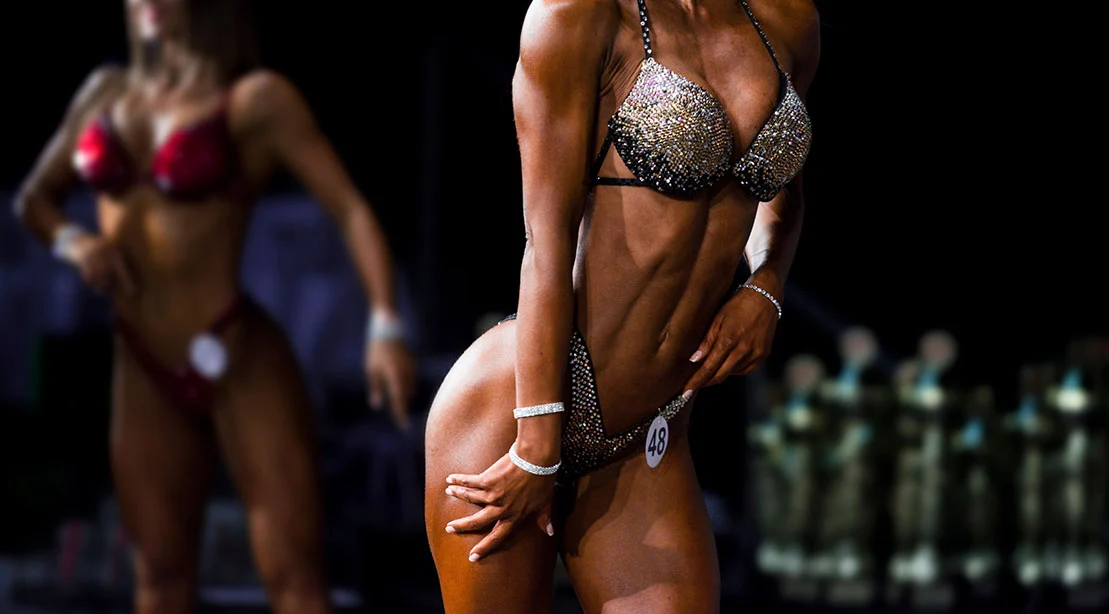
The presentation of the Fit Model division reflects its distinct nature. Gone are the elaborate mandatory bodybuilding poses that emphasize muscle fibers. Instead, competitors perform simple front and back poses. The stage attire is equally stripped back; competitors eschew the heavy, Swarovski-laden suits that have become the hallmark of the Bikini division, opting instead for plain, elegant designs. Combined with the use of heels, the presentation emphasizes poise, balance, and overall symmetry over raw muscular output.
Implications: A New Demographic or a Slippery Slope?
The fundamental question facing the sport is whether Fit Model will actually attract a new demographic of athletes. The logic holds that there is a vast population of women who train diligently, maintain a healthy, aesthetic physique, and lead a fitness-oriented lifestyle, but who are alienated by the extreme dietary and training requirements of the Bikini or Figure divisions. These women do not want to "diet down" to the point of extreme vascularity or muscle separation.
If the Olympia can provide a professional stage for these women, it opens the door to a broader commercial appeal. However, the success of this endeavor depends entirely on the judging panel.
The "Slippery Slope" is real. If the winner of the inaugural 2026 Fit Model Olympia displays even a slightly more conditioned or muscular look than her competitors, the standard will shift. The following year, every athlete entering the division will chase that new, "slightly harder" look. If the judges fail to strictly enforce the "less is more" policy, we will inevitably see the division morph into something that mirrors the very categories it was designed to replace. In that scenario, we would be looking at the eventual birth of a "Fit Model Classic" to rescue the sport from the evolution of the current Fit Model division.
The Verdict on the Horizon
As we watch the first-ever Fit Model Olympia champion crowned in Las Vegas, the significance goes far beyond the gold medal. The judges are not just picking a winner; they are defining the DNA of an entire division. Every woman who steps onto the stage in the coming years will be looking at this inaugural winner as the definitive blueprint.
The IFBB Pro League has created a sanctuary for a specific aesthetic, but they have also created a challenge for themselves. Can they maintain the "softness" of the division in an industry obsessed with hardening? Can they hold the line against the natural progression toward greater size?
For the spectators in Las Vegas and the thousands watching at home, the Fit Model competition will be a litmus test for the future of the sport. If the judges choose wisely, they may successfully diversify the Olympia stage, welcoming a new generation of fitness models who value the look of health over the look of extreme depletion. If they falter, they risk simply adding another layer to the same old, ever-growing, ever-shrinking cycle of competitive bodybuilding.
The world is watching, and the standard is about to be set. The question is: will it hold?