For most, the childhood dichotomy is clear: one either pursues the disciplined, stoic path of the military or the singular, high-octane focus of elite athletics. The two worlds are often viewed as distinct silos, separated by training philosophy, lifestyle, and ultimate objective. Yet, for Major Eli Bremer of the Air Force Reserve Command, this separation never existed. To Bremer, the question was never "or"—it was always "and."
Bremer’s life story is not merely a tale of personal achievement; it is a blueprint for how military service and athletic excellence can coexist, creating a synergy that benefits both the individual and the nation. From his early days in the shadow of the Air Force Academy to his pivotal role in global sports governance, Bremer has proven that the "soldier-athlete" is a force of nature capable of shifting the culture of international sport.
A Foundation Built on Service
Growing up in Colorado Springs, Colorado, the proximity to the United States Air Force Academy provided a formative backdrop for a young Bremer. Surrounded by the rhythmic precision and high expectations of cadet life, his trajectory seemed almost preordained.
"All my childhood mentors were cadets at the Academy," Bremer recalls. This early exposure fostered a deep-seated respect for the institution. However, he possessed a secondary, equally burning ambition: the Olympic podium. While many would have been forced to sacrifice one dream for the other, the Air Force’s World Class Athlete Program (WCAP) served as the vital bridge.
WCAP is an elite initiative that allows top-tier military athletes to compete at the Olympic level while maintaining their military careers. During his freshman year at the Academy, Bremer wrote a letter to his future self—a manifesto of sorts—declaring his intent to join WCAP and compete on the world’s biggest stage. It was a bold declaration that would eventually materialize in Beijing.
Chronology of a Career: From Beijing to the Boardroom
The timeline of Bremer’s life is marked by a series of transitions that emphasize his adaptability and commitment to systemic improvement.
- 2000: Bremer’s international journey begins at the Military Championships in Switzerland. It was there he forged a life-altering friendship with a Brazilian lieutenant named Nilton Rolim. This connection would prove critical over two decades later.
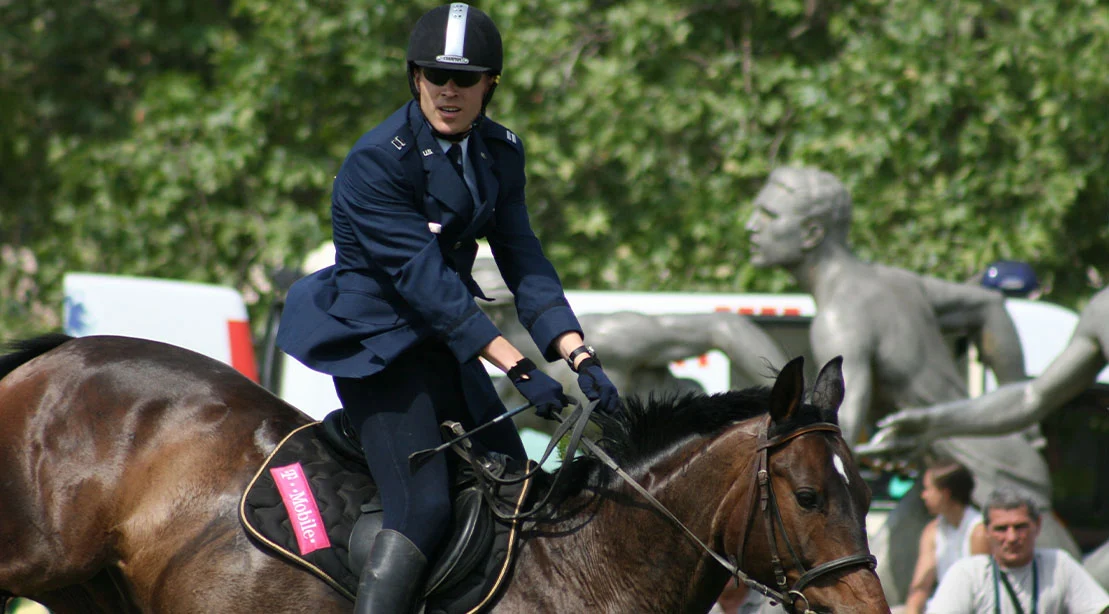
- 2008: The realization of a lifelong dream. Bremer competes in the modern pentathlon at the Beijing Summer Olympics, representing the United States. He finished 22nd, a respectable showing that solidified his status as an elite global competitor.
- Post-2008: Following his Olympic debut, Bremer pivoted his focus back to his military responsibilities, eventually rising to become the chair of the Advisory Board for the Air Force’s WCAP program.
- 2016–2018: A period of intense advocacy. As the Larry Nassar sexual abuse scandal rocked the foundations of American sport, Bremer emerged as a vocal critic of the governing structures within the U.S. Olympic and Paralympic Committee (USOPC).
- 2027: The culmination of his efforts to bring international military athletics to American soil. Through his work as co-chair of the bid committee, Charlotte, North Carolina, is set to host the Military World Games.
The Governance Crusader: Beyond the Uniform
Bremer’s most enduring legacy may not be found in the medals he won, but in the institutional changes he helped architect. When the Larry Nassar scandal exposed systemic failures in athlete safety, many remained silent. Bremer did not. He recognized early on that the abuse was a symptom of a deeply flawed governance model.
"I had been a vocal critic of the governance model because it predisposed ways to cover up issues like abuse," Bremer explains. "The leadership at the time tried to get rid of me but couldn’t. Then Nassar happened, and people thought I was Nostradamus, but I wasn’t; I just know governance."
Bremer’s involvement went beyond mere criticism. He helped lead an athlete coalition, working alongside bipartisan lawmakers to push for legislative reform within the USOPC. His insistence that "you may take the uniform off, but you don’t take off the obligations" reflects his conviction that true service involves holding institutions accountable.
Supporting Data: The Value of the Military Athlete
The integration of athletes into the military is not merely for the sake of public relations; it provides tangible, measurable benefits for the service members. According to Bremer, the WCAP is a "force multiplier" for the Air Force.
Athletes who transition through the program often acquire a secondary skill set. The Air Force provides them with three years of rigorous job training, ensuring that when their competitive window closes, they possess marketable skills that translate to the civilian workforce. This symbiotic relationship ensures that the military retains high-performers who are disciplined, goal-oriented, and accustomed to high-pressure environments.
Furthermore, the impact of international cooperation cannot be overstated. The Military World Games, which bring together military personnel from across the globe, act as a diplomatic tool. By hosting the 2027 Games in Charlotte, the United States is fostering a spirit of international camaraderie that mirrors the friendship Bremer formed with Colonel Nilton Rolim—now the President of the International Military Sports Council (CISM)—nearly 25 years ago.
Official Responses and Implications
The implications of Bremer’s work are broad. By championing programs like WCAP, he is advocating for a more holistic approach to military service. The military is not just a place for combat training; it is an institution that can cultivate human potential in diverse arenas.
"The athletes we bring into the Air Force really like it because they understand the three years of job training they get in a skill outside of their sport," Bremer notes. "That’s a huge benefit."
The legislative reforms initiated by the athlete coalition have, in turn, forced a shift in how sports governing bodies view athlete rights. While Bremer acknowledges that the reforms haven’t solved every issue, they have provided a framework for accountability that was previously non-existent. This represents a fundamental shift in the culture of American sport: from a top-down, profit-driven model to one that increasingly centers the safety and autonomy of the individual athlete.
Life After the Podium: Longevity and Legacy
Today, Bremer manages a complex professional portfolio. As the owner of the consulting firm Pure Performance and the CEO of Mytikas Industries, he has successfully transitioned his competitive drive into the business world.
Yet, his definition of "fitness" has undergone a significant evolution. Where he once trained for speed and explosive power, his focus has shifted toward longevity. "My thinking now is not on how fast I can run but if I can keep up with my son and be there for my 83-year-old father," he says. He emphasizes that for veterans, finding new challenges—like golf or low-impact cycling—is essential for maintaining mental and physical health after service.
Bremer’s advice to younger generations is clear: it is okay to move the goalposts. "You must forgive yourself and do the best you can now. You don’t want to wake up 10 years from now and realize you sold yourself short."
Conclusion: A Blueprint for the Future
Major Eli Bremer represents a new archetype of American service member—one who is as comfortable in the halls of Congress and the boardrooms of industry as he is on the Olympic track. His journey highlights that the pursuit of excellence, whether in the military or in sport, requires the same fundamental virtues: discipline, foresight, and an unwavering commitment to the greater good.
As the United States prepares to host the Military World Games in 2027, the impact of Bremer’s advocacy will be on full display. He has demonstrated that service is not a static state of being, but a continuous, evolving process of contribution. By choosing "and" over "or," Bremer has not only carved out a unique path for himself but has paved the way for future generations to serve their country while chasing their own, equally ambitious dreams.
For those interested in the future of international military athletics, the 2027 Military World Games in Charlotte, North Carolina, will be held from June 25th to July 4th. Major Eli Bremer continues to advocate for the value of military service and the integration of professional development through programs like WCAP.