In the high-stakes world of elite sports, the margin between a gold medal and a missed opportunity is often razor-thin. This reality necessitates a culture of constant adaptation, rigorous evaluation, and radical honesty. But can these same principles be transplanted into the corporate world to drive innovation and growth?
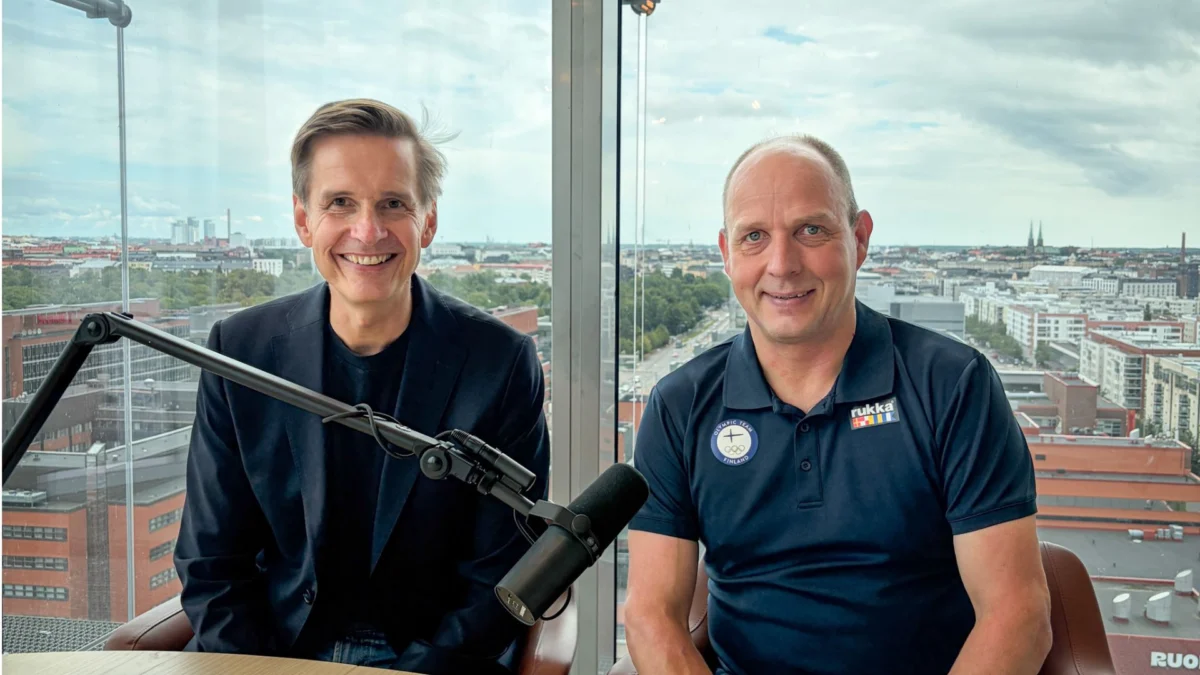
In the latest episode of the Better is Possible podcast, host Sami Laine sits down with Janne Hänninen, the High-Performance Director of the Finnish Olympic Committee. Their conversation explores the parallels between athletic mastery and organizational success, challenging traditional Finnish leadership paradigms that often favor consensus over courageous decision-making.
The Core Philosophy: Dreams vs. Tangible Objectives
A central theme of the discussion is the fundamental distinction between a "dream" and a "goal." According to Hänninen, this is a nuance often lost in both sports and business.
"A dream is a vision, an aspiration of what could be," Hänninen explains. "A goal, however, is a commitment—a bridge built by concrete, daily actions. Many young athletes dream of Olympic gold, but that dream only becomes a goal when they are prepared to endure the daily grind required to earn it."
In the professional sphere, this distinction is crucial. Organizations often confuse high-level strategic visions (dreams) with operational targets (goals). Hänninen argues that when companies mistake a vision for a goal without backing it up with the necessary daily operational shifts, they stall. Success, he posits, is not found in the final outcome but in the disciplined optimization of the process that leads there.
The 2026 Growth Audit: Identifying the "Invisible Brakes"
The conversation draws heavily from a seminal 2026 report published by Deloitte and Demos Helsinki. The study, which interviewed 20 international executives managing Finnish companies, served as a catalyst for the discussion, exposing structural weaknesses in the Finnish leadership culture.
The Four "Invisible Brakes" on Growth:
- Under-ambitious Targets: A tendency to set goals that are "safe" rather than transformative.
- Risk Aversion: A cultural preference for stability that stifles experimentation.
- The Consensus Trap: Valuing comfort and harmony over the healthy conflict necessary for breakthrough innovation.
- Efficiency Over Evolution: A focus on optimizing existing processes to the point where it cannibalizes the ability to innovate or pivot.
These findings suggest that while Finnish companies are masters of operational efficiency, they often struggle with the "courageous pivot"—a trait that is essential for long-term survival in an increasingly volatile global market.
Chronology of Cultural Shift: Why "Best Idea Wins" Must Replace Hierarchy
Hänninen reflects on his career, noting that the most successful eras in Finnish sports were those where the hierarchical walls were broken down. He advocates for a flat, meritocratic approach where the "best idea wins," regardless of its origin.
"I resist the notion that as a High-Performance Director, I must dictate every tactical move," Hänninen says. "If you lead from the top down, you stifle the intelligence of the collective. Real innovation happens in the trenches, through constant collaboration with the team and the broader network."
A Timeline of Integration:
- The Traditional Era: Hierarchical, siloed, and cautious. Data was collected but rarely shared across disciplines.
- The Transitional Phase: The introduction of modern analytics. Coaches began to realize that performance isn’t just physical—it’s psychological and systemic.
- The Modern Paradigm: The adoption of the "70-20-10" learning model, where 70% of growth comes from on-the-job application, 20% from mentorship, and only 10% from formal training. This is the current benchmark of excellence, as seen in the Norwegian model.
Supporting Data: The Norwegian Blueprint for Success
Hänninen points to Norway as a masterclass in breaking down organizational silos. By centralizing high-performance expertise and fostering "natural encounters" (informal, cross-functional collaboration), the Norwegians have managed to outperform their neighbors consistently.
In the Norwegian model, knowledge is not guarded; it is treated as a shared resource. By focusing on the "70-20-10" framework, they ensure that talent is constantly being challenged. Innovation, according to the data, is not a product of seminars or board meetings—it is a byproduct of people working side-by-side on the same challenges, iterating, failing, and learning in real-time.
Official Responses and Strategic Implications
For the corporate world, the implications are clear: to grow, one must be willing to embrace discomfort. The "Better is Possible" podcast highlights that the most effective teams are those where members can challenge each other without the relationship fracturing.
Key Takeaways for Leadership:
- Radical Transparency: Performance must be measured based on factors that actually drive results. If the data is uncomfortable, it is all the more reason to discuss it openly.
- The Death of Silos: When departments act as isolated entities, they protect their own interests rather than the organization’s mission. Success requires a unified, cross-departmental focus.
- Calculated Risk-Taking: In the Olympic arena, the athlete who trains "smartest"—not necessarily the hardest—is the one who stands on the podium. This requires taking risks, failing, and analyzing the failure to inform the next training cycle.
The Human Element: Can Motivation be Taught?
One of the most profound questions posed by Sami Laine is whether motivation is an internal trait or something that can be fostered by leadership. Hänninen’s answer is nuanced: while internal drive is a prerequisite, it is the environment that sustains it.
"You cannot force motivation," Hänninen admits. "But you can build an environment where that motivation is nurtured. When an athlete feels they are part of a transparent, high-stakes, and supportive team, their personal drive is channeled into productive growth rather than burnout."
This lesson applies directly to corporate management. A leader’s job is not to "motivate" employees like a cheerleader, but to remove the barriers (the "invisible brakes") that drain the natural drive of a high-performer.
Conclusion: The Path Forward
The dialogue between Laine and Hänninen serves as a wake-up call for Finnish leadership. By shifting the focus from "playing it safe" to "playing it smart," organizations can unlock the same potential that drives Olympic success.
The roadmap is simple but demanding:
- Define clear, evolving goals that require more than just current capacity.
- Break down silos to ensure the best ideas rise to the top.
- Institutionalize honesty by creating a culture where constructive conflict is the norm, not the exception.
- Prioritize the process over the outcome, measuring the daily inputs that lead to future victory.
As Hänninen aptly puts it, "The question isn’t how we win tomorrow. The question is, how do I do my work today so that the goal becomes inevitable?"
In a world that prizes speed and adaptability, those who can merge the discipline of the arena with the strategic agility of the boardroom will define the future of industry. The tools are available; the question remains whether leadership has the courage to pick them up and apply them.
For those interested in the full discussion, the "Better is Possible" podcast is available on all major streaming platforms. The conversation continues to spark debate across the Finnish business landscape, challenging executives to reconsider their approach to growth, risk, and the definition of a "winning" culture.