The Philippines is set to significantly bolster its renewable energy landscape following the signing of a strategic Memorandum of Understanding (MoU) between the Aurora Pacific Economic Zone and Freeport Authority (APECO) and renewable energy developer Huge Energy. This ambitious partnership aims to establish a massive 1GW renewable energy complex in Casiguran, Aurora, representing a pivotal shift toward sustainable industrialization in the region.
The project, which integrates solar photovoltaics (PV), battery energy storage systems (BESS), and waste-to-energy (WTE) technology, is designed to serve as the backbone for the economic zone’s growth. By providing a reliable, green power supply, the initiative seeks to attract international investors and stimulate local economic development while aligning with the national government’s aggressive decarbonization targets.
The Core Pillars of the Aurora Project
At the heart of the agreement is a phased rollout strategy designed to ensure grid stability and technical feasibility. The project is not merely a generation facility; it is a holistic energy infrastructure development intended to modernize the utility capabilities of the Aurora province.
Phased Development Roadmap
The project will be executed in three distinct phases, allowing for iterative testing and financial adjustments:
- Phase I (The Foundation): The initial stage focuses on immediate capacity, with a target of 100MW. This phase will see the construction of a utility-scale solar photovoltaic plant, a robust Battery Energy Storage System (BESS) to mitigate the intermittent nature of solar power, and the development of a dedicated substation to manage the load.
- Phase II (Expansion): Following the successful commissioning of the first phase, the project will scale up by an additional 350MW. This stage introduces a technological mix, incorporating waste-to-energy facilities alongside expanded solar capacity, effectively addressing local waste management challenges while generating electricity.
- Phase III (The 1GW Milestone): The final phase is set to deliver an additional 550MW. Upon completion, the cumulative output will reach 1GW, positioning the APECO zone as one of the most energy-secure economic hubs in the Southeast Asian archipelago.
A Strategic Collaboration: The Stakeholders
The success of the Aurora project relies on the synergy between APECO, a government-managed economic zone, and private sector experts with deep experience in international energy markets.
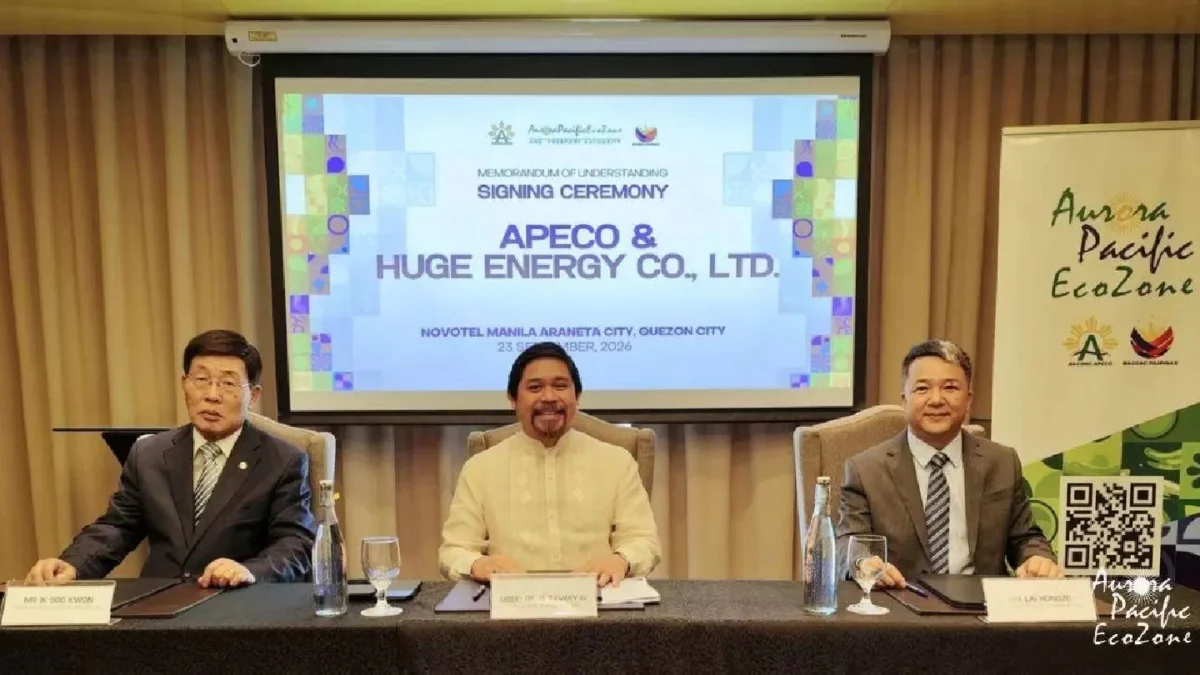
The MoU was formally signed in Quezon City by a high-level delegation, including:
- Usec. Gil G. Taway IV, President and CEO of APECO.
- Lai Hongze, Chairman and CEO of Huge Energy.
- Ik Soo Kwon, Chairman and CEO of Dong-A Global.
Huge Energy, renowned for its expertise in solar panel manufacturing and large-scale project development, will lead the scheme. They are joined by Dong-A Global, a South Korean firm specialized in energy-sector engineering, procurement, and construction (EPC). This partnership ensures that the project benefits from global manufacturing standards and international engineering best practices.
APECO has committed to providing 90 hectares of land within the Casiguran economic zone, creating a dedicated space for this industrial-scale energy hub.
Official Perspectives: "Power Precedes Progress"
During the signing ceremony, the leadership emphasized that the project is about more than just electricity generation; it is about national development.
Usec. Gil G. Taway IV articulated the strategic vision behind the initiative: "Power precedes progress. Before industries can operate, businesses can expand, and investments can come in, we need reliable and sustainable power."
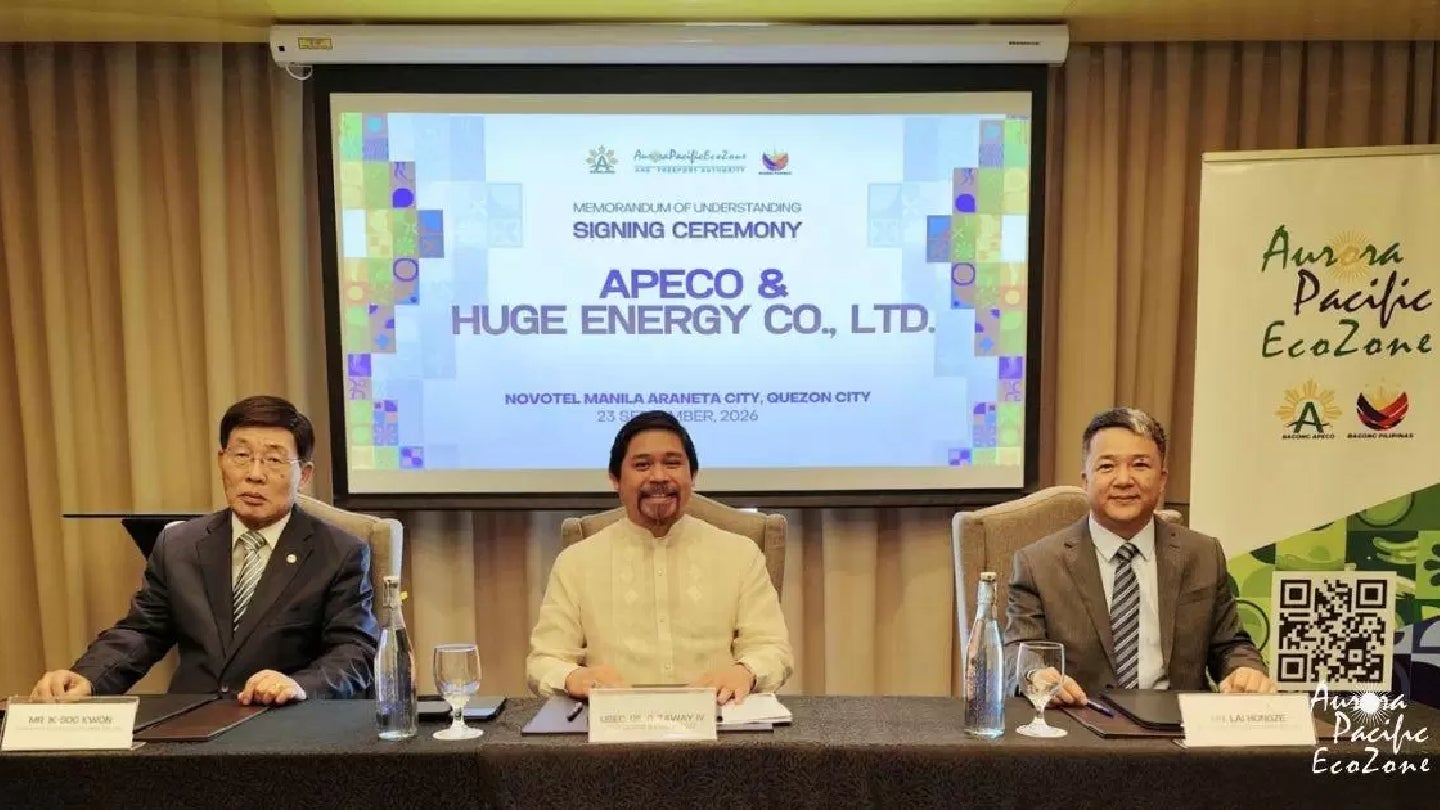
Taway IV noted that the project’s scope extends to critical infrastructure, including the development of substations and potential transmission upgrades. By enhancing the grid infrastructure, the project is expected to provide greater energy security not just for the economic zone, but for the wider Aurora province and the national grid. The sentiment from the APECO leadership is clear: sustainable energy is the primary catalyst for the Philippines’ industrial transformation.
Implications for the Philippine Energy Market
The APECO-Huge Energy project comes at a critical time for the Philippines. As the nation experiences rapid economic growth, the demand for electricity is rising. The reliance on imported fossil fuels has historically made the nation vulnerable to global price fluctuations. By tapping into renewable sources and utilizing waste-to-energy technologies, the Aurora project provides a buffer against these market volatilities.
Energy Security and Reliability
The integration of a BESS is a crucial element of this project. In the Philippine context, where grid stability can sometimes be a concern in remote provinces, the ability to store energy and deploy it during peak demand hours or grid fluctuations is transformative. It allows for the integration of variable renewable energy (VRE) while maintaining the consistent power supply that high-tech manufacturing and logistics businesses require.
Waste-to-Energy: A Circular Economy Model
The inclusion of waste-to-energy (WTE) technology in the second phase is particularly noteworthy. As urbanization continues in the Philippines, waste management has become a significant environmental challenge. By converting non-recyclable waste into energy, the project provides a dual benefit: it generates electricity while significantly reducing the volume of waste destined for landfills. This alignment with circular economy principles positions APECO as a model for sustainable economic zone development.
Regional Economic Development
By establishing a 1GW energy hub in Casiguran, APECO is effectively "de-risking" the province for potential investors. Companies in the manufacturing, data center, and logistics sectors—which are traditionally energy-intensive—are more likely to locate in a zone where they are guaranteed a green, reliable, and cost-effective power supply. This could lead to a massive influx of Foreign Direct Investment (FDI) into the Aurora province, creating jobs and fostering human capital development in the region.
The Path Forward: Technical and Regulatory Considerations
While the MoU represents a significant commitment, the parties acknowledge that the path to 1GW is complex. Each phase of the project is subject to a rigorous framework of requirements, including:
- Technical and Financial Evaluations: Every stage of the 1GW rollout must pass feasibility studies that confirm the technological efficacy of the equipment and the financial viability of the business model.
- Due Diligence and Grid Interconnection: Ensuring that the power generated can be seamlessly fed into the national grid without compromising the integrity of the existing infrastructure is a primary technical challenge.
- Regulatory Approval: The project must comply with the Department of Energy (DOE) regulations, environmental impact assessments (EIA), and local government mandates in the province of Aurora.
- Offtake Arrangements: The long-term success of the project will depend on establishing solid Power Purchase Agreements (PPAs) that ensure a market for the energy produced, providing the certainty needed for project financing.
The collaboration will encompass every step of the lifecycle, from initial site surveys and permitting to procurement, construction, and, ultimately, the operations and maintenance (O&M) of the facilities.
Conclusion: A New Horizon for the Philippines
The partnership between APECO, Huge Energy, and Dong-A Global is a testament to the Philippines’ commitment to its renewable energy transition. By leveraging the expertise of global energy leaders and the strategic vision of the APECO administration, the project aims to transform the Casiguran economic zone into a premier destination for sustainable industrial activity.
As the nation works toward its goal of increasing the share of renewables in its power mix, projects like this serve as essential building blocks. They demonstrate that the path to economic prosperity is inextricably linked to the ability to generate power responsibly. With a clear roadmap, strong international partnerships, and a focus on both solar and waste-to-energy technologies, the Aurora project stands as a beacon for the future of Philippine infrastructure.
As the project moves from the signing of the MoU to the feasibility and execution stages, the global energy community will be watching closely, recognizing that 1GW of renewable capacity could fundamentally change the economic trajectory of the Aurora region. The commitment from APECO and its partners is not just a promise of power—it is a promise of a more resilient, sustainable, and prosperous future for the Philippines.