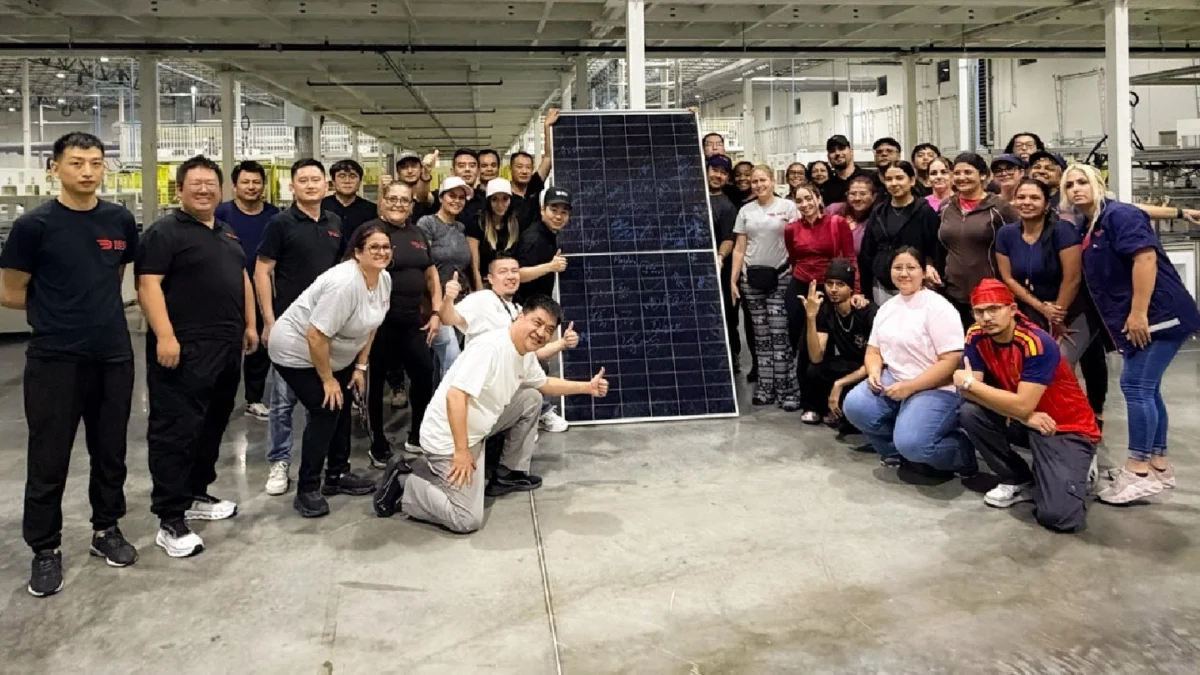
In a pivotal development for the North American renewable energy sector, SEG Solar has officially commenced commercial-scale production of its advanced heterojunction (HJT) solar modules at its newly inaugurated Tomball #1 manufacturing facility in the Greater Houston area. This milestone not only bolsters the company’s domestic footprint but also signifies a substantial shift in the landscape of American solar manufacturing, as the industry pivots toward higher-efficiency technologies to meet the surging demands of the utility, commercial, and residential markets.
Main Facts: A New Benchmark for Domestic Production
The launch of the Tomball #1 facility is a transformative event for SEG Solar. By adding 4GW of annual HJT module capacity to its operations, the company has effectively pushed its total North American output to 6GW per year. This expansion is a cornerstone of SEG Solar’s broader strategy to decouple from reliance on overseas supply chains and establish a robust, "Made in America" solar ecosystem.
The Tomball #1 plant is a $200 million investment, occupying a sprawling 500,000-square-foot footprint. Engineered for high-volume, high-precision manufacturing, the facility houses four dedicated production lines. These lines are specifically calibrated to manufacture the company’s flagship SIERRA N series HJT modules, which integrate both 210mm and 210R wafer formats. By focusing on HJT technology—widely regarded as the next frontier in photovoltaic (PV) performance—SEG Solar is positioning itself at the cutting edge of module efficiency, durability, and energy yield.
Chronology: Building the Foundation
The trajectory of SEG Solar’s expansion reflects a rapid and deliberate scaling process:
- 2021: SEG Solar is founded, entering the market with a vision to serve diverse solar sectors, from large-scale utility projects to residential installations.
- 2024 (Early): The company identifies the Greater Houston area as a strategic hub for its next phase of growth, citing regional supply chain advantages and access to a skilled manufacturing workforce.
- August 2026: SEG Solar formally opens the doors to the Tomball #1 facility, marking the completion of the $200 million infrastructure project.
- September 2026: The facility produces its first commercial-grade HJT module, signaling the transition from installation and testing to full-scale, market-ready operations.
- 2027 (Projected): SEG Solar anticipates the completion of an additional US-based HJT module manufacturing facility, which will contribute a further 4.6GW of annual capacity.
- 2028 (Projected): The company aims to integrate domestic solar cell production, further verticalizing its supply chain and reducing dependency on international cell markets.
Supporting Data: Why HJT Matters
The decision to lean heavily into HJT technology is backed by significant engineering advantages. Unlike traditional P-type PERC modules that have dominated the market for years, HJT modules are designed to minimize energy loss and maximize conversion efficiency.
Technical Advantages of HJT:
- Higher Bifaciality: HJT modules are inherently bifacial, allowing them to capture sunlight on both sides of the panel, which is particularly effective in utility-scale projects with high-albedo ground surfaces.
- Lower Temperature Coefficient: One of the most critical performance metrics in solar, the temperature coefficient dictates how much efficiency is lost as panels heat up. HJT modules excel here, maintaining higher output in hot, sunny climates like Texas.
- Reduced Degradation: HJT technology is less susceptible to light-induced degradation (LID) and potential-induced degradation (PID), ensuring that the modules retain their rated power output for longer periods.
The facility’s reliance on digital management is equally impressive. The Tomball #1 plant utilizes AI-enabled inspection systems that monitor production in real-time, catching microscopic defects that would otherwise go unnoticed. Furthermore, advanced production scheduling tools ensure that the four production lines operate at peak capacity with minimal downtime. These systems are complemented by precision-engineered processes, including low-temperature soldering—which prevents thermal stress on cells—and automated butyl sealant application, which provides superior moisture barrier protection.
Official Responses and Strategic Vision
The leadership at SEG Solar views this expansion as a direct answer to the shifting political and economic currents impacting the global energy transition.
"Facing the new policy challenges, SEG has doubled down on American manufacturing," stated SEG Solar CEO Jim Wood. "With Tomball #1 online and our domestic supply chain fully traceable, we are accelerating toward our goal of becoming America’s largest crystalline silicon module manufacturer."
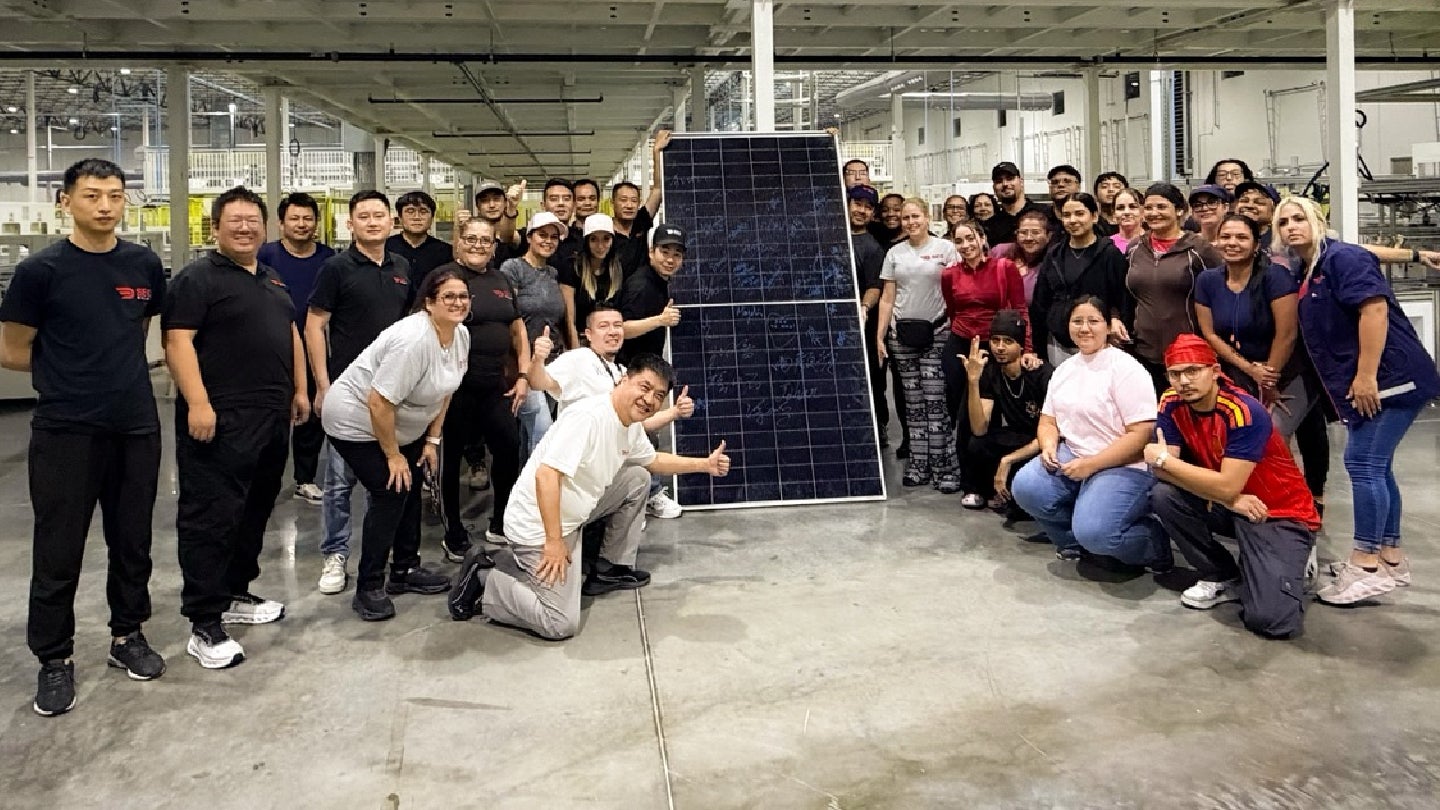
Wood’s commentary highlights a recurring theme in the US renewable industry: the importance of "traceability." As the US government tightens regulations regarding the origins of solar components, companies like SEG Solar are finding a competitive advantage in transparent, domestic-first supply chains. By moving toward a model where the entire manufacturing process—from raw silicon processing to finished module assembly—occurs within US borders, SEG Solar is mitigating the risks associated with global trade volatility and policy changes.
Implications for the US Energy Landscape
The scaling of the Tomball facility has far-reaching implications for the broader US economy and the renewable energy transition.
1. Strengthening the Supply Chain
With a projected total manufacturing capacity of 10.6GW by 2027, SEG Solar is rapidly becoming a titan of the American solar industry. This volume is critical; for the US to meet its climate goals, it requires a reliable, consistent, and massive supply of solar hardware. By localizing production in Texas, SEG Solar is reducing the logistics costs and carbon footprint associated with shipping panels from Asia.
2. Job Creation and Economic Growth
A facility of this scale is a massive engine for regional economic development. The $200 million investment translates into hundreds of high-skilled manufacturing and engineering jobs in the Houston area. Furthermore, the reliance on advanced automation and AI-driven manufacturing suggests that these are not just labor-intensive roles, but high-value positions that require specialized technical expertise, helping to foster a new generation of American manufacturing talent.
3. Price Competitiveness and Energy Security
As manufacturing scale increases, the unit cost of HJT modules is expected to drop. This will make high-efficiency technology more accessible to commercial and utility-scale developers who have previously relied on cheaper, lower-performing modules. Furthermore, increased domestic production enhances energy security, ensuring that the US power grid is built on technology that is controlled, maintained, and produced within the country.
4. Setting a Precedent for Future Investment
The roadmap toward 2028, which includes the integration of domestic cell production, sets a high bar for other market players. If SEG Solar can successfully navigate the complexities of vertical integration, it will likely prompt competitors to accelerate their own domestic investment plans. This creates a "virtuous cycle" of investment, where the growth of one company drives infrastructure improvements, workforce development, and supply chain maturity that benefits the entire sector.
Conclusion
The commencement of production at Tomball #1 is more than just a successful equipment launch; it is a declaration of intent. By choosing to invest in advanced HJT technology and high-tech, AI-integrated manufacturing, SEG Solar is signaling that the future of US solar is not merely about volume, but about quality and long-term performance.
As the company looks toward its 2027 expansion and 2028 cell production goals, the industry will be watching closely. If successful, SEG Solar’s roadmap could well serve as the blueprint for how American companies can compete in a global market, leverage domestic policy support, and drive the world toward a cleaner, more resilient energy future. The Texas facility is not just producing modules; it is producing the infrastructure of tomorrow’s grid.