Introduction: A Global Consensus on Sustainability
The International Ecotourism Society (TIES) recently concluded an extensive global survey aimed at gauging the current pulse of the ecotourism profession. By engaging members and industry stakeholders across the globe, the organization sought to map the shifting landscape of sustainable travel. The results, drawn from 971 viable responses spanning 91 countries, offer a comprehensive snapshot of a sector that is not only evolving but expanding at an accelerated rate.
The data underscores a nearly unanimous consensus: ecotourism is no longer a niche interest; it is a burgeoning global movement. With respondents ranging from the United States to Sudan, and from Bhutan to Cote d’Ivoire, the breadth of the survey confirms that the principles of conservation-focused travel are transcending borders, economic classifications, and cultural divides.
The Chronology of the Study
The initiative began as a strategic effort to better align TIES’s resources with the real-time needs of its diverse membership. In the months preceding the report, the society reached out to professionals via its digital newsletter, encouraging a broad demographic to participate.
- Data Collection Phase: Over a period of several weeks, TIES solicited feedback through a structured digital survey. The goal was to categorize the industry, identify geographic growth trends, and assess the organizational priorities of the membership.
- Analysis Phase: Following the close of the survey, the team processed 971 unique responses. While the primary concentration of respondents hailed from the United States, the geographic diversity—covering every continent—provided a robust, multi-faceted data set.
- Synthesis and Review: The society categorized industry segments, analyzed growth perceptions, and evaluated requests for multilingual support and future organizational focus.
- Reporting Phase: The findings were finalized in late 2019, serving as a foundational document for the society’s strategic roadmap for the following decade.
Supporting Data: Mapping the Ecotourism Landscape
The survey provided a wealth of statistical evidence that clarifies who is currently driving the ecotourism industry and where they believe the sector is headed.
Industry Segmentation
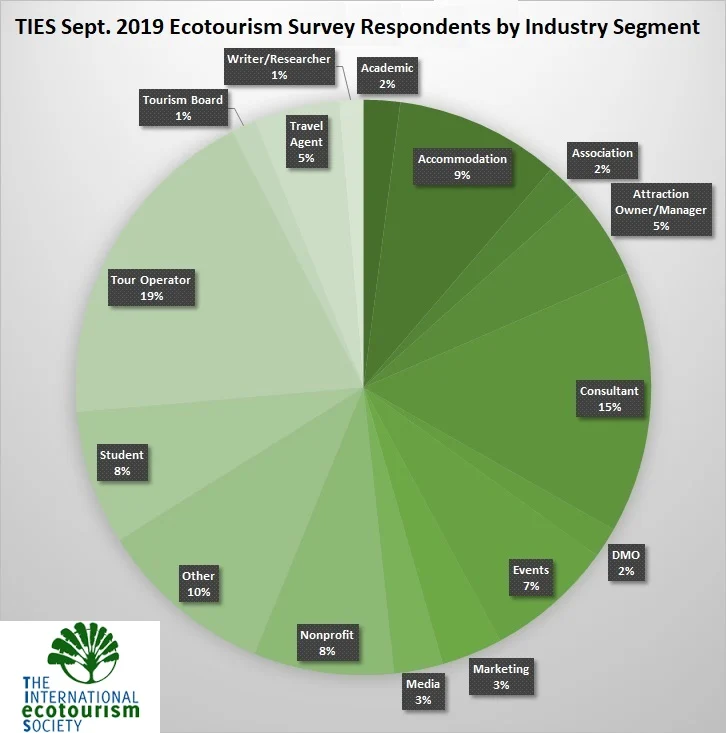
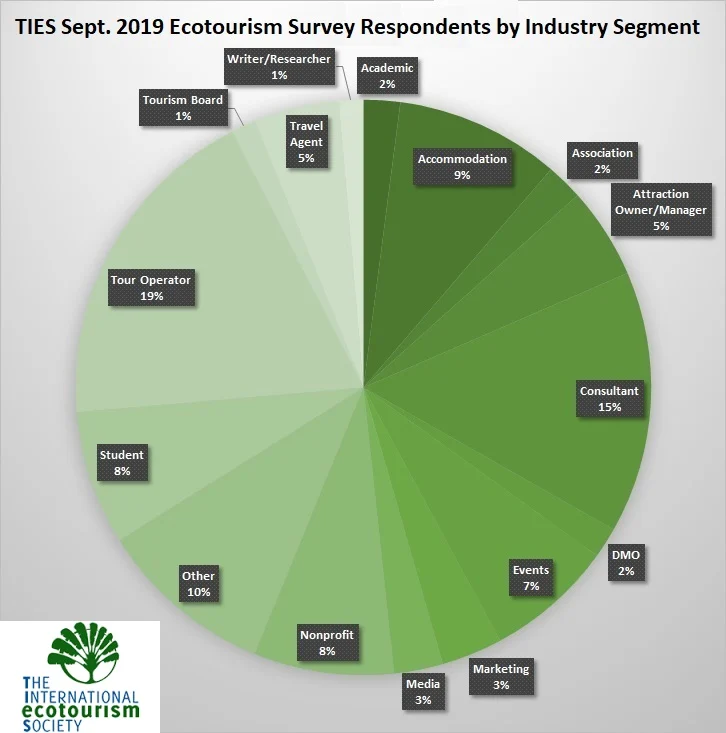
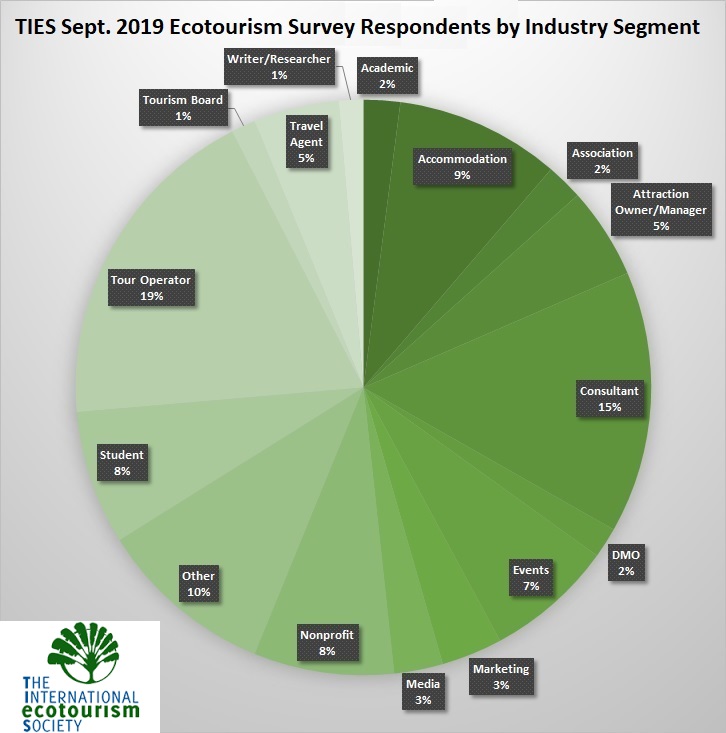
While 90% of participants were able to cleanly classify their professional roles within the provided categories, the feedback revealed a modern, hybridized industry. Respondents noted that many professionals now wear multiple hats, suggesting that future surveys should permit multi-segment selection. The current data illustrates a heavy concentration of tour operators and consultants, alongside a smaller-than-anticipated turnout from the academic community. This discrepancy serves as a catalyst for TIES to re-engage with researchers to ensure that data-driven insights continue to inform industry practices.
The Growth Trajectory
Perhaps the most striking finding is the overwhelming belief in the industry’s expansion. When asked about the health of the ecotourism sector, less than 0.5% (only four respondents) indicated that they saw the industry slowing down. The overwhelming majority characterized growth as rapid and sustained. This sentiment aligns with broader market research from organizations such as Booking.com, which have similarly identified a dramatic surge in consumer demand for sustainable and responsible travel options.

Language and Accessibility
The survey also served as a diagnostic tool for the organization’s communication strategy. Participants highlighted a critical need for multilingual resources. While English remains the primary language of the society, there was a clear mandate for Spanish-language content. Furthermore, the interest in French and Mandarin—the latter being particularly noteworthy given the low initial response rate from China—indicates a potential for market expansion and a need for broader cultural inclusivity in TIES’s educational outreach.
Official Responses and Strategic Pivots
In response to the survey data, The International Ecotourism Society (TIES) has begun outlining a series of strategic pivots. The organization is shifting its focus to address the specific pain points identified by the global community.
Addressing the "Educational Gap"
Perhaps the most surprising takeaway was the prioritization of education over traditional policy advocacy. When asked where TIES should direct its energy, 41% of respondents pointed directly to education. In response, TIES has already initiated dialogues with partners in the educational sector to develop frameworks that will provide better training and knowledge-sharing for tourism professionals.
Bridging the Gap to Consumers
A recurring theme in the qualitative feedback was the "lack of traveler ability to book ecotourism fairly." Consumers often struggle to distinguish between genuine ecotourism and "greenwashing." The respondents indicated that TIES must play a role in making sustainable choices more accessible and transparent. Whether through improved online platforms, better certification standards, or direct-to-consumer advocacy, the mandate is clear: the industry must make it easier for the average traveler to support legitimate conservation efforts.
The Shift in Organizational Focus
The survey results also forced a recalibration of internal priorities:
- Education (41%) is now the primary pillar.
- Conservation and Climate Partnerships (18%) remain a core secondary objective.
- Ecodestination Mapping (14%) will be expanded to provide better country-specific data.
- Publications and Social Media (20% combined) will continue to serve as the voice of the society.
Interestingly, traditional institutional priorities—such as UN partnerships and increasing raw membership numbers—ranked lower in the eyes of the respondents, signaling that members are more interested in tangible, on-the-ground outcomes than in bureaucratic expansion.
Implications: The Challenges Ahead
Despite the optimism surrounding the industry’s growth, the respondents did not shy away from the systemic challenges facing the sector. The feedback paints a picture of an industry at a crossroads, struggling with the "growing pains" of success.
The Shadow of Overtourism
The survey highlighted a paradoxical challenge: as ecotourism becomes more popular, it risks falling victim to the very problems it seeks to solve. "Overtourism," "overdevelopment," and "lack of regulations" were cited as major threats to the integrity of the sector. The consensus suggests that without strict standards and a commitment to carrying capacity, ecotourism could inadvertently degrade the sensitive environments it relies upon.
Economic and Operational Barriers
Beyond the environmental concerns, professionals noted significant operational hurdles. Difficulties in obtaining permits, the scarcity of sustainable financing, and a general lack of awareness among travelers and operators remain significant bottlenecks. The mention of "greed" as a challenge underscores the tension between profit-seeking and the ethos of conservation.
The Path Forward
The path forward, according to the survey, is one of collaborative resilience. The respondents, while clear-eyed about the threats posed by climate change and inadequate infrastructure, remain fundamentally optimistic. They see ecotourism as a viable tool for global change, provided that the industry can standardize its offerings and educate the consumer base.
Conclusion: A Future Built on Knowledge
The 2019 survey conducted by The International Ecotourism Society stands as a landmark document. It has successfully moved beyond mere internal polling to become a collaborative blueprint for the future. By listening to the voices of 971 professionals across 91 countries, TIES has confirmed that the desire for a better, more ethical way to experience the world is a universal aspiration.
As TIES moves forward with its plans to roll out multilingual support, enhance educational programming, and advocate for more transparent booking processes, it carries the mandate of its members. The findings serve as a reminder that while the challenges of the 21st century—climate change, economic volatility, and industry fragmentation—are immense, the collective commitment of the global ecotourism community is stronger. The future of travel is not just about moving from one place to another; it is about ensuring that every journey contributes to the preservation of the planet. Through education, partnership, and a steadfast commitment to the core values of conservation, the industry is poised to meet these challenges head-on, ensuring that ecotourism remains a powerful force for good for generations to come.