By Molly Taft for Power Play
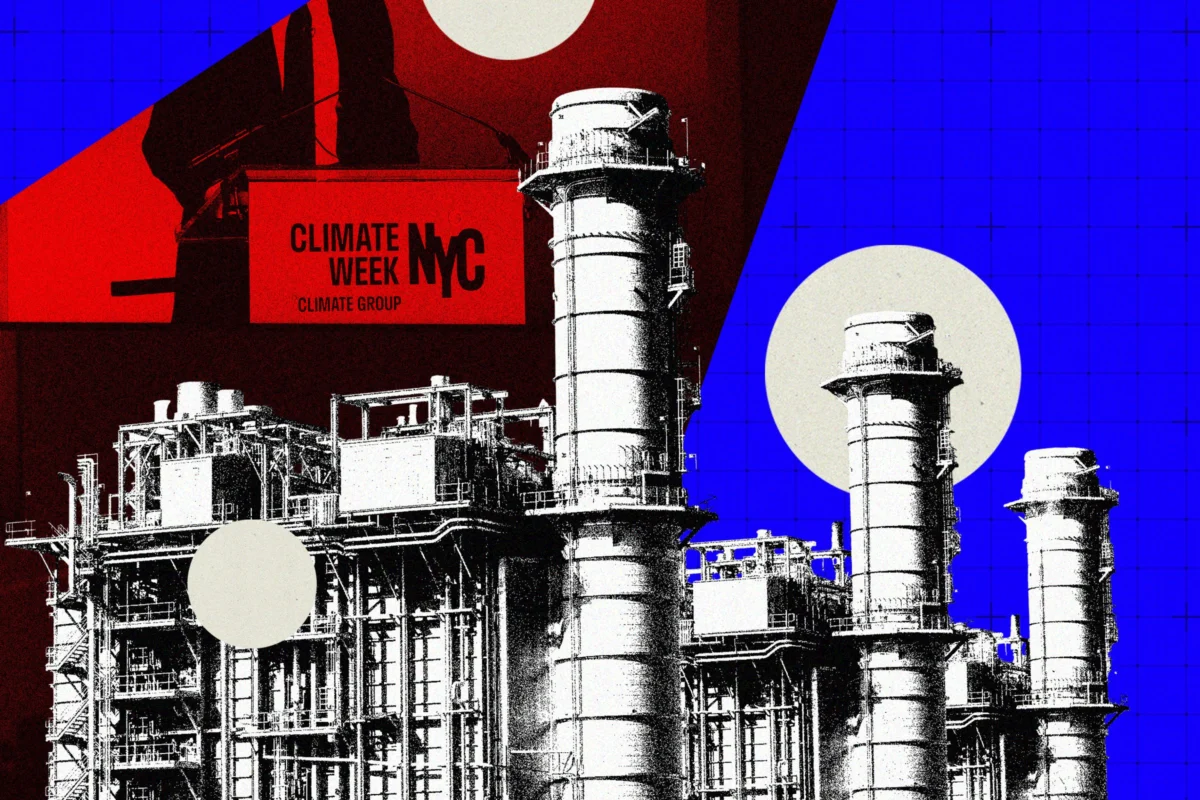
The tension at this year’s Climate Week in New York was palpable, but it wasn’t just the humidity or the urgency of the global climate agenda. The real friction point was a new, unlikely protagonist in the climate drama: the humble, massive, and rapidly multiplying data center. As AI demand skyrockets, these facilities—the silent engines of our digital lives—have transformed from benign infrastructure into the most contested sites of environmental activism.
The Disruption: When Silent Infrastructure Finds a Voice
The post-lunchtime panel session on AI and data center infrastructure was barely sixty seconds underway when the status quo was shattered. A man, standing a few rows into the audience, stood up and cut through the moderated discussion with a sharp, piercing reality check.
“The idea that we can keep running on fracked gas is a lie!” he shouted.
Security was swift, escorting the man out as the panelists—tech executives and industry analysts—exchanged uneasy glances. The session attempted to resume, but the peace was short-lived. A second protester stood, then a third. Over the next ten minutes, members of the group Extinction Rebellion NYC systematically interrupted the proceedings, turning the corporate-friendly event into a theater of dissent. They spoke not of abstract carbon goals, but of the direct harms they associate with the AI boom.
For the better part of a decade, Extinction Rebellion has used tactical, public disruption to force the climate emergency into the headlines. Usually, such interruptions are met with the polite, practiced silence of corporate professionals waiting for the storm to pass. Yet, this time felt different. The panelists were visibly rattled. Cully Cavness, cofounder and president of the data center infrastructure firm Crusoe, admitted to the moderator later that he remained preoccupied by the interruptions long after the security teams had cleared the room.
A Chronology of Growing Resentment
The intensity of the protests at Climate Week is not an isolated incident; it is a microcosm of a broader, months-long trend that has caught the tech industry off guard.
- Mid-2024: Public sentiment toward massive data center projects begins to shift from neutral curiosity to localized alarm as developers push into rural and suburban areas.
- Late Summer 2024: A wave of legislative moratoriums sweeps across both "red" and "blue" states, with local governments citing concerns over land use and grid stability.
- September 2026 (Climate Week): The tension reaches a boiling point. Industry leaders, who previously viewed data centers as neutral economic boons, find themselves forced into a defensive posture on public stages.
- Post-Climate Week: Industry leaders, including those at the panel, pivot to a "good neighbor" narrative, attempting to rebrand data centers as essential partners in grid modernization.
The frustration among the tech elite is rooted in a perceived disconnect. During the session, Cavness noted his assumption that many of the protesters likely resided nowhere near a data center. In his view, they failed to grasp the economic benefits—specifically the boost to the local tax base—that these facilities provide. Varun Sivaram of Emerald AI echoed this sentiment, attempting to paint a vision of data centers as "good citizens" capable of stabilizing the grid and accelerating the transition to clean energy. "Careful what you wish for," Sivaram warned the absent protesters, suggesting that driving away these massive tech players would deprive communities of the very entities with the capital and motivation to upgrade outdated power systems.
The Hierarchy of Public Concern
While the protesters at Climate Week focused on the existential threat of fossil fuels, the reality of public opposition is more nuanced and locally rooted. Data from recent polling—including research from Ipsos and the University of Massachusetts—suggests that for the average voter, climate change is often the last item on a long list of grievances regarding data centers.
Far more pressing are immediate, tangible concerns:
- Water Usage: The massive cooling requirements of data centers threaten local water tables and infrastructure.
- Energy Prices: Residents fear that the voracious electricity appetite of AI will drive up residential utility bills.
- Local Pollution: Noise, air quality degradation from backup diesel generators, and the physical transformation of landscapes top the list of local anxieties.
Even within the investment community, there is a distinct shift in priorities. As one venture capitalist noted in The Wall Street Journal, Climate Week has effectively morphed into "AI and Data Center Week." The focus has shifted from abstract carbon-cutting initiatives to the cold, hard mechanics of energy system management. For investors, the question is no longer "How do we lower emissions?" but "How do we feed the grid?"
The Political Front: A New Legislative Strategy
The dissent has found a political home in figures like William Lawrence, a candidate in Michigan’s 7th congressional district. A former founder of the Sunrise Movement, Lawrence has made opposition to data centers and AI a central pillar of his campaign.
When questioned about his platform, which explicitly calls for halting AI development, Lawrence noted that his constituents are primarily driven by concerns over air, water, and quality of life. His platform is silent on climate change, a strategic choice that reflects the priorities of his district. However, he argues that the opposition is underpinned by a deep-seated "environmental consciousness."
"We have a small amount of billionaires and political insiders who have made it impossible to feel confident about the future," Lawrence said. "They’ve destabilized our ecological system. They’ve destabilized the political order."
The Hard Data: A Fossil Fuel Buildout
The industry’s promise that data centers will "transform the grid for the better" faces a harsh reality check when looking at current market trends. While the theoretical potential for green grid transformation exists, the current ground reality is a massive, rapid buildout of fossil fuel-powered infrastructure.
Analysis from BloombergNEF (BNEF) paints a stark picture:
- Global Demand: Data centers are projected to account for more than 5 percent of global electricity demand by 2035—a tripling of current needs.
- Emissions Impact: The majority of this new power is being sourced from existing or new natural gas plants, potentially raising global power sector emissions by 6 percent in under a decade.
- The "Behind-the-Meter" Threat: BNEF examined 99 proposed on-site gas power plants. If completed, these off-grid facilities could inflate US power sector emissions by 20 to 33 percent, effectively canceling out the environmental gains made by retiring coal plants.
Implications: The PR Turnaround of the Century
The fundamental dilemma for the tech industry is that even if they manage to resolve concerns regarding water usage and residential energy costs, the fossil fuel buildout remains an intractable problem. As long as the AI boom relies on the rapid expansion of gas-fired power, the climate math simply does not add up.
There is, however, a glimmer of innovation. Startups are beginning to explore technologies like supercritical CO2 to increase the efficiency of gas turbines, theoretically lowering the emissions profile of these plants. Yet, such technologies remain in their infancy and have yet to be proven at the scale required to offset the massive energy demands of hyperscale computing.
The protesters at Climate Week, while disruptive, were raising an issue that will eventually reach everyone, regardless of their proximity to a server farm. As emissions rise to power the digital age, the "climate emergency" is no longer something that can be relegated to a panel discussion. It is becoming the power source of our daily lives, and the conflict between our digital ambitions and our environmental reality is only just beginning.
What We’re Reading
- The Wall Street Journal: "Climate Tech VCs Zero In on Powering AI Instead of Cutting Carbon Emissions"
- BNEF 2026 Executive Summary: Trends in global electricity demand and fossil fuel integration.
- Michigan-First AI Plan: A deep dive into the legislative efforts to halt hyperscale development in the Midwest.