Mount Kilimanjaro, the "Roof of Africa," stands as a beacon for adventurers, scientists, and nature enthusiasts from across the globe. As the world’s tallest free-standing mountain, its ascent is not merely a physical challenge but a profound journey through five distinct ecological zones. Among the myriad paths to the summit, the Lemosho route has emerged as the premier choice for those seeking a balance of breathtaking aesthetics, solitude, and—most importantly—the highest probability of reaching Uhuru Peak.
Main Facts: The Lemosho Advantage
The Lemosho route is widely regarded by seasoned mountaineers and local guides as the most superior path for a Kilimanjaro expedition. Unlike the high-traffic Marangu or Machame routes, Lemosho offers a pristine experience, characterized by lower foot traffic and diverse, untouched landscapes.
For the modern traveler, "ecotourism" is no longer just a buzzword; it is a philosophy. Choosing the Lemosho route is a commitment to experiencing Kilimanjaro in its most authentic state. The route’s unique geography, starting from the west, allows trekkers to traverse the lush Lemosho Glades before meeting the Shira Plateau. This gradual approach provides the physiological advantage necessary for high-altitude success.
Statistics from local operators, such as Kilimanjaro Tanzanite Safaris, consistently demonstrate that the 8-day Lemosho itinerary offers the highest success rates of any route on the mountain. By prioritizing slow, steady acclimatization, the 8-day plan mitigates the risks associated with altitude sickness, allowing climbers to focus on the spectacular vistas rather than physical distress.
Chronology: A Day-by-Day Journey to the Summit
The Lemosho trek is a masterclass in progressive elevation. Understanding the day-by-day progression is essential for any prospective climber.
The Initial Ascent: Days 1–3
The journey begins with a departure from Moshi or Arusha, traveling to the Londorosi Park Gate. From the gate, a 4WD vehicle navigates a forest track to the Lemosho Glades. The first day involves a trek through dense, primeval forest to Mti Mkubwa (Big Tree) campsite at 2,750 meters. This section serves as a gentle introduction to the mountain’s complex ecosystem.
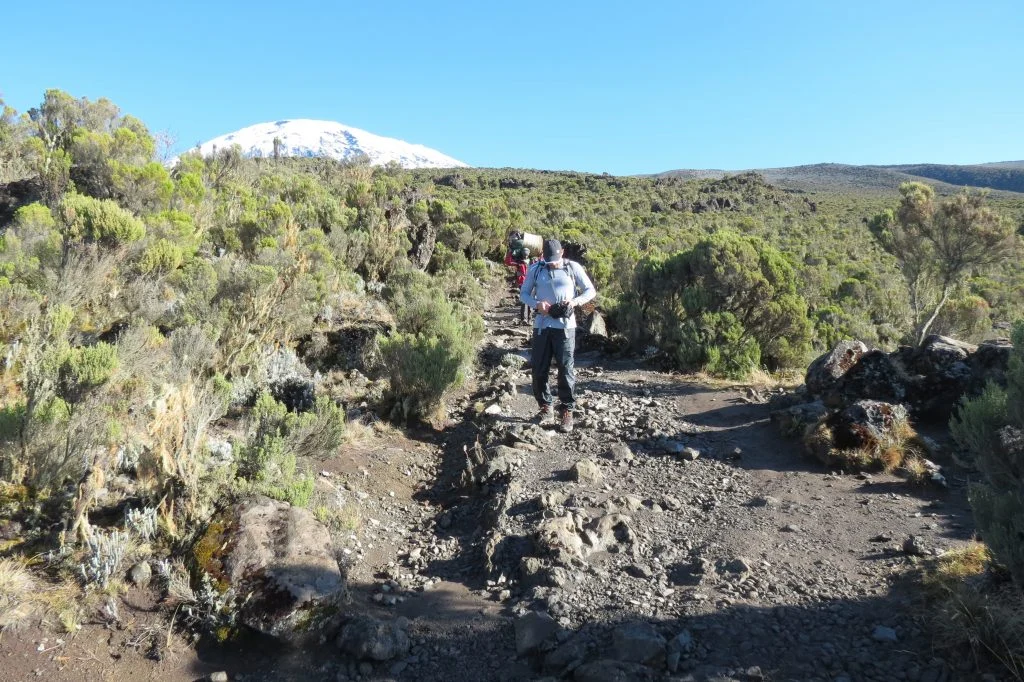
Day two sees the trail steepen as it enters the giant heather moorland zone. Climbers cross several mountain streams before ascending the Shira Ridge to 3,600 meters, eventually dropping into the serene Shira 1 camp. On day three, the trek moves across the Shira Plateau—a vast, volcanic landscape—to the Shira 2 camp. This plateau serves as a critical acclimatization hub, where side trips allow the body to adjust to the thinning air.
The Mid-Mountain Transition: Days 4–5
Day four marks the push toward the Lava Tower, a massive volcanic plug that serves as a landmark for altitude adjustment. Climbers descend to the Barranco Hut, famous for its proximity to the Barranco Wall—a dramatic, albeit manageable, rock scramble.
For those on the recommended 8-day itinerary, day five is spent traversing toward the Karanga Valley. This additional night at Karanga Camp is a vital strategic decision. It allows the body to recover from the previous day’s exertion and prepares the system for the steep ascent to the Barafu Hut (4,600 meters). Barafu, the "base camp," is a stark, high-altitude outpost where the final preparations for the summit push occur.
The Final Push and Descent: Days 6–7
Day six is the culmination of the expedition. An early morning start—often at midnight—sees climbers ascending the rim of the Kibo Crater. The final ascent to Uhuru Peak (5,895 meters) is arduous, but the reward is a panoramic sunrise that stretches across the Serengeti and beyond. After capturing the moment at the summit, the group descends to Mweka Hut, marking the end of the high-altitude exertion. Day seven completes the journey with a final walk through the lush forest, leading to the park gate and the return to civilization.
Supporting Data: Why Acclimatization Matters
The primary cause of failure on Mount Kilimanjaro is not physical weakness, but the failure to acclimatize. Altitude sickness—or Acute Mountain Sickness (AMS)—can affect even the most athletic individuals.
The Lemosho route’s success lies in its design. By providing extra time on the Shira Plateau and an additional night at Karanga Camp, the 8-day itinerary follows the "climb high, sleep low" principle. Data collected by Kilimanjaro Tanzanite Safaris indicates that guests who opt for the 8-day trip report significantly lower instances of headaches, nausea, and fatigue compared to those attempting a 6-day sprint. Furthermore, the inclusion of medical safety measures—such as portable pulse oximeters, emergency oxygen bottles, and professional medical insurance via the AMREF Flying Doctors—ensures that safety is never sacrificed for speed.
Official Responses and Professional Guidance
Industry experts and local destination management companies (DMCs) are uniform in their advocacy for sustainable, well-planned trekking. Kilimanjaro Tanzanite Safaris, a reputable local operator, emphasizes that the "ecotourism" experience is enhanced by small, manageable groups and ethical treatment of porters and guides.
"We advise our clients to look beyond the price tag," says a spokesperson for the company. "The value of a Kilimanjaro expedition is found in the logistics, the quality of nutrition, the expertise of the mountain crew, and the safety protocols provided. A lower-cost, rushed itinerary often misses the mark on both safety and the sheer joy of the mountain environment."
The company also highlights that discounts are available for educational programs, students, and organized groups. By fostering these partnerships, local DMCs ensure that the mountain remains accessible while maintaining the high standards required for responsible tourism.
Implications for the Future of Kilimanjaro Tourism
As global interest in "bucket list" adventures grows, the pressure on Kilimanjaro’s delicate ecosystem increases. The shift toward the Lemosho route, alongside the Northern Circuit and Rongai routes, represents a positive trend in sustainable travel. By spreading the impact of tourism across different paths, the Tanzanian authorities and private operators are effectively protecting the mountain’s fragile alpine meadows and forests.
For the traveler, the implications are clear: the future of adventure travel lies in slow, immersive experiences. A 7- or 8-day Lemosho trek is not just a vacation; it is an educational journey. It offers an opportunity to witness the rapid transition from tropical rainforest to arctic desert, a biological spectacle that few places on Earth can offer.
Conclusion: Planning Your Expedition
Planning a trip to Kilimanjaro requires careful consideration of the service provider. As noted by industry leaders, the inclusions matter. When selecting a package, ensure it covers airport transfers, government taxes, high-quality mountain equipment, and, crucially, a reputable team of guides and cooks.
Whether you are a professional photographer looking for the perfect shot of the Mawenzi peak, or an ecotourist aiming to minimize your footprint while maximizing your experience, the Lemosho route remains the definitive choice. By choosing an 8-day itinerary, you aren’t just buying a ticket to the top; you are investing in your own health, safety, and a transformative encounter with the natural world.
For those ready to begin their journey, direct consultation with established local DMCs ensures that every detail—from the initial briefing in Moshi to the final certificate of completion—is managed with professional care. As the saying goes in Tanzania: Pole, pole—slowly, slowly. On the Lemosho route, this isn’t just a mantra; it is the key to the summit.