This coverage is made possible through a partnership between Grist and Verite News, a nonprofit news organization with a mission to produce in-depth journalism in underserved communities in the New Orleans area.
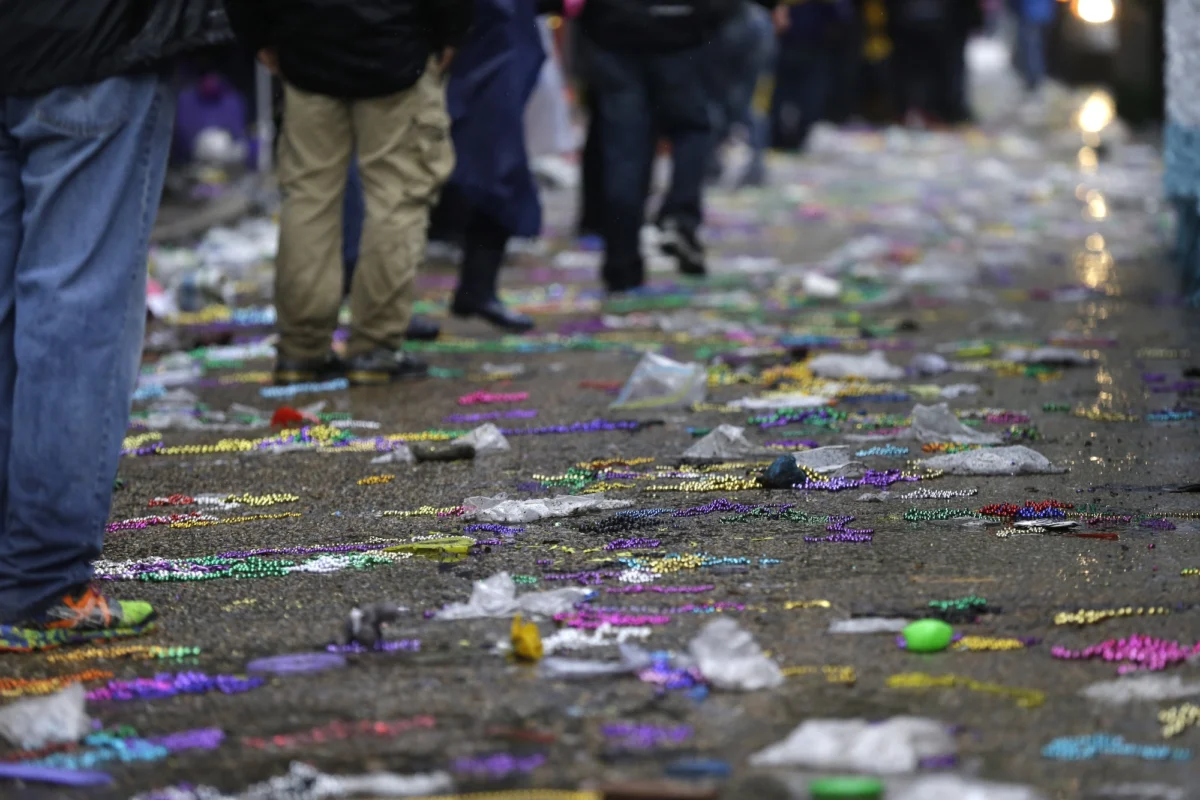
When municipal cleaning crews descended into the subterranean labyrinth of New Orleans’ storm drains in 2018, they expected to find the usual urban grit. Instead, they extracted 46 tons of Mardi Gras beads—a shocking revelation that underscored the environmental toll of the city’s most famous tradition. The discovery of that massive, tangled plastic mass served as a wake-up call for city officials and environmental advocates alike.
“Once you hear a number like that, there’s no going back,” then-Public Works director Dani Galloway said at the time. “So we’ve got to do better.”
Nearly a decade later, the city’s attempt to "do better" has hit a formidable wall of consumer behavior and logistical crisis. Despite years of awareness campaigns and a shift in cultural attitudes toward waste, New Orleans is currently generating more Mardi Gras refuse than ever before. During the five-week Carnival season that culminated in February, sanitation crews collected an staggering 1,363 tons of beaded necklaces, plastic cups, aluminum cans, and abandoned camping gear along parade routes.
This figure represents a 24 percent increase over the previous year and stands as the highest volume of waste recorded in the city’s history. To put the scale of this debris in perspective, the weight is equivalent to 741 automobiles, roughly the mass of the iconic Steamboat Natchez, or more than 1 million king cakes.
A Century of "Throws" and the Toxic Legacy
At the heart of the crisis is the "throw"—a century-old tradition where riders on parade floats shower crowds with trinkets. While historically a symbol of communal joy, the modern throw has become an environmental liability. The vast majority of these items are cheap, petroleum-based plastics manufactured overseas. Beyond their sheer volume, many beads are laden with toxic chemicals, including unsafe levels of lead and phthalates, which leach into the city’s soil and water as they are crushed under the feet of millions of revelers.
Brett Davis, founder of Grounds Krewe, a nonprofit dedicated to sustainability, expresses frustration at the current trajectory. “To see the waste go up that much, it’s just absurd,” Davis said. His organization has been at the forefront of the movement to promote high-quality, reusable throws, such as socks, wooden cooking spoons, and metal cups, but these efforts are currently being eclipsed by the rising tide of disposable debris.
A Decade of Rising Tonnage: A Chronology
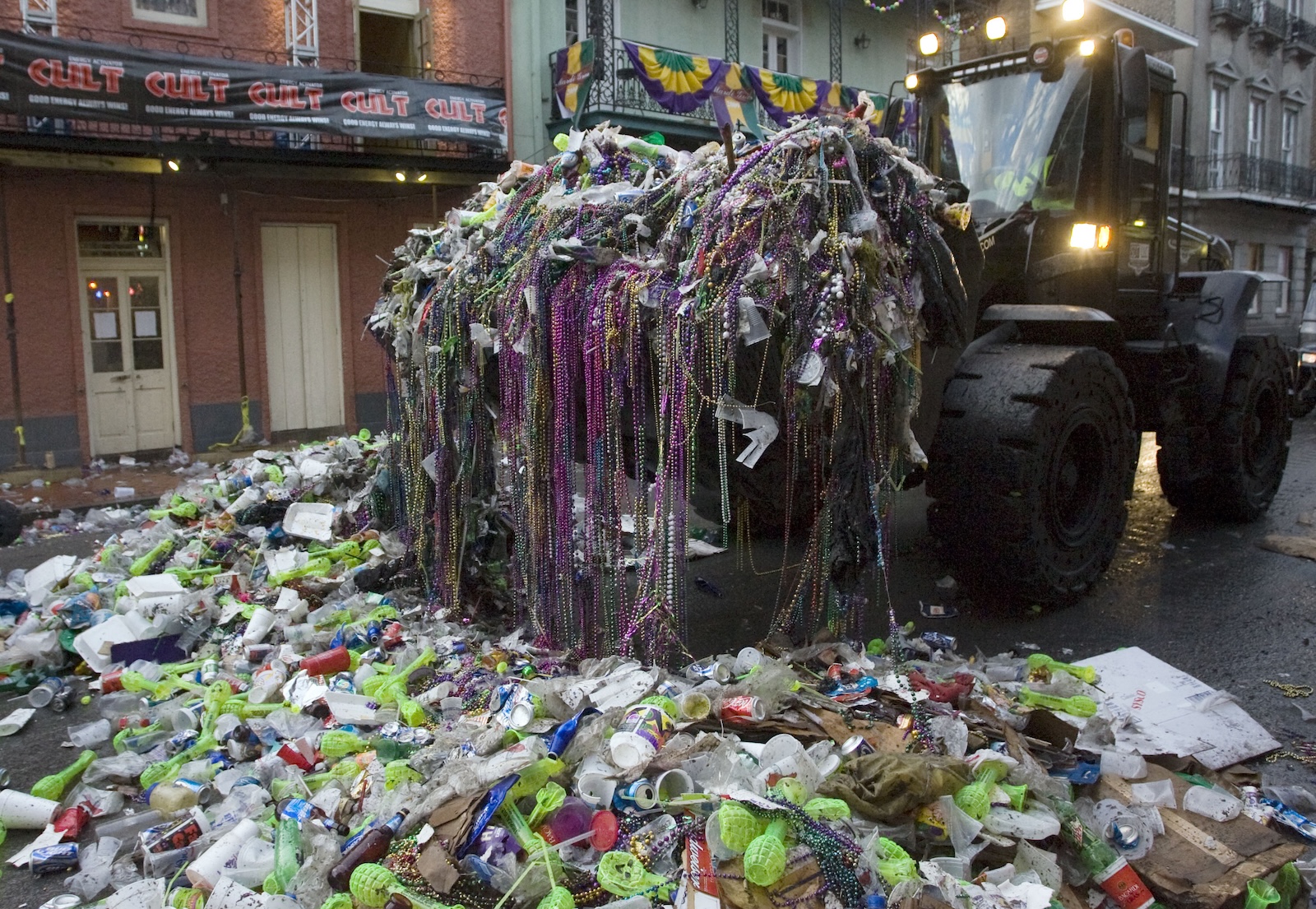
The evolution of the city’s waste problem reveals a troubling trend that transcends year-to-year attendance fluctuations. In the early 2010s, annual Carnival waste hovered around 880 tons. By 2017, the city crossed the 1,320-ton threshold, and with the exception of 2021—when the COVID-19 pandemic effectively shuttered the festivities—the total has not dipped below 1,000 tons since.
The data suggests a disconnect between the number of people attending and the volume of trash left behind. In 2020, for example, the city hosted approximately 2.4 million visitors, yet the cleanup crews collected nearly 241 fewer tons of waste than they did this year. This anomaly highlights a critical shift: the problem is no longer just the beads being thrown from the floats, but the increasingly elaborate infrastructure brought by the spectators themselves.
The Myth of Attendance-Driven Waste
City officials, including Sanitation Director Matt Torri, initially pointed to the surge in tourism as the primary culprit for the record-breaking trash numbers. According to the Downtown Development District, which tracks location analytics, 2.2 million people visited downtown New Orleans this year—a 10 percent increase over 2025.
“The increase from last year was directly associated with the larger crowds,” Torri told the City Council in March. “Anybody who was out at this year’s parades definitely took note that there seemed to be more people enjoying the Carnival season.”
However, a Verite News analysis challenges this narrative. By mapping attendance figures against citywide cleanup logs, the data shows no statistically significant correlation between the number of people on the street and the tonnage of waste. While the downtown area remains the epicenter of the crowd, the citywide sanitation figures fluctuate independently of these attendance metrics. The data suggests that while tourism is a factor, the composition and volume of waste are driven by a changing culture of parade-going.
The Infrastructure of "Abject Entitlement"
The modern parade-goer has evolved from a transient spectator into a stationary camper. Revelers now stake out prime viewing locations days in advance, bringing with them a small city of comforts: heavy-duty canopy tents, wooden viewing platforms, portable generators, industrial-sized coolers, and even full-sized furniture.
These items, often referred to as the "Krewe of Chad"—a pejorative term for those who claim public space as their own—have become the heaviest components of the post-parade cleanup. City Council President JP Morrell describes this behavior as a sense of "abject entitlement."
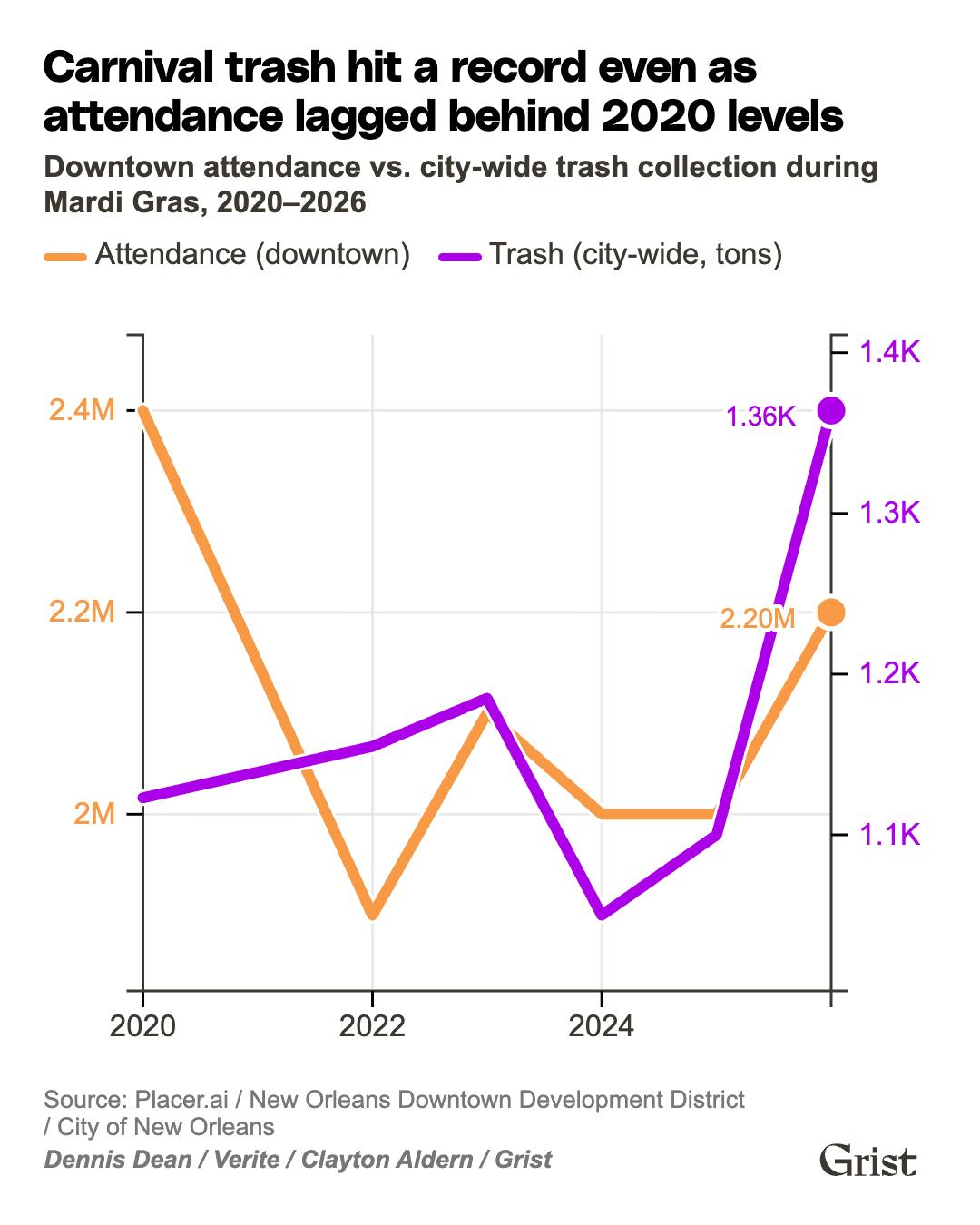
“The reality is that they get their use out of this stuff, and then it becomes a tremendous amount of debris that our workers have to deal with because these people had no intention of ever picking this stuff up,” Morrell stated. “It goes towards a sense that our entire city exists to serve other people’s whims.”
Administrative Hurdles and the Budget Crisis
The city’s ability to manage this waste is currently hampered by a perfect storm of fiscal and security-related challenges. A $220 million budget deficit has forced the city to slash funding for sanitation and enforcement. Furthermore, the city’s security posture shifted in 2025 following a tragic terror attack on New Year’s Day, leading officials to prioritize police presence for public safety over the enforcement of parade-route ordinances.
As a result, the "spotty" enforcement of rules against tents, tarps, and ladders has emboldened revelers to push the boundaries of what is acceptable. While there was a brief period of improvement in 2024 following a crackdown that involved the seizure of truckloads of encampment gear, that momentum evaporated as the city’s resources were stretched thin.
The Future of Carnival Sustainability
Despite the grim figures, advocates see a path forward, though it requires a multi-pronged approach that goes beyond mere recycling. Grounds Krewe and similar groups successfully diverted 28 tons of material from landfills this year, even without the promised $200,000 in city support that was lost to budget cuts.
However, as Brett Davis notes, recycling alone cannot offset the 24 percent increase in overall waste. “Having the krewes throw less is great, but what’s really heavy is a couch and all the stuff people brought out in wheelbarrows,” Davis said. “Unless we have police out there and the trucks to haul it away, this kind of behavior creeps back. And that’s what we’re seeing now.”
For the city’s drainage system, the stakes are existential. The "gutter buddies" and filters installed after the 2018 crisis remain a band-aid solution. With each passing year, the volume of refuse continues to pose a significant risk of flooding, as outfalls remain clogged with debris that eventually makes its way into Lake Pontchartrain and the surrounding canals.
As New Orleans looks toward the next Carnival season, the path to sustainability remains fraught. Without a firm commitment to both enforcing regulations on spectator gear and providing the infrastructure for a circular economy, the city risks being buried under the weight of its own celebrations. The challenge, ultimately, is not just one of waste management, but of redefining the relationship between the city, its residents, and the millions who visit to partake in its most cherished—and increasingly taxing—tradition.