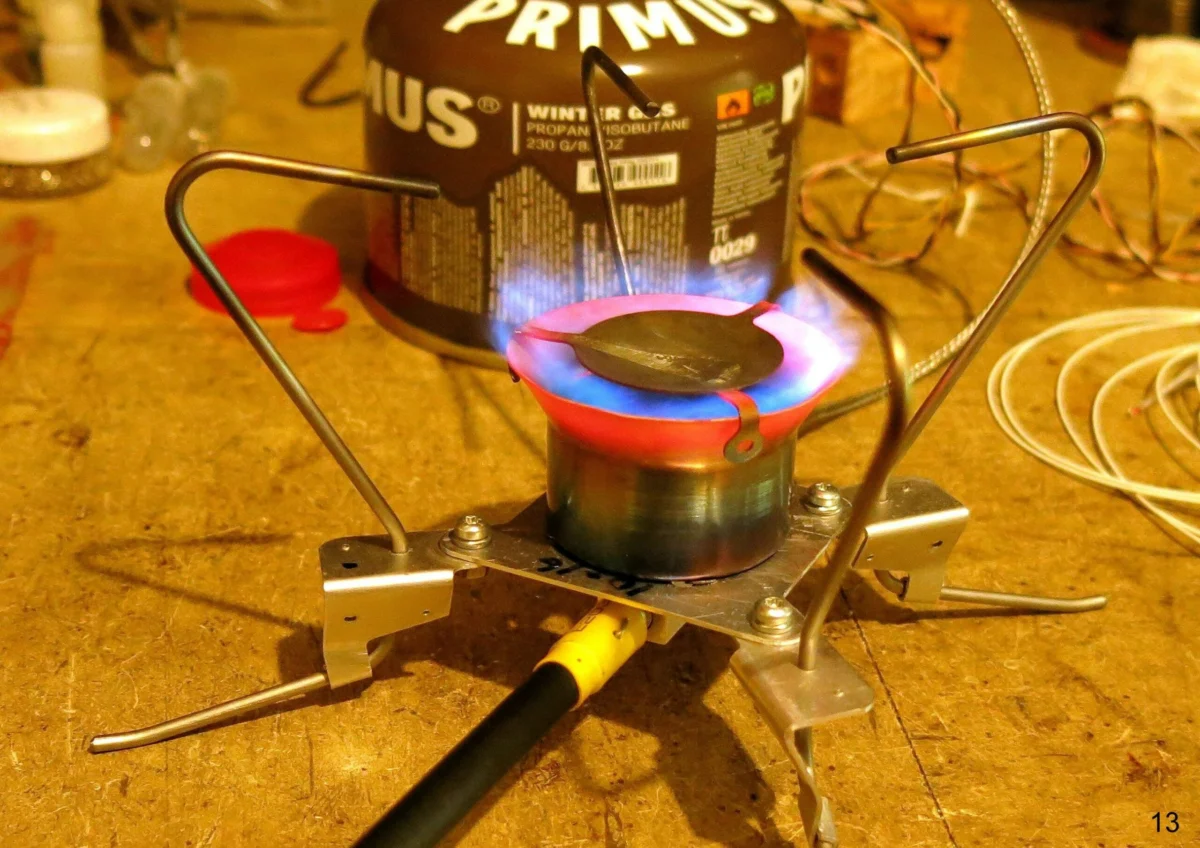
Introduction: The Quest for the Perfect Flame
For the dedicated winter backpacker, the stove is not merely a piece of gear; it is a lifeline. When temperatures plummet and snow blankets the landscape, the ability to melt water and prepare a hot meal is the difference between a successful expedition and a dangerous ordeal. For years, I have been obsessed with the challenge of the "remote inverted canister stove." While commercial units have improved over the decades, they often remain heavy, cumbersome, or prone to the dreaded "flare-up" that occurs when liquid fuel enters the burner jet prematurely.
My latest project, the V8 Vortex stove, represents the culmination of years of iterative engineering, data logging, and field testing. Weighing in at a mere 75 grams—including a carbon fiber handle and a high-performance heat shunt—this stove represents a significant leap in weight-to-performance efficiency. This article details the evolution of my design philosophy, from the early days of "stove-stand" tinkering to the sophisticated thermodynamic modeling that defines my current work.
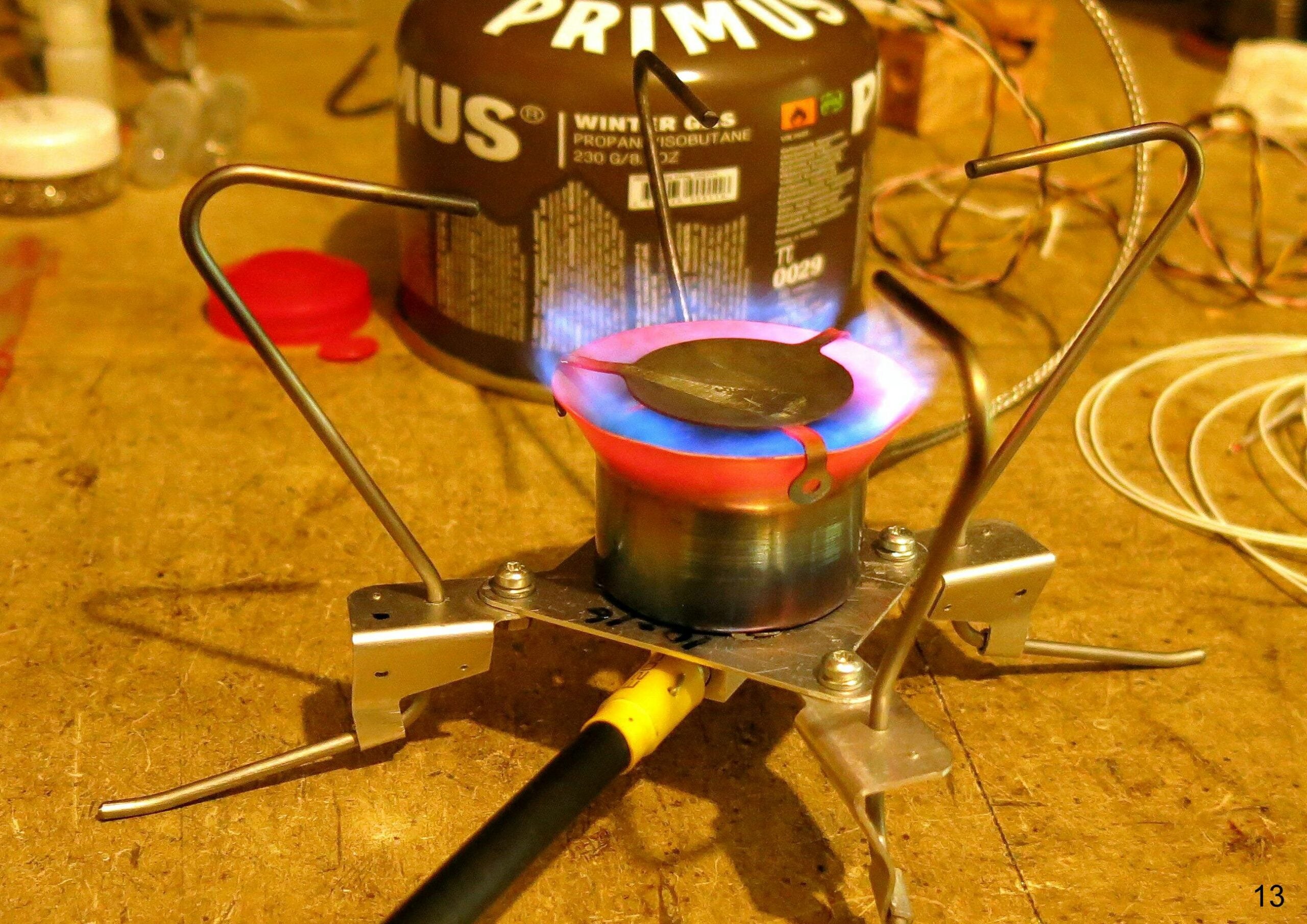
Chronology: A Decade of Iteration
The Genesis: The Brunton Era (V0)
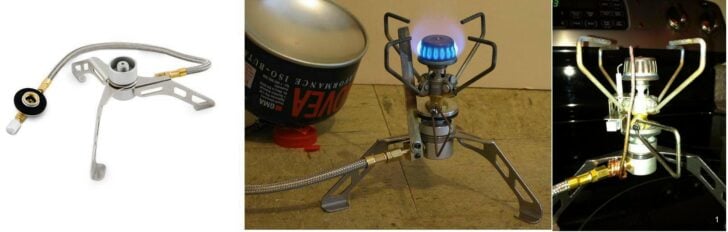
My journey began with a simple curiosity sparked by the Brunton Stove Stand. The device was ingenious: it lowered the center of gravity of upright canister stoves, providing stability. However, it had a fatal flaw for winter use—the canister had to remain upright. In cold weather, standard canister gas pressure drops, and upright configurations fail to deliver consistent heat. I began experimenting with copper strips to shunt heat from the flame to the fuel inlet. This "V0" experiment proved that with the right thermal management, one could effectively vaporize liquid fuel even with an inverted canister.
The V1 and the CNC Revolution
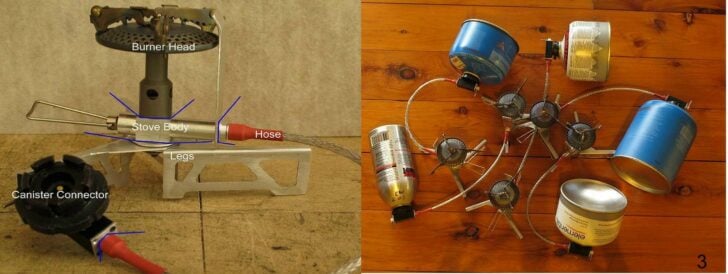
As I moved toward a dedicated remote-canister design, I realized that relying on off-the-shelf parts was insufficient. The V1 stove was born from a desire for a dual-valve system: a precision control valve at the burner and a safety shut-off at the canister. To ensure consistency across the 115 units I eventually produced for fellow enthusiasts, I taught myself CNC machining. Programming the hardware taught me that the complexity of stove manufacturing is not just in the metalwork, but in the tolerances required to ensure that every component is interchangeable and field-serviceable.
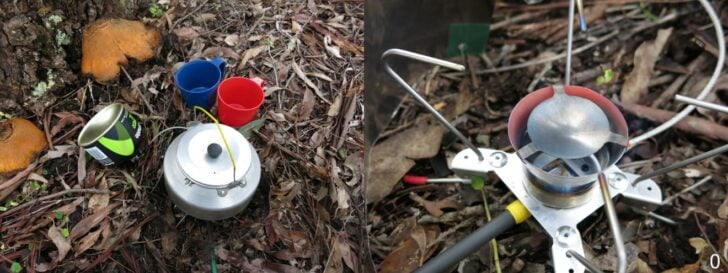
Vortex Burners (V2, V3, and V6)
The transition to Vortex burners—modeled after the classic MSR XGK architecture—marked a turning point. These chambers offer superior flame containment and heat distribution. The V2 and V3 models were successes, but they highlighted a persistent engineering challenge: the reliability of pot supports. I found that titanium wire, while lightweight, failed when "spot-welded" because the oxide layers prevented a true molecular bond. By redesigning the burner head to keep the supports cool and using mechanical fastening, I moved from fragile prototypes to reliable production models.
The V4 and V5: The Upright and the Experimental
The V4 was an attempt to return to an upright burner head with internal baffles to optimize gas mixing. While the design was efficient, it was notoriously difficult to manufacture. The V5 was a short-lived attempt to simplify this process, but it hit a wall when I realized that without industrial hot-forging capabilities for titanium, the weight-to-complexity ratio was unfavorable. I abandoned the V5 to refine the Vortex concept, which ultimately led to the V6.
The SUL (Super Ultra Light) V7 and the Current V8
The V7 was an exercise in extreme weight reduction. By utilizing a BRS-3000T burner core and custom-braided stainless steel PFA tubing, I achieved a total weight of 45 grams. The V8, my latest iteration, takes the lessons of the V7—specifically the refined heat shunt—and integrates them back into the high-output Vortex architecture.
Supporting Data: The Physics of Thermal Balance
Designing a stove that functions at -20°C in the field while avoiding internal overheating requires rigorous data collection. I have utilized a LabJack data logger to monitor temperatures at the heat shunt, the stove body, and the burner base.
The critical metric is the "thermal balance." The heat shunt must conduct enough energy to vaporize the incoming liquid fuel—which requires substantial heat—without exceeding the 200°C threshold of the Viton O-rings and PFA tubing. My testing shows that at low power, the system is stable. However, as power increases, the heat demand rises exponentially. Through careful geometry, such as bending the heat shunt tip directly into the flame path, I have successfully balanced the thermal load, ensuring that the stove body remains in the "goldilocks zone" of 80°C to 120°C.
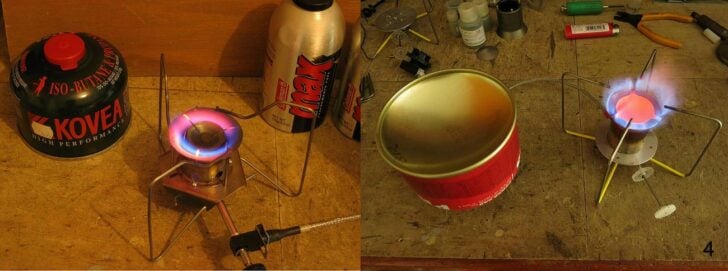
Furthermore, air-fuel ratio management is paramount. While some excess air ensures complete combustion and mitigates carbon monoxide (CO) production, too much air acts as a heat sink, reducing efficiency and complicating ignition. The V8 has been tuned to provide an optimal air intake that maintains a clean, blue, and roaring flame without unnecessary thermal drag.
Official Perspectives on Stove Safety
While my work is largely experimental and intended for DIY enthusiasts, the engineering principles align with the safety standards established by major outdoor equipment manufacturers. The "remote" aspect of the stove is the most critical safety feature. By separating the canister from the heat source, the risk of "canister boil-over" or explosion due to radiant heat is virtually eliminated.
The industry consensus, supported by historical failures of early liquid-fuel stoves, is that two-stage valving is essential. A primary control valve at the burner provides the modulation required for cooking, while the canister-side shut-off acts as a secondary fail-safe. My designs incorporate these standard safety protocols while pushing the boundaries of weight reduction.
Implications for the Backcountry Traveler
The implications of these developments are twofold: weight efficiency and reliability. For the long-distance hiker or the winter mountaineer, reducing pack weight by even 50 grams is significant. When that weight reduction is achieved without compromising the stove’s ability to operate in sub-zero conditions, it fundamentally changes the logistics of winter travel.
However, the "Super Ultra Light" (SUL) movement brings with it a responsibility for the user. These stoves are not "set it and forget it" devices. They require an understanding of thermal mechanics and a commitment to field maintenance. The use of specialized components—such as thin-wall PFA tubing and custom CNC-machined connectors—means that the user must be as invested in the equipment’s care as the designer is in its creation.
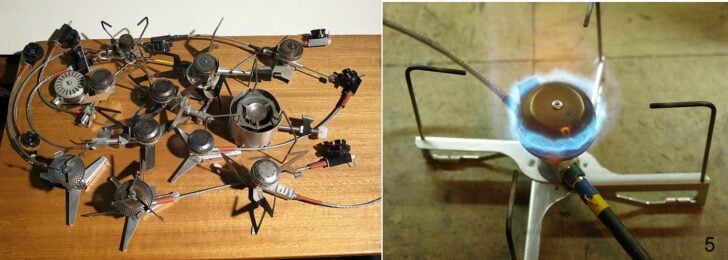
As I continue to refine the V8, the next frontier remains the material science of the burner chamber. Exploring thinner, more heat-resistant alloys that can be formed without industrial forging remains the "holy grail" for the next generation of DIY stove designs. For now, the V8 stands as a testament to the fact that with enough curiosity and data, the traditional limits of gear performance can always be pushed just a little bit further.