By Samuli Haapasalo
Published: September 8, 2026
In the remote wilderness of Kuhmo, where the Finnish taiga meets vast, untamed mires, nature operates on a rhythm dictated not by human clocks, but by the relentless pulse of the elements. On the night of August 17–18, 2026, I retreated into the silence of a photography hide situated at the edge of a large marshland. What followed was a masterclass in patience, an encounter with the raw, uncompromising beauty of the North, and a reminder that in the wild, the observer is merely a guest, allowed only glimpses into a world that exists entirely for itself.
The Deluge: Nature’s Untamed Power
The evening began with a meteorological spectacle that defied common experience. A rainstorm of such ferocity descended upon the Kuhmo landscape that it felt as though the sky had simply collapsed. In an urban environment, such a volume of water would have triggered immediate catastrophe—flooded basements, inundated streets, and overwhelmed drainage systems. Yet, here on the mire, the water was absorbed into the vast, ancient sponge of the peatland.
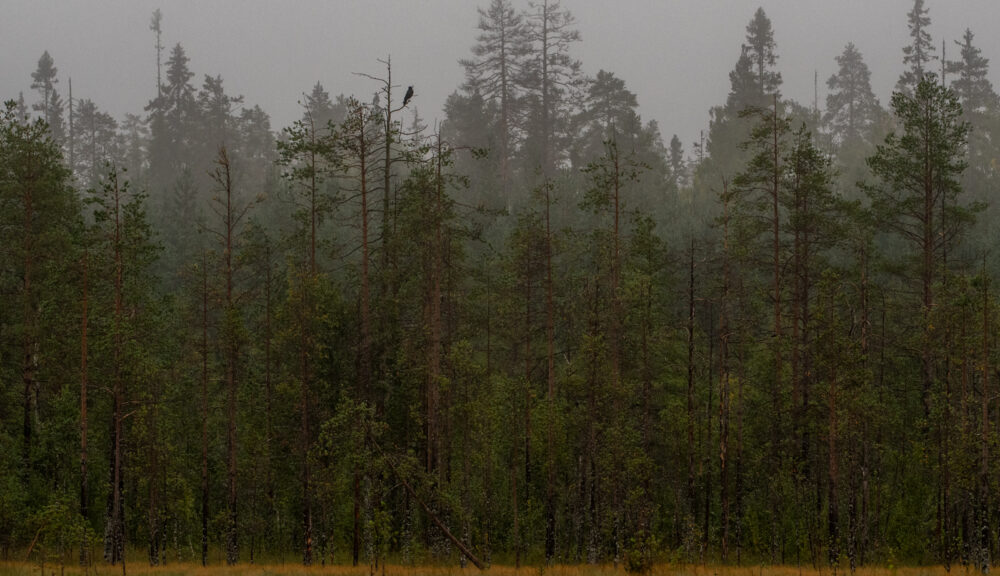
For a brief, ethereal moment, the surface of the swamp turned into a mirror of puddles, reflecting the grey, churning sky, before the earth drank its fill. This was not merely weather; it was a demonstration of the mire’s function as a vital hydrological regulator. While the deluge turned the surroundings into a sodden, glistening wilderness, it served as a stark reminder of the resilience of the boreal ecosystem.
Chronology of a Wilderness Vigil
17:00 – The Rain and the Residents
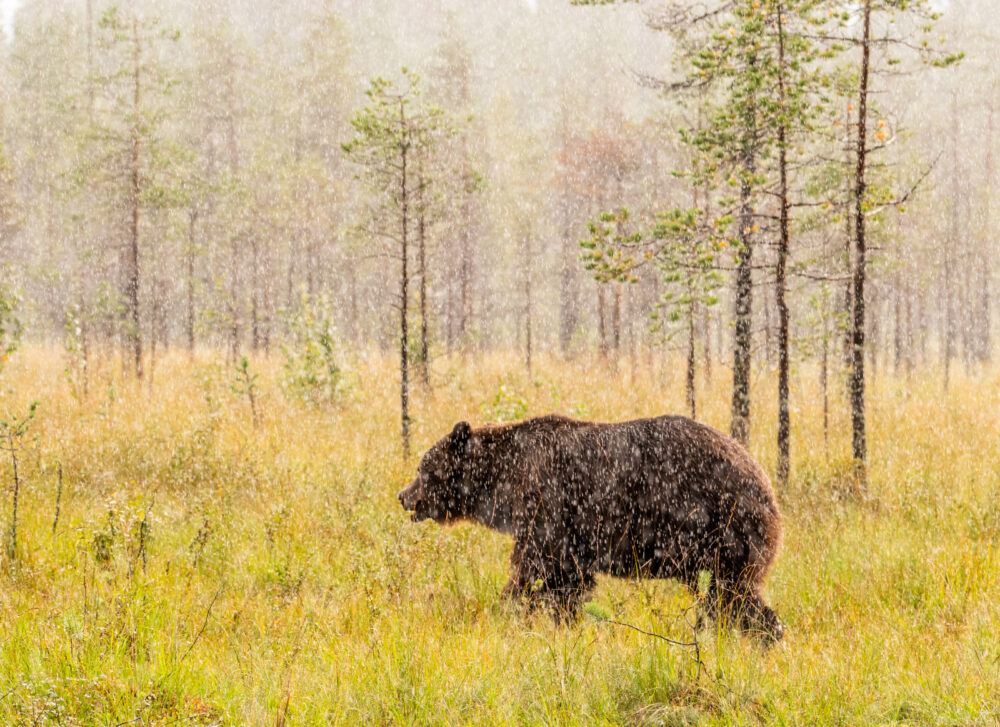
The intensity of the rainfall was enough to deter most creatures, but not the apex predators of the Finnish forest. A bear, appearing as a dark, lumbering shadow against the damp vegetation, moved with total indifference to the downpour. A bear’s coat is a miracle of evolutionary engineering—dense, water-repellent, and designed for the harsh realities of the North. For the bear, the rain was a benefit; it masked the animal’s scent and silenced the relentless chorus of biting insects that otherwise haunt the summer nights.
20:00 – The Grey Specter
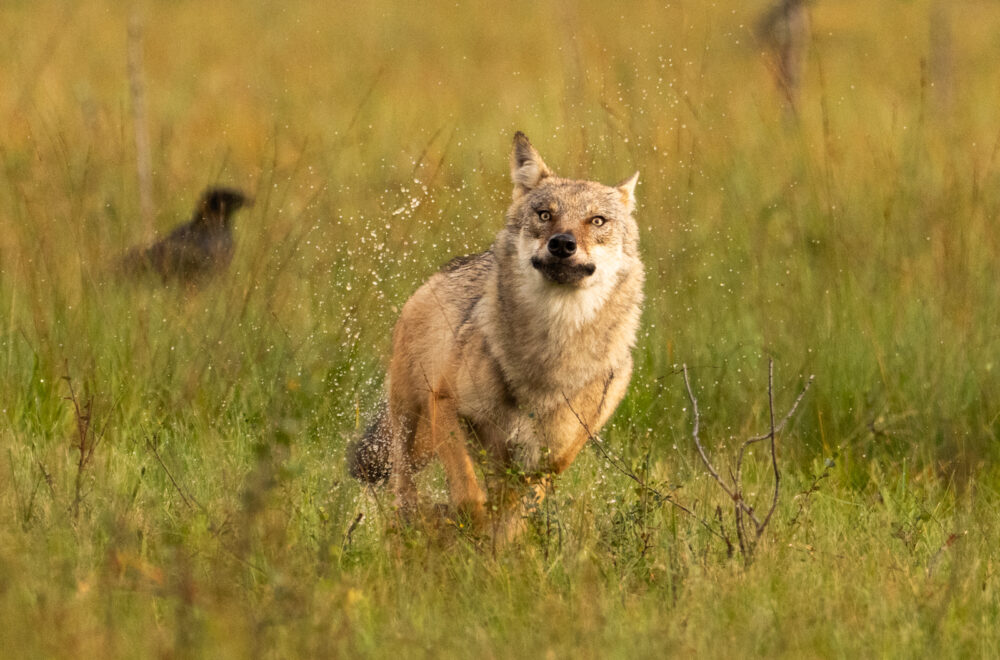
As the rain tapered to a rhythmic drizzle, the mire transformed into a canvas of deep greens and slate greys. Two wolves emerged from the periphery, appearing almost out of the mist. They moved with a spectral, fluid grace, their paws sinking into the saturated moss as they investigated the terrain for scavenged remnants. The sight of a wolf in such conditions is a privilege—a reminder of their role as the ghosts of the forest. They did not linger, driven by a primal need for efficiency in their search for sustenance.
02:00 – The Necessity of Rest
Even in the height of midsummer, when the light barely retreats, the body demands rest. In the cramped, spartan confines of the photography hide, I caught snatches of sleep, disturbed only by the drumming of fresh downpours against the roof. Experienced wildlife photographers often debate the merits of staying awake for the duration of the night. While some argue that one must be vigilant every second, the reality is that the human body requires maintenance to remain sharp. The key, however, is to be operational well before the first light.
05:00 – The Pre-Dawn Ritual
An hour before sunrise is the most critical juncture for any wildlife observer. This is when the forest breathes, when the nocturnal animals transition into the shadows of the day and the diurnal creatures begin their stirrings. I consumed cold, stale coffee, staring out into the gloom. The air was cool, and a thin, spectral mist began to rise from the surface of the swamp—a "fog dance" that adds depth, texture, and a painterly quality to any photograph.
The Elusive Wolverine: An Encounter at 06:36
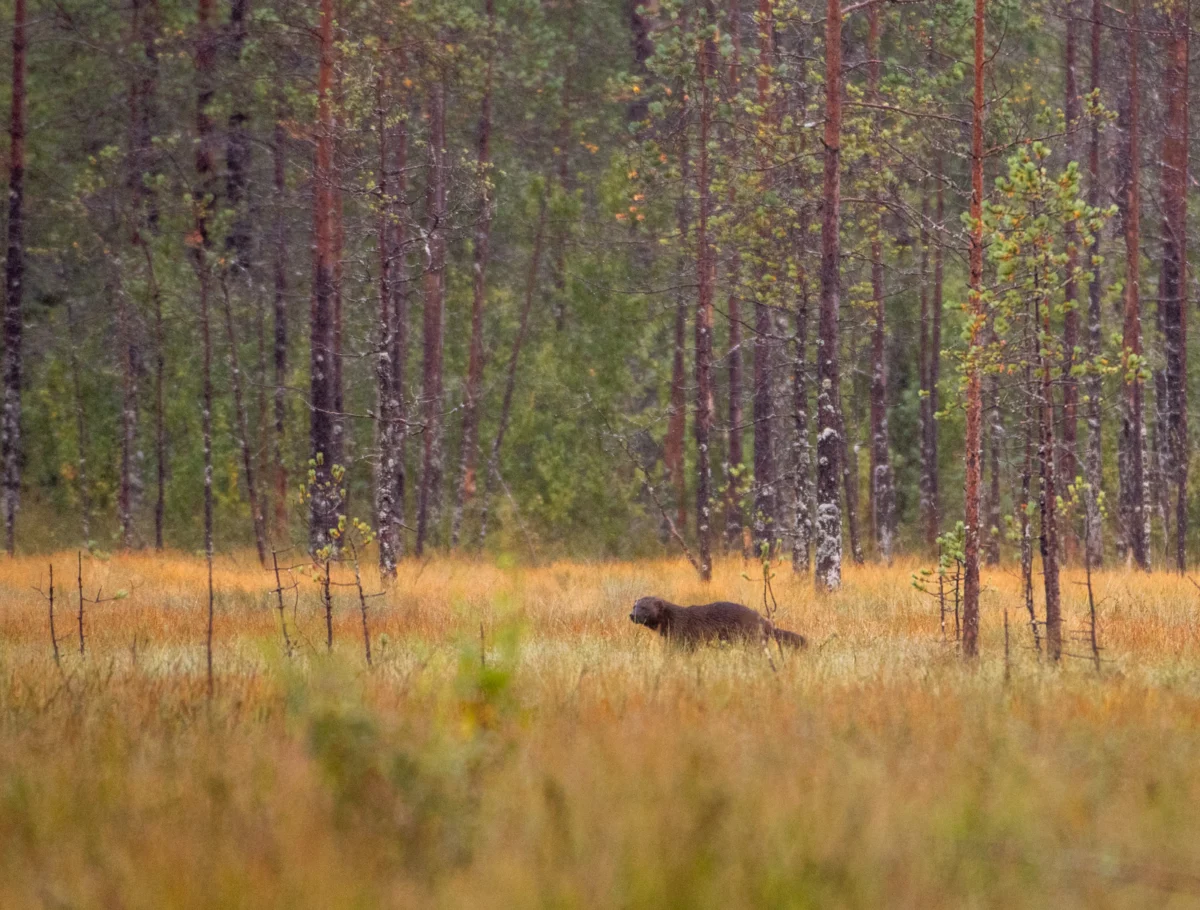
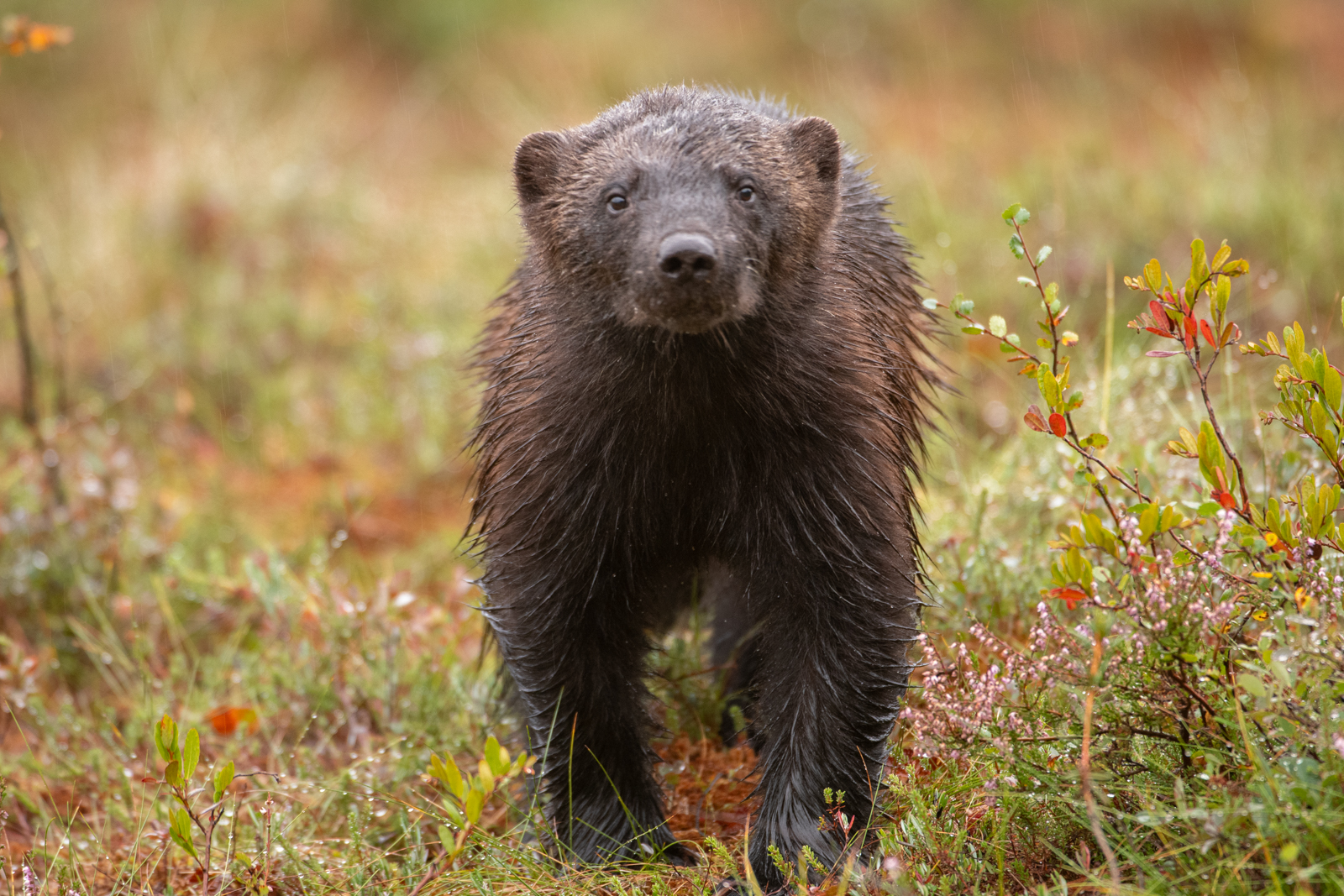
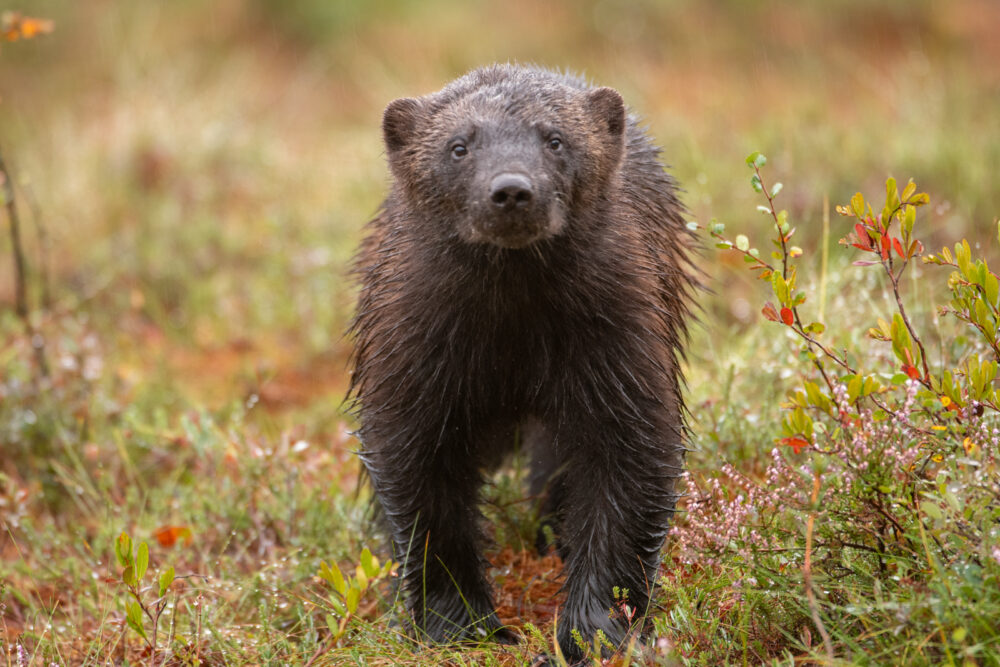
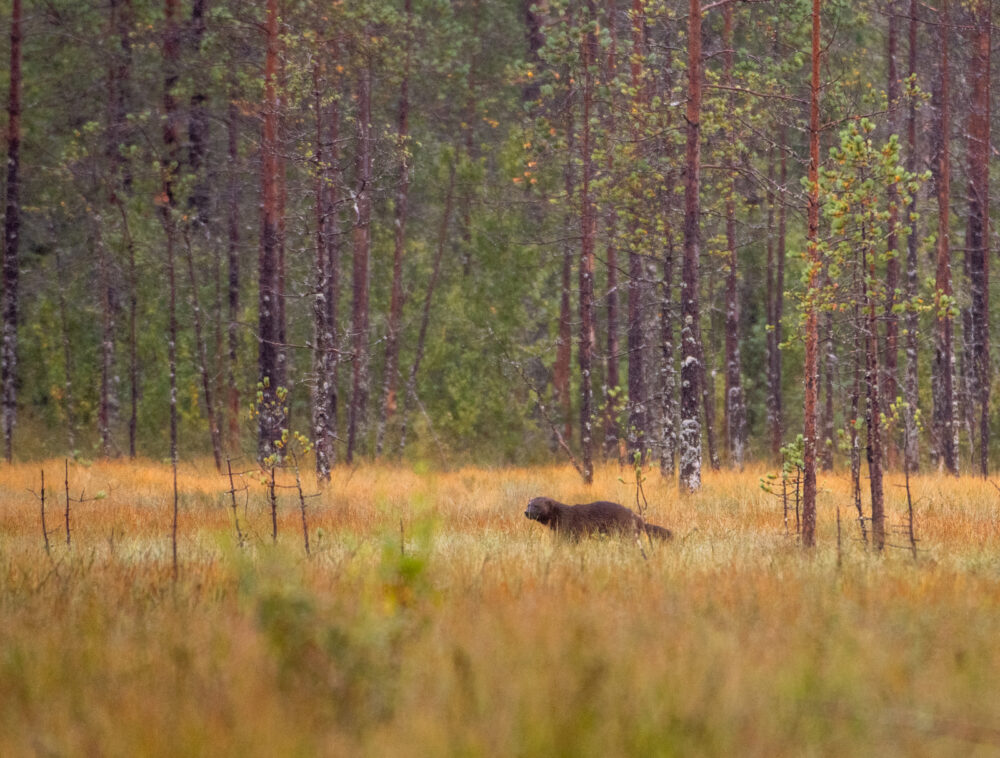
The highlight of the night, and perhaps the most surprising, occurred at 6:36 AM. A wolverine—the legendary, solitary wanderer of the North—emerged onto the mire.
Wolverines are, by nature, restless travelers. A single male can cover 30 to 40 kilometers in a 24-hour cycle, constantly traversing its vast territory to scavenge food cached away from larger competitors like wolves and bears. They are the "gluttons" of the wilderness, yet they possess a grace that belies their reputation for being ill-tempered.
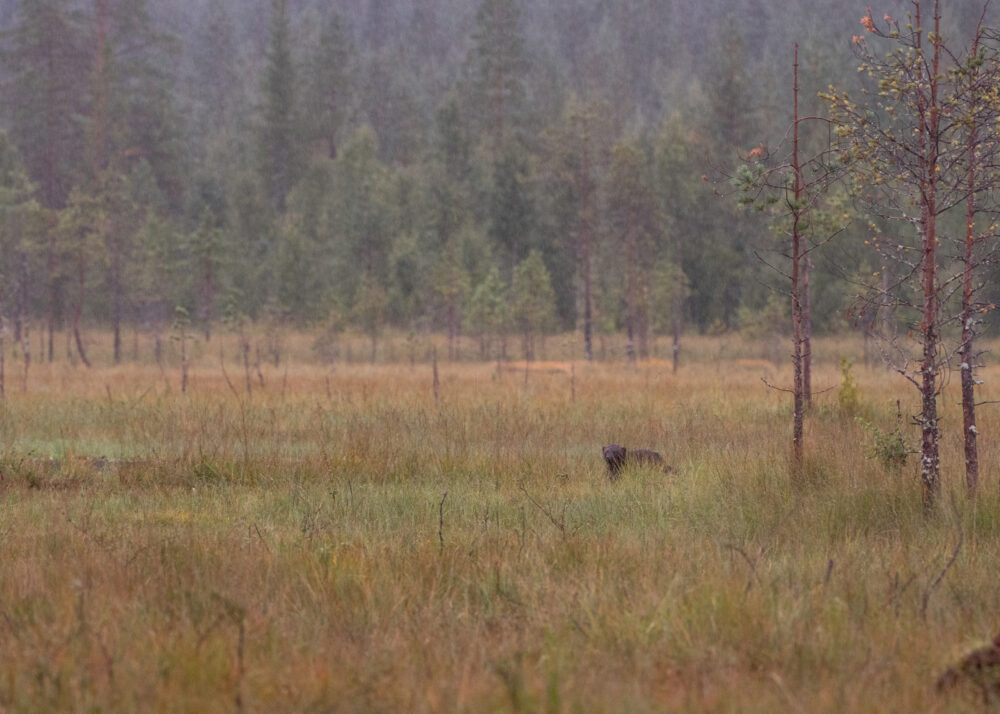
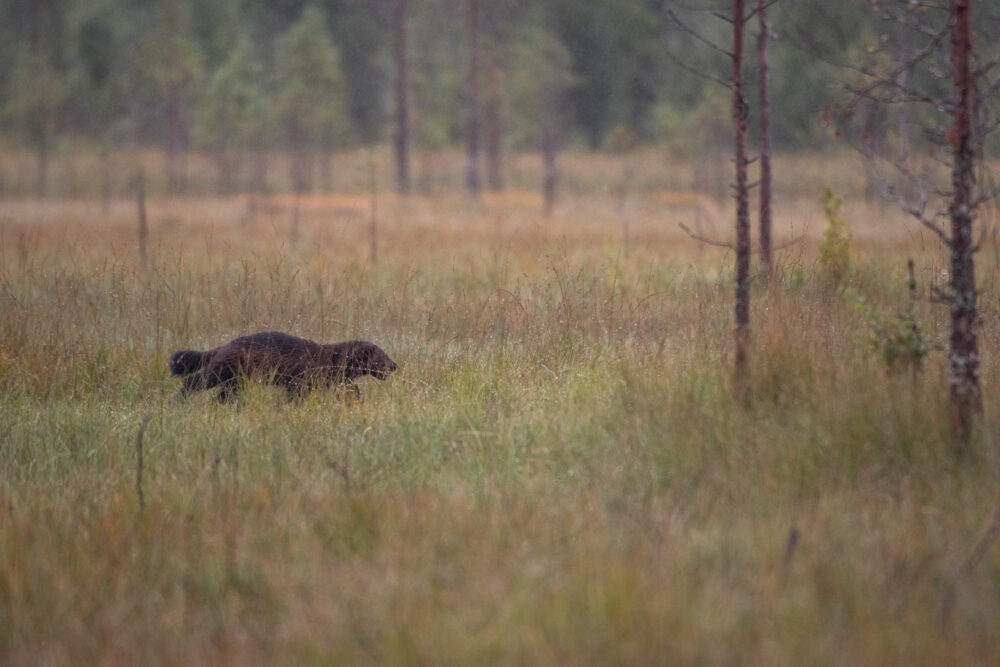
This particular individual arrived with characteristic energy, bounding across the marsh in a loping, swaying gait. It ignored the remnants of meals left by larger predators, preferring to explore the long, wet grasses. It was a masterclass in camouflage; at times, the wolverine vanished entirely into the tall sedge, only to reappear moments later, its presence revealed by that distinct, rolling motion.
It eventually settled on a scrap of meat, likely scavenged from a previous wolf kill, and prepared to carry it away to a hiding spot or perhaps to feed offspring. At one point, perhaps sensing a shift in the wind or a subtle sound, the wolverine sprinted with astonishing speed—a hundred-meter dash that lasted only seconds. In that brief, fleeting moment, it turned its gaze toward my position. It did not see me, but the connection felt absolute. For forty-five minutes, the wolverine circled the area, a master of its domain, before vanishing back into the deep forest.
Supporting Data: The Dynamics of the Mire
To understand the activity witnessed during this 24-hour window, one must look at the ecology of the Kuhmo region. The area functions as a critical corridor for large carnivores.
- Boreal Predators: The presence of bear, wolf, and wolverine in a single, small radius within 16 hours highlights the high biodiversity of this protected area.
- The Role of Weather: Precipitation patterns in August directly influence animal behavior. While heavy rain suppresses insect activity, it also creates thermal stress for smaller mammals, forcing them to find shelter. Conversely, for large furred predators, rain is often an optimal time to hunt or scavenge without the annoyance of mosquitoes or heat stress.
- The Photography Factor: Capturing these animals requires not just luck, but an understanding of the "graphical landscape." Grey, rainy days provide a low-contrast environment that allows for the focus to remain strictly on the form and movement of the animal, rather than the distraction of harsh, direct sunlight.
Implications of Conservation
The experience of sitting in a hide is not merely a hobby; it is a form of passive, non-intrusive research. By allowing the animals to behave exactly as they would in the absence of humans, we gain valuable insights into their daily rhythms, their dietary habits, and their interactions with one another.
However, this proximity comes with a responsibility. The preservation of these vast, undisturbed areas is paramount. If we fragment these habitats, we lose the corridors required for the wolverine to travel its 40-kilometer range, and we disrupt the social structures of the wolf packs that rely on the solitude of the deep marshlands. The "luck" of seeing these animals is directly proportional to the amount of time spent in the wild—and the amount of space we afford them to exist undisturbed.
Conclusion: A Lesson in Waiting
One does not get anything for "free" in the wilderness. There is no guarantee that the animals will appear, that the light will be perfect, or that the camera will capture the decisive moment. Often, the result is nothing more than the sight of a lone raven calling out into the grey morning. But it is in that anticipation—the silent, breathless waiting—that the true value of the experience lies.
The mire taught me once again that nature does not owe us a spectacle. It is a complex, functioning system that persists with or without our gaze. To be allowed to witness it, even for a brief, rain-soaked night, is a gift that requires nothing more than patience, silence, and a deep, abiding respect for the residents of the woods. As the sun finally broke through the clouds, marking the end of my vigil, I left with the knowledge that the wilderness remains, as it always has, a place where the wild still commands the stage.