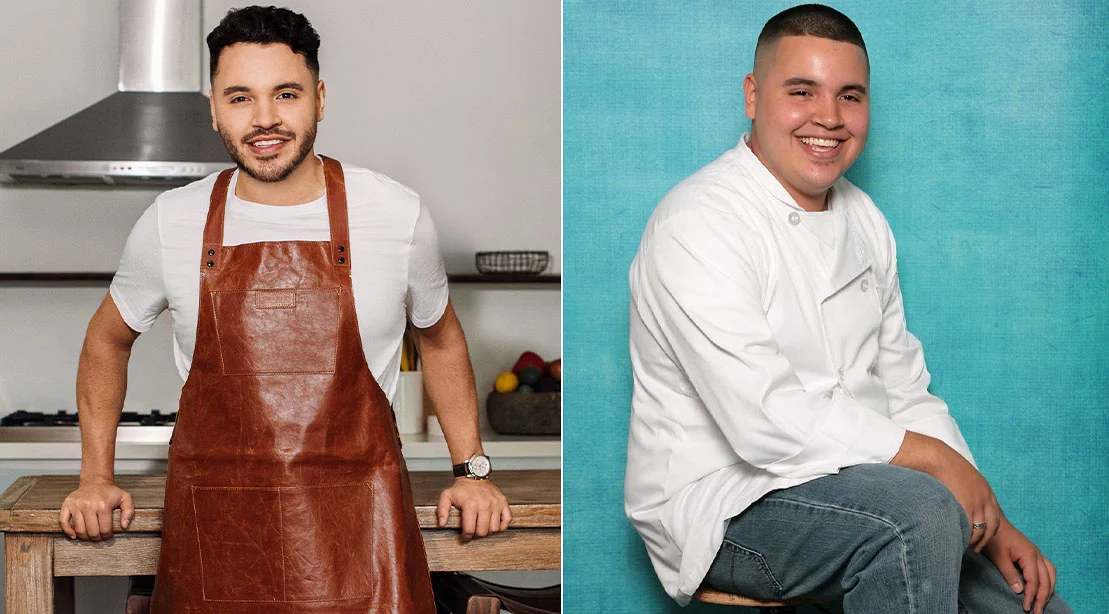
For millions of viewers who tuned in to Season 14 of Food Network Star, Chris Valdes was a breath of fresh air—a vibrant, charismatic talent with a deep-rooted passion for the bold, sun-drenched flavors of his Cuban heritage. Yet, behind the scenes, the Miami-born culinary star was navigating a personal conflict that many in the professional food industry know all too well: the struggle to reconcile a career built on indulgence with the pursuit of personal health.
After a transformative journey that saw him shed 40 pounds of body fat, Valdes has emerged not just as a leaner version of himself, but as a more intentional chef. His journey is a testament to the idea that health and heritage are not mutually exclusive.
The Foundation: A Life Defined by Flavor
To understand Valdes’s relationship with food, one must look at his upbringing. In his world, food was never just sustenance; it was a love language. From daily childhood rituals involving chicken nuggets to the constant, bustling environment of his family’s restaurant, Valdes grew up surrounded by the intoxicating aromas of Latin and Caribbean cuisine.
"I would describe my cooking as bold, flavorful, and heavily influenced by my Cuban roots," Valdes explains. "I love taking the Latin and Caribbean flavors that I grew up with and giving them a modern twist."
However, this constant exposure to culinary abundance created a paradox. While his professional identity flourished, his physical health began to suffer. The nature of the culinary profession—tasting multiple dishes throughout the day, long hours, and high-stress environments—often makes the standard calorie-deficit model of weight loss feel like an impossible climb.
A Chronology of Change: From Crisis to Clarity
Valdes’s path to wellness was not a linear trajectory of success; it was marked by hard-learned lessons and, at times, misguided attempts at quick fixes.
The Early Wake-Up Call
At 23, the reality of his lifestyle hit home when medical tests revealed his cholesterol levels were dangerously high. It was the first time the young chef recognized that his passion for food was physically costing him. His initial reaction was a desperate attempt to out-train his diet. He hired a personal trainer and committed to the gym, but without a foundational change in his lifestyle, the results were ephemeral. Once the intensity of the training sessions subsided, the weight inevitably returned.
The Temptation of the Quick Fix
At 25, Valdes reached a breaking point. Seeking a shortcut, he opted for surgical intervention: liposuction. "At the time, part of me believed that if I could physically change my body, maybe everything else would fall into place," he reflects. It was a pivotal moment of realization. The surgery altered his physical appearance, but it did nothing to address the internal mechanics of his health—his habits, his mindset, and his emotional connection to eating. He realized that discipline and consistency were not qualities that could be bought or surgically implanted; they had to be cultivated.
The Turning Point: CrossFit and the 21/90 Rule
The true transformation began when Valdes shifted his focus from aesthetic results to mental resilience. He discovered CrossFit, a high-intensity functional training regimen that offered him more than just calorie burning. It provided a meditative space.
"I didn’t have to think about everything I was carrying or what tomorrow looked like. I just needed to get through the next rep," he notes. To solidify these changes, he adopted the "21/90 rule," a psychological framework suggesting that it takes 21 days to form a new habit and 90 days to make that habit a permanent lifestyle change.
Supporting Data: The Science of Sustainable Habits
The success of Valdes’s transformation lies in his departure from restrictive dieting. Nutritional science consistently shows that extreme deprivation is the primary driver of weight-loss failure. By focusing on "additive" nutrition—the concept of adding nutrient-dense foods rather than solely subtracting "bad" ones—Valdes tapped into a sustainable metabolic approach.
His methodology involved:
- Prioritizing Lean Protein: Increasing satiety while supporting muscle retention.
- Fiber-Rich Additions: Incorporating more vegetables and legumes, which are staples of Latin cuisine but often overshadowed by refined carbohydrates in standard diets.
- The Swap Method: Utilizing modern cooking technology like air-frying and roasting to replicate the texture of fried foods without the excess caloric load of deep-fat frying.
The Chef’s Philosophy: Redefining Latin Cuisine
Valdes is quick to push back against the notion that Latin food is inherently unhealthy. He argues that the cuisine is rich in naturally nutritious ingredients: fresh herbs, citrus, lean seafood, avocado, and high-fiber beans.
"I don’t think you can label Latin food as simply healthy or unhealthy," Valdes asserts. "Some of the comfort foods that I grew up loving can be fried, heavy in carbohydrates, or served in very large portions. I’ve now learned that I don’t have to stop eating the foods that connect me to my culture. Instead, I can change the cooking method, adjust the portions, and make smarter ingredient choices."
This philosophy has extended into his professional kitchen. By relying on the bright, acidic profile of fresh citrus and the pungent, aromatic power of garlic, chiles, and spices, he achieves depth of flavor without relying on heavy, fat-laden sauces.
Implications: A New Era of Professional Cooking
Valdes’s journey has significant implications for the culinary world. He serves as an example for chefs who believe they must choose between being a "foodie" and being fit.
Emotional Intelligence in the Kitchen
Perhaps the most profound takeaway from Valdes’s story is the importance of emotional regulation. Growing up in a family restaurant, he associated food with safety and joy. When his father went to prison and the family business closed, food became his coping mechanism—a way to create something beautiful when his world felt unstable.
By acknowledging this, Valdes has separated the act of eating from the need for comfort. He no longer eats to soothe stress; he eats to fuel his performance. This separation is the hallmark of his long-term success.
The "Healthy Chef" Misconception
Valdes is careful not to brand himself as a "healthy chef," fearing that the label might alienate those who love the traditional, unadulterated versions of his dishes. Instead, he views himself as an intentional chef.
"I don’t want people to think I’m suddenly giving up the Cuban and Latin foods that I love, because that’s not realistic for me," he says. "I love the challenge of finding ways to keep the soul of a dish, while making choices that better fit the way I want to live today."
Conclusion: The Ongoing Journey
For Chris Valdes, the 40 pounds lost are merely a byproduct of a much larger shift. The real victory is found in the discipline he developed, the relationship he repaired with his own body, and the creative evolution of his craft. He remains a vibrant voice in the culinary space, proving that one can honor their roots while planting the seeds for a healthier future.
As he continues to share his journey with his growing audience, Valdes stands as a reminder that the most important ingredient in any dish—and in any life—is the intention behind it.
To follow Chef Chris Valdes on his continued journey, visit his Instagram page.