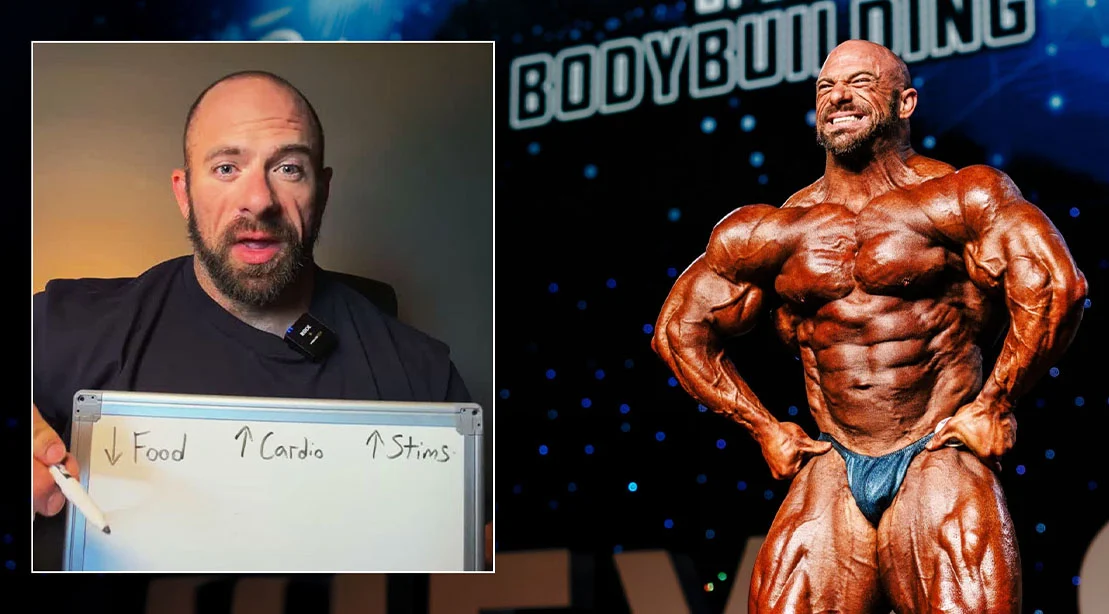
The final weeks of a bodybuilding contest preparation are widely regarded as the most grueling gauntlet an athlete can endure. It is a paradoxical endeavor: the competitor must achieve a level of body fat so low it borders on the physiological limit, all while maintaining the dense, vascular muscle tissue earned through years of dedicated hypertrophy training. For many, the pressure to "get shredded" leads to a dangerous over-reliance on aggressive tactics that often backfire, resulting in muscle loss, extreme fatigue, and a "flat" appearance on stage.
However, according to IFBB professional and multiple-time Olympia finalist John Jewett, this does not have to be the case. Jewett, a respected coach known for his analytical approach to the sport, argues that the secret to the perfect stage physique isn’t found in extreme suffering, but in strategic, calculated adjustments. By avoiding the common pitfall of "pulling every lever at once," athletes can navigate their prep with precision, ensuring they reach their peak condition without sacrificing their hard-earned muscle mass.
The Fallacy of the "Everything, All at Once" Approach
In the pursuit of the elusive stage-ready physique, the three primary tools at a bodybuilder’s disposal are caloric restriction, increased cardiovascular training, and the use of stimulants (such as thermogenics or high-caffeine pre-workouts). While these methods are effective individually, the tendency for competitors to combine them simultaneously as a deadline approaches is a recipe for disaster.
When an athlete slashes calories, doubles their cardio, and ramps up stimulants all in the same week, they aren’t just burning fat; they are overwhelming their central nervous system (CNS) and metabolic capacity. "It’s about choosing the strategy that creates the least fatigue while preserving recovery," Jewett explains.
When a body is pushed into a massive, multifaceted deficit, the body reacts defensively. Cortisol levels spike, sleep quality plummets, and the body may begin to catabolize muscle tissue to meet energy demands. This leads to the "flat" look—a common issue where muscles lose their fullness and glycogen saturation, leaving the physique looking small and depleted rather than hard and etched.
The Chronology of a Failed Prep: A Warning Sign
To understand why Jewett’s methodology is so critical, one must look at the typical "downward spiral" of an unguided prep.
Weeks 16–12 (The Foundation): The athlete begins a steady caloric deficit and introduces baseline cardio. Energy is high, and the body responds predictably.
Weeks 12–8 (The Plateau): As progress slows, the athlete feels the pressure of the upcoming show. They decide to increase the intensity of their cardio sessions while simultaneously dropping another 200–300 calories from their daily intake.
Weeks 8–4 (The "Panic" Phase): Results are still not moving at the desired pace. The athlete, fearing they won’t be lean enough, adds a thermogenic supplement, increases cardio to two sessions a day, and reduces fats and carbohydrates to bare minimums.
Weeks 4–Show Day (The Crash): The athlete is now exhausted. Their training intensity in the gym drops significantly because they lack the fuel to push heavy weight. Their sleep is non-existent due to excessive stimulants. On stage, the physique is stringy and flat. They have successfully stripped the fat, but they have also stripped the "pop" that judges look for in elite bodybuilding.
Jewett’s approach seeks to interrupt this chronology by replacing panic-induced decisions with a structured, data-driven decision-making process.
John Jewett’s Triad: The Three Rules of Fat-Loss Adjustments
Jewett suggests that rather than manipulating all variables, an athlete should treat their prep like an engineering problem. He proposes three distinct categories—Food, Cardio, and Stimulants—and provides a set of diagnostic questions to determine which lever should be moved, if any.
1. The Nutritional Lever: When to Cut Calories
"If you are hungry and struggling with your diet, don’t reduce food," Jewett advises. This seems counterintuitive to the novice, but it is rooted in long-term adherence. If a competitor is already at the brink of mental burnout due to extreme hunger, further reducing food will only lead to a binge-eating episode or a total collapse of motivation. If the diet is manageable, however, and the athlete feels satiated, this is the first place to look for a subtle caloric adjustment.
2. The Cardiovascular Lever: When to Add Work
Cardio is often misused as a punishment rather than a tool. Jewett suggests, "If you already have heavy, fatigued legs, and you’re not hungry, then don’t reduce cardio." Cardio should be used to increase energy expenditure without taxing the muscle fibers needed for hypertrophy training. If the athlete’s legs are feeling "heavy" or recovered poorly from weight training, adding cardio is a mistake that will impede gym performance. Conversely, if the athlete is physically fresh, increasing cardio is a cleaner way to create a deficit than starving the body of nutrients.
3. The Stimulant Lever: Managing the CNS
Stimulants are the most dangerous lever to pull. Because they mask fatigue, they allow an athlete to push through workouts they should otherwise be resting from. "If you’re already using stimulants and have low sleep, then don’t increase stimulants," warns Jewett. Sleep is the primary driver of recovery; sacrificing it to burn an extra 50 calories via a thermogenic supplement is a poor return on investment.
Supporting Data: Why "Least Evil" Wins
The philosophy of "The Least Evil" is the cornerstone of Jewett’s coaching. By assessing which category is currently the most stable, the athlete can make a choice that causes the least disruption to their overall health.
- Scenario A: If food intake is low and cardio is already high, but the athlete is still not losing fat, the "least evil" might be a slight increase in stimulants, provided sleep quality remains intact.
- Scenario B: If the diet is not a struggle point—meaning the athlete is comfortable and satiated—reducing calories is objectively the most effective way to drop weight, as it is easier to track and less taxing on the CNS than adding more cardio or chemicals.
This approach transforms the athlete from a reactive participant into an active manager of their own biology. By understanding the relationship between these variables, the athlete can avoid the "uneducated choices" that characterize amateur preps.
Implications for the Modern Bodybuilder
The implications of this methodology extend beyond just winning a trophy. It changes the culture of bodybuilding from one of "suffer-at-all-costs" to one of "intelligent mastery."
The Physiological Impact
By focusing on recovery, the athlete maintains their metabolic rate for longer. When the body is not constantly under the stress of simultaneous, extreme interventions, it does not downregulate thyroid production or leptin levels as aggressively. This allows the athlete to enter the final week of prep with a higher metabolic ceiling, meaning they don’t have to suffer as intensely to hit their peak.
The Psychological Impact
The mental toll of a bodybuilding prep is often underestimated. When an athlete feels in control of their variables—rather than feeling like they are "white-knuckling" through the process—their psychological stability improves. This translates to better focus in the gym, better interactions with family and coaches, and a more positive experience overall.
Expert Consensus: Listening to the Body
The consensus among elite-level coaches aligns with Jewett’s sentiment: The body is a feedback loop. If the physique is not changing, it is providing information. If the body is flat, it needs more carbohydrates or a reduction in stress. If the body is soft, it needs more time or a slight shift in macronutrient ratios.
"Getting that last bit of fat off to get stage lean is not about pulling all the levers at once," Jewett concludes. It is about patience. It is about the subtle, almost imperceptible tweaks that allow the physique to emerge from the fat layers like a statue being chiseled from stone.
For those looking to compete, the takeaway is clear: success in bodybuilding is not just about how hard you work, but how well you think. Before you drop your calories, increase your cardio, or add another stimulant to your stack, take a moment to assess the "least evil" path. Your body—and your stage appearance—will thank you for it.
To stay updated on the latest in physique coaching and to follow John Jewett’s ongoing training philosophies, enthusiasts are encouraged to follow his progress and educational content on his professional channels.