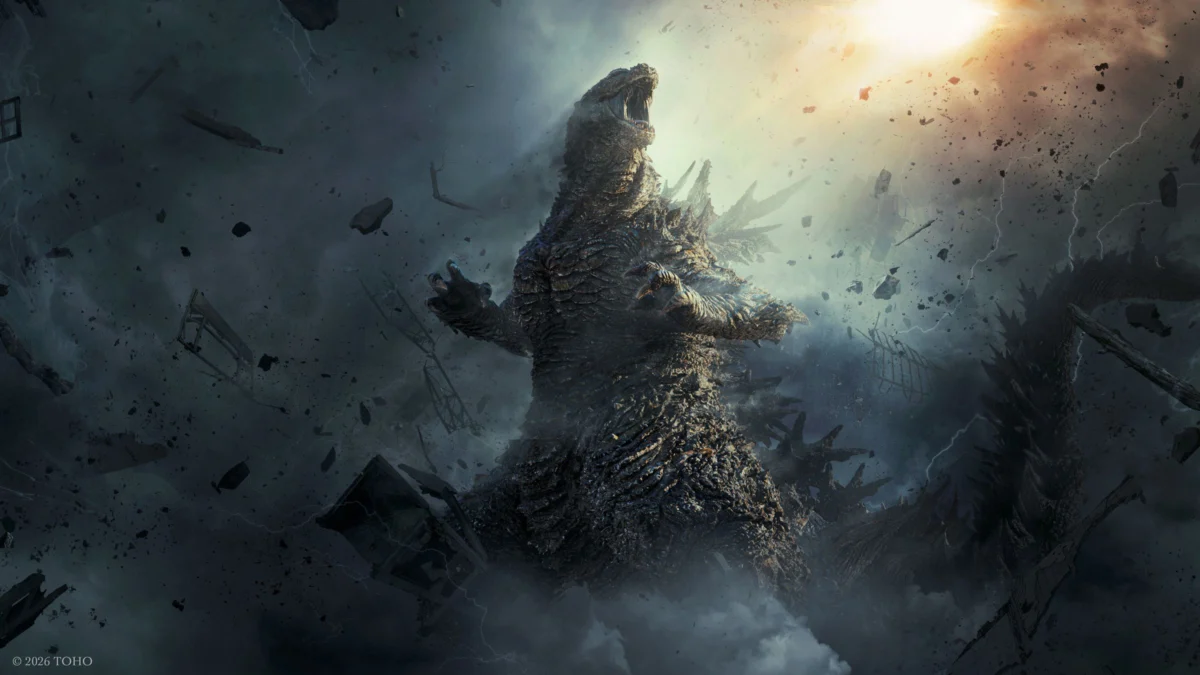
In the landscape of modern monster cinema, few franchises command the reverence and historical weight of Toho’s Godzilla. Following the monumental global success of 2023’s Godzilla Minus One—a film that captured both the critical imagination and a staggering $114 million at the worldwide box office—the pressure to iterate on a masterpiece was immense. Yet, if the recent revelations from New York Comic Con (NYCC) are any indication, the upcoming sequel, Godzilla Minus Zero, is poised to elevate the franchise to unprecedented technical and emotional heights.
With actor and pop-culture connoisseur Seth Green serving as the master of ceremonies for the film’s NYCC panel, the industry got its first real look at what promises to be a masterclass in visceral storytelling. Green, clearly moved by the early footage, did not mince words, declaring that the filmmakers have "created kaiju that feel physically real and, trust me, emotionally terrifying."
The Genesis of Terror: A New Chapter in the Franchise
Godzilla Minus Zero arrives as the 39th installment in the storied history of the King of the Monsters. Directed by the visionary Takashi Yamazaki, who steered Minus One to its Oscar-winning glory, the new film serves as a direct expansion of the tone established by its predecessor. While Minus One was lauded for its poignant exploration of post-World War II malaise and the psychological scars of a nation in recovery, Minus Zero appears to be leaning into the grand, kinetic spectacle of the "versus" era.
The trailer showcased at NYCC promised a high-stakes aerial confrontation, pitting Godzilla against his iconic three-headed nemesis, King Ghidorah. For long-time fans, the return of Ghidorah—a creature often considered the ultimate foil to Godzilla—suggests a film that balances the grounded human drama of the previous installment with the "punch-’em-up" scale that defined the Showa and Heisei eras of the franchise.
The Sound of Destruction: Anatomy of a Kaiju Roar
One of the most fascinating revelations from the NYCC panel involved the film’s sound design. Creating a sound for a creature that does not exist is a challenge of artistry and physics. Sound designer Natsuko Inoue and her team, including Hisafumi Takeuchi, took a radical approach to ensure the roars of Godzilla and Ghidorah felt anchored in the physical world.
Rather than relying solely on digital synthesis or studio foley, the team ventured to an outdoor dam. Their methodology was as ambitious as it was disruptive: they hauled massive industrial speakers to the top of the dam and projected the monster vocalizations into the open air. The goal was to capture the authentic physics of sound—reverb, echo, and atmospheric reflection—that occur when a massive sound wave interacts with a real environment.
"The first time we sent that roar out on the speakers, I could see the relief and confidence in everyone’s eyes," Inoue explained during the panel. "By using speakers and projecting it into the real world, capturing the reverb, the echo, the reflection of the sound back with the mic, it manifests it in our world."
The experiment was not without its collateral damage. The production team inadvertently terrified unsuspecting locals. "There were people having a picnic, maybe people just taking a stroll," Takeuchi recounted, laughing. "The person walking their dog, though—they had the worst time, because the dog was freaking out and barking back at us."
Beyond the environmental recordings, the team employed ingenious analog foley techniques. To recreate the leathery, terrifying flapping of Ghidorah’s wings, the crew utilized a rubber fisherman’s suit mixed with the mechanical, resonant sounds of an accordion-style air duct. These tactile, real-world sounds provide the "weight" that Green referenced, grounding the mythical creatures in a reality that audiences can intuitively feel.
Technical Prowess: The Rise of Tatsuji Nojima
The technical backbone of Godzilla Minus Zero rests on the shoulders of visual effects artist Tatsuji Nojima. Described by Seth Green as "the first Gen Z Oscar-winner," Nojima’s ascent is a testament to the democratization of film technology.
Nojima’s career began as a teenage hobbyist, a path that led him to the renowned Japanese animation house Shirogumi. His big break came when director Takashi Yamazaki noticed a small, personal project Nojima was working on: a rough animation of ocean waves. Impressed by the fluid dynamics and the technical intuition displayed in the render, Yamazaki immediately brought him into the fold.
"OK, I think you’re ready to animate and do VFX for Godzilla now," Yamazaki reportedly told the young artist.
Nojima’s work on Minus Zero pushes the boundaries of current CG capabilities. During the panel, he detailed the sheer scale of the production. While he famously simulated 200 million particles to render the whitewater effects for Godzilla Minus One, the requirements for Minus Zero were an order of magnitude higher. Because the film utilizes the expansive IMAX aspect ratio and features scenes with no live-action plates—meaning the entire frame is computer-generated—Nojima’s team had to push the limits of their hardware. "We required 2 billion particles," Nojima noted, underscoring the shift toward a more immersive, larger-than-life visual language.
Chronology and Release Strategy
The release of Godzilla Minus Zero is timed to coincide with a significant milestone in cinematic history. The film is slated for a Japanese theatrical release on November 3—a date synonymous with the birth of the franchise. It was on November 3, 1954, that Ishirō Honda’s original Godzilla premiered in Japan, forever altering the course of science fiction cinema.
For U.S. audiences, the wait is short; the film will hit theaters on November 6. This strategic release cycle honors the legacy of the original film while capitalizing on the current "Godzilla renaissance" that has been building since the 2023 hit.
Key Dates:
- November 3, 1954: The release of the original Godzilla, establishing the franchise’s "birthday."
- November 3, 2024: Japanese premiere of Godzilla Minus Zero.
- November 6, 2024: U.S. theatrical release.
Implications for the Future of Kaiju Cinema
The success of Godzilla Minus One proved that Godzilla is not merely a vehicle for mindless destruction; when treated with respect, the character can be a profound vessel for human emotion and historical reflection. Godzilla Minus Zero appears to be the next logical step in this evolution.
By blending the high-concept visual effects of the digital age with the "dirty", analog sound design techniques of the past, the production team is creating a unique sensory experience. The reliance on 2 billion particles and real-world audio recording highlights a trend in modern blockbuster filmmaking: the desire to marry the impossible scale of CGI with the textures of reality.
Furthermore, the decision to bring back Ghidorah suggests that Toho is leaning into the franchise’s deep lore. While Minus One was a standalone story of trauma and survival, Minus Zero signals a willingness to engage with the grander spectacle of the monster pantheon. If the film can successfully balance the intensity of the "aerial dogfights" promised in the trailer with the emotional depth of its human characters, it will likely secure the franchise’s place in the cultural zeitgeist for another decade.
As the industry looks toward the November release, the consensus is clear: the King of the Monsters is no longer just a relic of mid-century cinema. Through the work of artists like Nojima, Inoue, and Yamazaki, Godzilla has been reborn as a modern icon, capable of scaring, moving, and aweing audiences in equal measure. The roar heard from that dam wasn’t just a sound effect; it was the signal of a franchise operating at the peak of its powers.