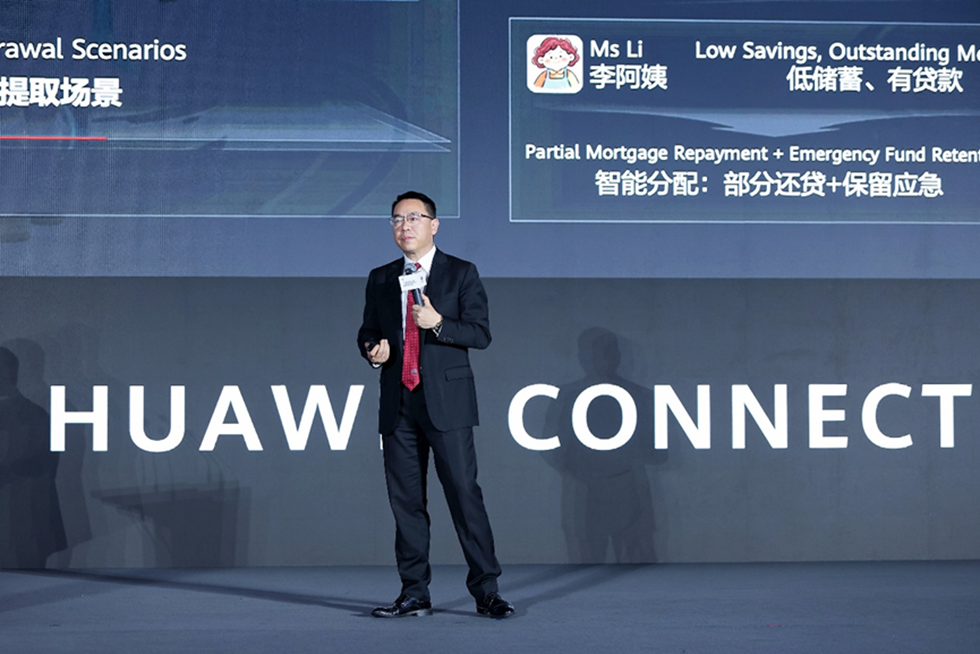
In an era where urban centers are grappling with the dual pressures of rapid population growth and increasingly volatile environmental conditions, the concept of the "Smart City" is undergoing a radical evolution. For the past decade, urban planners have focused on the digitization of infrastructure—installing sensors to monitor everything from water consumption to traffic flow. However, as experts argued at the Global Government AI CITY Innovation Summit, held during Huawei Connect 2026 in Shanghai, we are now entering a new, more consequential era: the age of the "AI City."
This shift marks a move from passive data collection to proactive, autonomous governance. By layering AI agents over existing digital foundations, governments are no longer just observing their cities—they are predicting, automating, and responding to urban challenges in real-time.
The Core Philosophy: Shifting from Insight to Action
The fundamental premise presented at the summit is that data, in isolation, is insufficient. Digitalization provided the "eyes and ears" of the modern city, but it often left government officials overwhelmed by a deluge of disconnected metrics. The "AI City" vision seeks to bridge this gap by deploying AI agents capable of detecting patterns, forecasting urban demands, and executing tasks without human intervention.
As Simon Zhou, Vice President of the Government Public Services Digitalization BU at Huawei, noted, the goal is to transform urban management from reactive, manual labor to proactive, intelligent governance. This transition is not merely technical; it is a fundamental shift in how the state interacts with the citizen.
Chronology and Case Studies: AI in the Field
The summit provided a comprehensive look at how this transition is manifesting across the globe, moving from abstract theory to tangible, on-the-ground reality.

Shenzhen: Proactive Disaster Management
Perhaps the most striking example of this evolution was the performance of Long Xiao Er, an AI-native urban governance agent deployed in Shenzhen, China. Last July, as Typhoon Noul approached the coastal city, the agent served as the primary command-and-control interface.
- The Process: The AI aggregated data from weather stations, IoT sensors, and public reports.
- The Execution: It analyzed over 740,000 on-site images, identifying more than 900 potential hazards, such as flooding risks or compromised infrastructure.
- The Result: The system dispatched over 2,800 early warnings to frontline staff, effectively automating the preparation process. Post-typhoon, the agent automatically compiled incident reports and generated flood-prevention briefings for municipal review, showcasing a complete loop of predictive, preventative, and analytical action.
Guangzhou: Scaling the Agent Ecosystem
Guangzhou stands as a benchmark for rapid AI scaling. Two years into its digital transformation journey, the city has already deployed 20 specialized AI agents, with plans to double that number by the end of 2026.
The city’s "Smart Office" agent currently serves 55 government agencies and 26,000 public servants, having processed over 5 billion token invocations. By standardizing the "eight unifications"—a set of common technical and data foundations—Guangzhou has successfully broken down the traditional departmental silos that often paralyze municipal progress.
Saudi Arabia: Closing the Loop on Public Services
Mohammed Ashgar, CEO of the Center for Monitoring City Operations in Saudi Arabia, highlighted the critical need for "closed-loop" systems. Previously, issues like road defects or public waste were reported through fragmented channels, leading to duplicate reports and zero visibility into whether a fix had actually occurred. By integrating all detection sources into an AI-empowered National Command Control Center, Saudi Arabia has moved to a system where the AI tracks an issue from the moment of detection until the moment of verified resolution.
Supporting Data: Efficiency Gains and Operational Impact
The data presented at the summit underscored the economic and operational value of AI integration. In Guangzhou, the implementation of a new hotline agent reduced ticket dispatch times from one hour to mere seconds, while simultaneously maintaining a first-contact resolution rate of over 69%.

Furthermore, the introduction of automated data governance and cataloging agents has resulted in significant labor savings:
- Manual Workload Reduction: Data cataloging tasks saw a 90% reduction in manual labor.
- Workflow Optimization: General governance tasks, including the monitoring of unlicensed street trading, have been moved to fully autonomous robotic and video-terminal systems, freeing up human resources for more complex, high-touch public services.
Official Perspectives: Navigating the Path to Transformation
The summit featured voices from diverse geopolitical and developmental contexts, each offering a unique perspective on the challenges of AI adoption.
The Human-Centric Approach: Angola
Meick Afonso, General Director of the Administrative Modernization Institute (IMA) in Angola, offered a cautionary note to those eager to rush into high-tech solutions. With a young population that is expected to double by 2050, Angola’s primary challenge is scale. Afonso emphasized that AI should never precede sound administrative design. "Redesign procedures and establish connected, interoperable platforms first," he advised. "Add the AI layers and automation later."
Inclusivity and Accessibility: Ethiopia
Melaku, Director of Coordination and Capacity Building at Ethiopia’s MESOB, underscored that technology must be adapted to local realities. By launching mobile service buses and unified applications, Ethiopia is attempting to extend digital government to remote communities that have historically been excluded from central services. For Ethiopia, the value of AI lies in its ability to foster trust through transparency—making the black box of government processes visible, predictable, and navigable for all citizens.
Implications: The Global AI City Innovation and Development Ecosystem Alliance
The summit concluded with a major strategic development: the launch of the Global AI City Innovation and Development Ecosystem Alliance. Comprising Huawei and 14 founding partners, the alliance is designed to create a collaborative framework focused on three key pillars:
- Computing Power: Establishing the hardware backbone, including Ascend-powered computing, necessary to process massive AI workloads.
- Data Infrastructure: Creating "AI-ready" data architectures that allow for seamless device-edge-cloud collaboration.
- Scenario Innovation: Developing a shared marketplace for pre-built, government-specific AI agents that can be deployed across borders.
The Path Forward
The implications of this alliance are significant. By fostering a global, open-source approach to urban AI, governments are moving toward a future where "city-as-a-service" becomes a standard model. However, the path forward is not without risks. As these systems become more autonomous, the reliance on robust cybersecurity, data privacy, and ethical oversight becomes paramount.
As Simon Zhou aptly concluded, "Technology keeps breaking city boundaries." Whether these boundaries are physical, administrative, or geographical, the next phase of urban evolution will be defined by how effectively governments can synthesize the power of AI with the needs of their citizens. The "AI City" is no longer a distant vision of the future; it is a developing reality that is fundamentally rewriting the social contract between the state and the public it serves.
As cities like Shenzhen, Guangzhou, and Riyadh continue to pilot these technologies, the global community will be watching to see how these automated systems handle the complexities of real-world governance. The evidence presented in Shanghai suggests that while the technical foundations are firmly in place, the true challenge—and the ultimate success—will lie in the ability of leaders to implement these tools with a steady focus on inclusivity, transparency, and, above all, the tangible improvement of human life.