In the fast-paced world of cinematography and professional photography, the quest for the "perfect shot" is often interrupted by the logistics of gear. Variable Neutral Density (VND) filters have long been a staple for filmmakers looking to control exposure without sacrificing depth of field. However, these tools have historically been plagued by mechanical failure, bulky profiles, and unwanted color shifts.
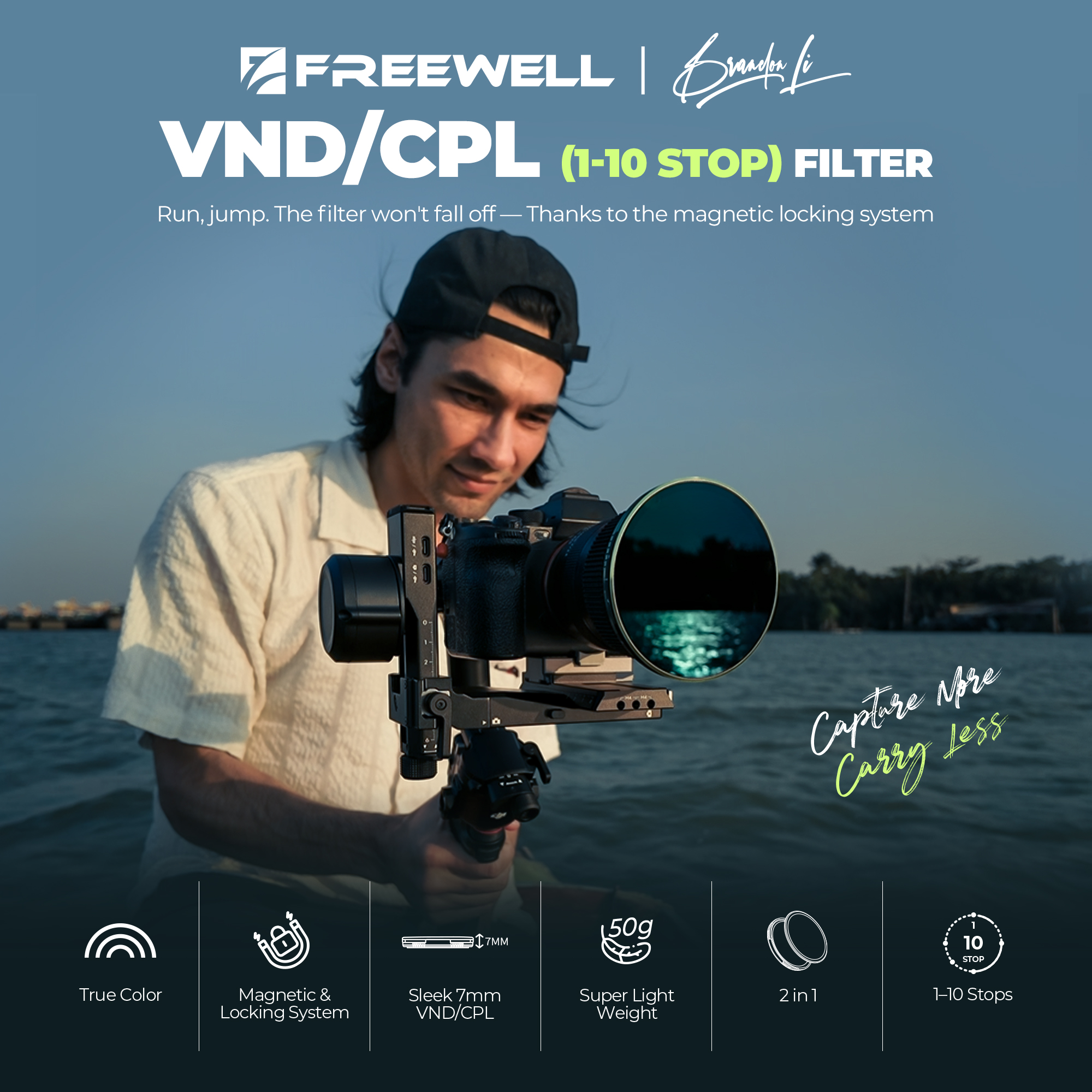
Seeking to solve these persistent pain points, Freewell has officially unveiled the Brandon Li Signature VND/CPL System, a groundbreaking piece of engineering that promises to eliminate the mechanical complexities that have defined the filter market for decades. Developed in collaboration with renowned filmmaker Brandon Li, this new system represents a significant shift in how creators manage light in the field.
The Core Innovation: A Mechanism-Free Future
At the heart of the new Freewell release is a bold design philosophy: the removal of internal moving parts. Traditional VND filters rely on rotating internal gears or complex mechanical housings to adjust light reduction. Over time, these components are prone to wear, misalignment, and the "X-pattern" artifacts often seen in cheaper glass.
Freewell’s engineering team, led by product designer Gary Lu, spent two years iterating on a design that abandons these traditional mechanical dependencies entirely. The result is described as the world’s slimmest locking VND system. By removing the friction-prone internal mechanisms, Freewell has not only reduced the physical footprint of the filter but has also significantly increased its long-term reliability in harsh, real-world shooting environments.
For the traveling filmmaker, this translates to a streamlined, durable tool that can withstand the rigors of location shooting without the fear of internal failure.
Chronology of Development: Two Years in the Making
The journey toward this release began shortly after the pandemic, at a time when the demand for high-end, compact, and modular cinema gear was reaching a fever pitch.
- Mid-2024: Initial conceptualization between Brandon Li and Freewell. The goal was identified: create a filter system that feels invisible to the user.
- Late 2024: The prototype phase. The team focused on the challenge of maintaining "True Color" optics while compressing the physical size of the glass layers.
- Early 2025: Rigorous field testing. Brandon Li took early prototypes into various climates—ranging from high-humidity tropical zones to arid desert landscapes—to ensure the magnetic locking mechanism and glass coatings remained resilient.
- May 2026: The official launch. Following final refinements to the magnetic locking strength and the anti-reflective coatings, the system was cleared for mass production and global release.
This two-year development cycle was marked by a commitment to "frictionless production." The team sought to address the specific annoyances that Brandon Li encountered during his own high-speed, run-and-gun filmmaking style, such as the time wasted swapping filters when moving from interior to exterior environments.
Technical Specifications and Optical Performance
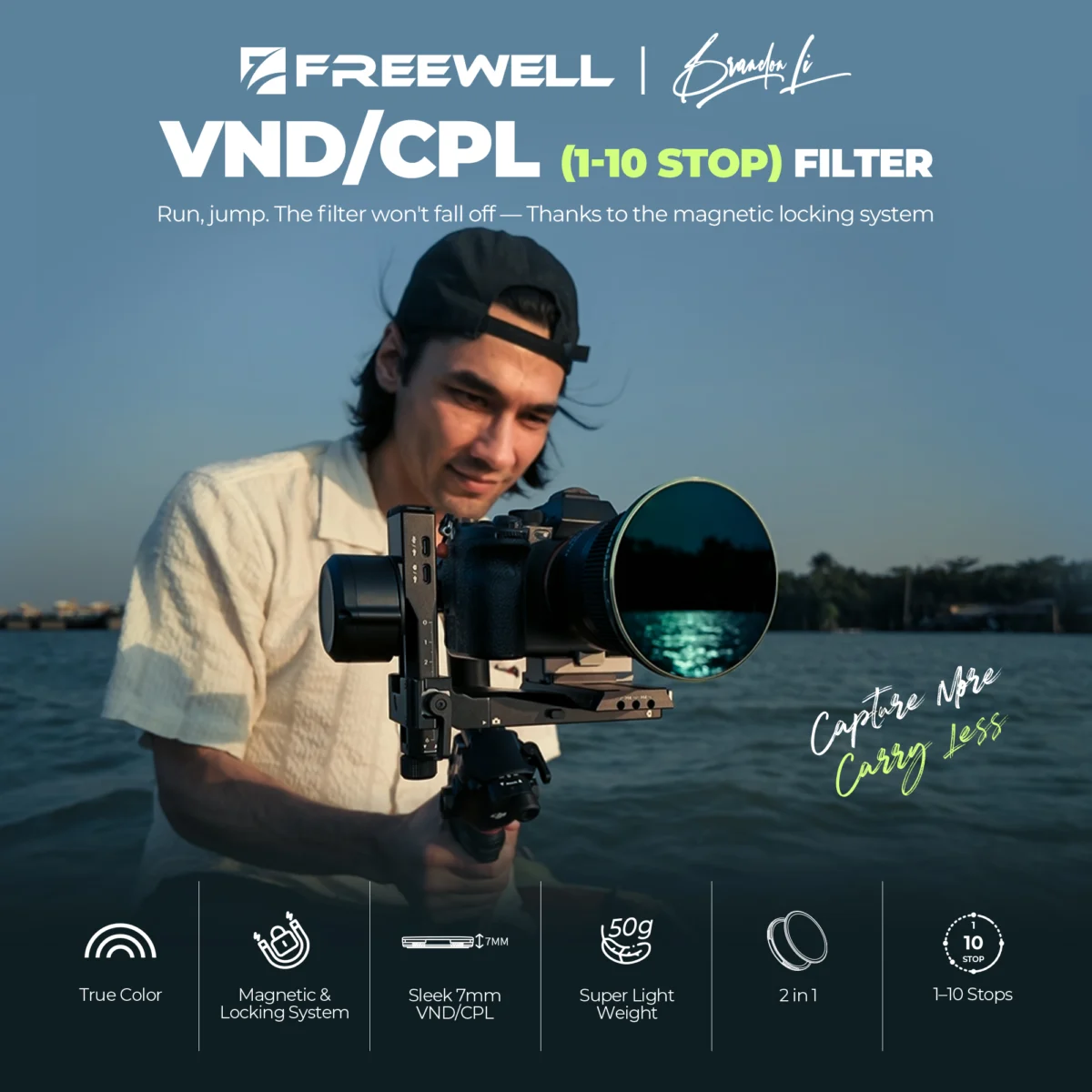
The Brandon Li Signature system is built for versatility. By integrating a circular polarizer (CPL) directly into the VND unit, Freewell allows users to manage both exposure and surface reflections simultaneously—a task that previously required stacking multiple, often heavy, filters.
Key Performance Metrics:
- 1–10 Stop Range: By combining the base VND/CPL unit with the included ND32 filter, users achieve an expansive 10-stop range. This covers everything from bright, mid-day sun to more controlled, low-light cinematic conditions.
- True Color Optics: One of the most common criticisms of VND filters is the dreaded "color shift," where the image turns green or magenta at higher densities. Freewell’s new coating technology ensures that color balance remains neutral throughout the entire range.
- Magnetic Modular System: The filter employs a robust magnetic mount, allowing for near-instant swaps. This modularity means photographers can add "Glow Mist" or other diffusion filters to the front of the stack without needing to unscrew or recalibrate the primary filter.
- Universal Compatibility: Recognizing that professionals use a wide range of glass, the system is designed to accommodate lens diameters from 49mm to 95mm, making it a viable solution for both mirrorless shooters and cinema lens users.
Official Perspectives: The Philosophy Behind the Build
The collaboration between Freewell and Brandon Li is built on a shared frustration with existing equipment. In official statements, both parties emphasized that this product is not merely a "feature upgrade" but a fundamental rethink of the tool.
Brandon Li’s Perspective:
"This system was built to remove the usual friction filmmakers deal with when traveling or shooting on location. You don’t have to think about swapping filters. It just works the way you need it to." Li, known for his cinematic travel storytelling, prioritized speed and ease-of-use. His input was critical in ensuring the locking mechanism was intuitive enough to be operated without looking at the lens.
Gary Lu’s Perspective:
"The goal was simple but difficult to execute: remove all mechanical dependency and create the slimmest possible locking VND without compromising optical performance. What we ended up with is a system that is more reliable, more compact, and built for real-world use."
The engineering feat of achieving a slim profile while housing a CPL and a VND—without traditional internal gear-driven movement—is a testament to the advancements in optical manufacturing that Freewell has championed over the last few years.
Implications for the Industry
The release of the Brandon Li Signature system signals a broader trend in the camera accessory market: the "modular-first" approach. As cameras become smaller and more capable, the peripheral equipment must follow suit.
1. The Death of the "Bulk" Era
For years, professional cinematography required bulky matte boxes and complex rail systems. While those still have their place in large-scale studio productions, the rise of "guerilla" filmmaking and high-end vlogging has created a market for high-quality, compact solutions. Freewell’s success here suggests that the future of filters lies in magnetic, slim-profile units that mimic the weightlessness of the camera bodies they are attached to.
2. Reliability as a Premium Feature
By removing mechanical parts, Freewell is essentially increasing the lifespan of the product. In an industry where gear is often discarded after a few years due to wear and tear, a 100% mechanism-free design is a strong selling point for independent creators who need their equipment to last for years of travel and constant use.
3. Workflow Efficiency
The most significant implication is the time saved. In professional production, time is literally money. If a filmmaker can save 30 seconds every time they need to adjust their exposure or add a mist filter, they gain hours of shooting time over the course of a project. By reducing the "fiddliness" of the process, Freewell is enabling creators to focus more on composition and storytelling rather than the technical hurdles of light management.
Final Thoughts: A New Standard?
The Brandon Li x Freewell VND/CPL system is more than just a collaboration; it is a declaration that the standard for optical filters is rising. By marrying the convenience of magnetic mounting with the precision of a mechanism-free variable density system, Freewell has positioned itself at the forefront of the photography and filmmaking industry.
Whether you are a documentary filmmaker trekking through remote landscapes or a content creator working in the heart of a bustling city, the ability to control light accurately and quickly is paramount. With this new system, Freewell has provided a tool that—for once—feels like it was designed by someone who actually spends their life behind the lens.
As we look toward the future of digital imaging, it is clear that the winners will be those who can simplify the complex. With their latest signature series, Freewell has done exactly that, proving that the best gear is often the kind that you don’t have to think about while you’re capturing the shot.