The global photography industry is turning its gaze toward Beijing this week as the China International Photography Machinery and Imaging Equipment and Technology Expo—universally known as China P&E—prepares to open its doors. Running from May 15 to May 18, 2026, the event serves as the premier stage for the rapidly evolving Chinese optical industry. This year, the excitement is palpable, with major players like Viltrox, Laowa, and Meike signaling significant product launches that could reshape the hierarchy of the third-party lens market.
The Main Facts: A Wave of Innovation
As of mid-May 2026, the industry is buzzing over a series of cryptic yet revealing teasers released by the most prominent Chinese manufacturers. The narrative of this year’s expo is clear: the focus has shifted from budget-friendly manual glass to high-performance, autofocus-enabled, and specialized optics.
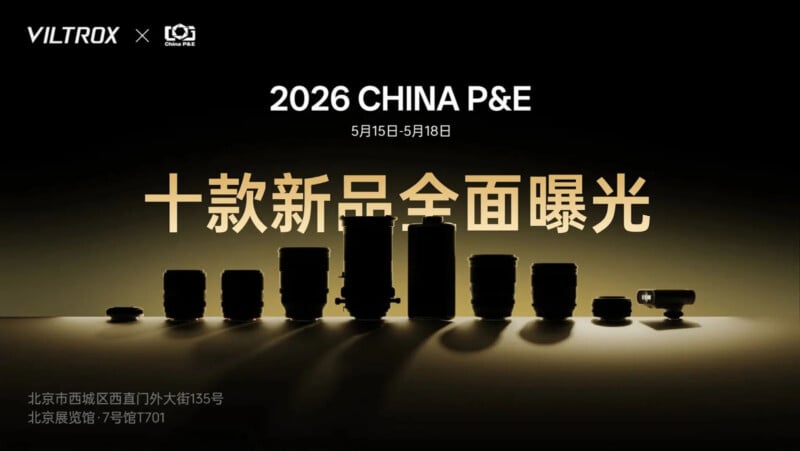
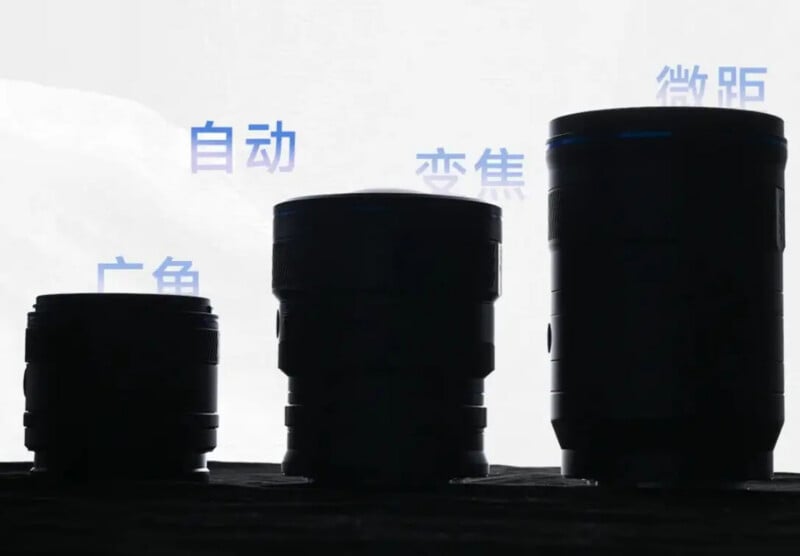
Viltrox, arguably the most prolific brand in the current landscape, has confirmed the unveiling of ten new products. Industry analysts and enthusiasts have already begun dissecting the silhouettes provided in the company’s promotional materials. Among the ten items are eight distinct lens designs, a compact flash unit, and one still-unidentified piece of hardware.
Simultaneously, Venus Optics (Laowa) and Meike have teased their own developments. Laowa appears to be leaning into the high-end zoom and macro market, while Meike is boldly entering the medium-format arena—a space that has historically remained a "walled garden" for camera manufacturers.

A Chronology of the Teaser Campaign
The lead-up to China P&E 2026 has been marked by a strategic drip-feed of information, keeping the community in a constant state of speculation:
- September 2025: Viltrox joins the L-Mount Alliance, signaling a major shift toward high-end, full-frame professional integration.
- Early May 2026: Viltrox releases a silhouette teaser showing a diverse lineup of ten products, including a distinct pancake lens and a complex tilt-shift optic.
- May 6, 2026: Meike drops a cryptic image on social media featuring sensor dimensions, explicitly highlighting the 43.8 x 32.9mm format used by Fujifilm GFX and Hasselblad X-System cameras.
- May 10, 2026: Reports from Asobinet confirm that Laowa is preparing to unveil three new autofocus lenses, marking a potential pivot away from their traditional manual-focus heritage.
- May 15–18, 2026: The official dates of the China P&E expo in Beijing, where these products will be fully unveiled to the public and the trade press.
Supporting Data: Decoding the Silhouettes
The technical implications of the silhouettes provided by these manufacturers are significant.
Viltrox’s Ambition
The most striking element in the Viltrox teaser is the inclusion of what appears to be a specialized tilt-shift lens. The presence of two distinct adjustment knobs on the barrel is a hallmark of professional-grade architectural and product photography optics. If Viltrox manages to bring a high-quality, electronically controlled tilt-shift lens to market at their signature price-to-performance ratio, it could democratize a segment previously dominated by the prohibitively expensive offerings from Canon and Nikon.
Furthermore, the "pancake" lens on the far left of the Viltrox lineup suggests a renewed interest in compact, street-photography-ready glass. With Viltrox’s recent entry into the L-Mount Alliance, there is significant pressure on the company to begin populating that ecosystem. Fans are hopeful that the majority of these ten new releases will be compatible with the L-mount, providing a much-needed boost to the Leica/Panasonic/Sigma alliance.

Laowa’s Pivot to Autofocus
Laowa has long been the "king of specialty glass," known for its extreme wide-angle, shift, and macro lenses. However, their teasers indicate a transition toward autofocus. This is a critical development. Thypoch recently made headlines with the AF 24-50mm f/2.8, the first Chinese-made zoom with autofocus capabilities. By entering this space, Laowa is signaling that it no longer wishes to be a niche manufacturer but a direct competitor to the established "Big Three" lens makers in the general-purpose zoom category.
Meike and the Medium-Format Frontier
Meike’s teaser is arguably the most disruptive. The medium-format market, specifically the Fujifilm GFX system, has been devoid of third-party autofocus lenses. By highlighting the 43.8 x 32.9mm sensor size, Meike is clearly targeting GFX users who have long asked for more affordable, high-quality lens options. If these lenses include reliable AF motors, it could lead to a massive surge in GFX body sales, as the "cost of entry" for glass is reduced.
Official Responses and Market Positioning
While direct technical specifications remain under wraps until the floor opens at China P&E, the industry sentiment is clear. Companies are no longer satisfied with merely providing "alternative" lenses; they are now competing on innovation and feature parity.
"The Chinese lens market has entered its ‘Phase Two,’" says industry analyst Marcus Thorne. "Phase One was about proving that they could make sharp glass for a fraction of the cost. Phase Two is about proving they can solve the complex engineering problems—autofocus algorithms, weather sealing, and electronic communication with camera bodies—that the Japanese giants have guarded for decades."
The manufacturers themselves have been tight-lipped, preferring to let the hardware speak for itself at the show. However, the sheer volume of companies participating—including industry stalwarts like 7Artisans, ZY Optics, TTArtisan, Brightin Star, Songraw, and Yongnuo—suggests a coordinated push to solidify China’s position as the global hub of optical manufacturing.
Implications for the Future of Photography
The implications of the 2026 China P&E expo are far-reaching for photographers worldwide:
1. Price Compression
As more manufacturers enter the autofocus zoom and medium-format categories, we can expect significant price compression. The "monopoly" that camera manufacturers have held on their own native mounts is eroding. This is excellent news for consumers, as it forces original equipment manufacturers (OEMs) to innovate faster or lower their prices to stay competitive.
2. The Rise of the "Third-Party Professional"
We are moving away from the era where third-party lenses were considered "budget compromises." With Viltrox’s "Lab" and "AF Pro" series, and the new AF offerings from Laowa and Meike, we are seeing a shift toward professional-grade build quality. These lenses are designed to meet the rigors of commercial work, meaning the barrier to entry for high-end professional photography is significantly lowered.
3. Ecosystem Expansion
The L-Mount Alliance and the Fujifilm GFX ecosystem are the primary beneficiaries of this expansion. For years, the lack of diverse, native-autofocus lens options was the biggest argument against choosing these systems over more established mounts like Sony E or Canon RF. As Viltrox and Meike fill these gaps, we may see a migration of professional users toward these systems, further diversifying the market.
Conclusion
As the doors open at China P&E this week, the world of photography stands on the precipice of a significant shift. The days of Chinese optics being defined by manual, vintage-style lenses are coming to an end. In their place is a modern, high-tech, and highly competitive industry that is no longer content to follow the status quo—it is setting its own pace.
Whether it is Viltrox’s massive ten-product rollout, Laowa’s bold entry into the autofocus zoom space, or Meike’s groundbreaking push into medium-format, one thing is certain: the next twelve months will be among the most interesting years for optical engineering in recent memory. Stay tuned as we cover the official unveilings, hands-on tests, and technical breakdowns from the floor of China P&E 2026.